
My Book About Israel is Free on Amazon for 5 Days
3 years ago I wrote a book about the mounting controversy surrounding the people and the Land of Israel. It’s called, “The Controversy of Zion and the Time of Jacob’s Trouble: The Final Suffering and Salvation of the Jewish People.”
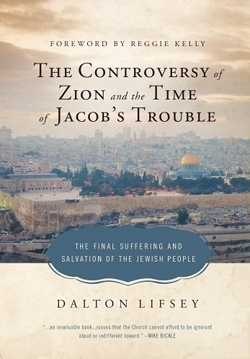 My intention was to provide a biblical alternative to the all-too popular errors of Replacement/Covenant/Divestment Theology on the one hand and Dispensational theology on the other. Being a missionary at heart, I wrote it with the hope that it would provoke bold and calculated Great Commission efforts to both ‘Isaac and Ishmael’ in the tumultuous season of history preceding the return of the Lord.
In the introduction I wrote that,
The message contained within this book will bear greater relevance and value as “the time of Jacob’s trouble” draws near. As “the controversy of Zion” continues to escalate in the coming years, my prayer is that this book would instruct, edify, and inform many.
The most recent conflict between Israel and Hamas/Islamic Jihad has stirred global rage and protest. Over the last few days tens of thousands took to the streets in Seoul, London, Edinburgh, Paris, Amman, Cairo, Istanbul, Seattle, Chicago, Kashmir, NYC, Rome and dozens of other cities to express solidarity with the Palestinians (though they knowingly or unknowingly are effectively just championing the demented genocidal agenda of Hamas/Al Qassam Brigade/Islamic Jihad). Many of the demonstrations were overtly anti-Semitic with Jew-hating slogans common during the Nazi genocide being chanted again on the streets of Frankfurt, Berlin and Paris.
As synagogues were stoned and vandilized and Jewish civilians beaten in city centers, Western and Eastern government leaders condemned the Israelis for (in the words of Turkish Prime Minister), “surpassing the barbarism of Hitler.” ‘Christian’ propagandists like Stephen Sizer took the opportunity to condemn not Hamas/Islamic Jihad for their indiscriminate civilian missile onslaught, but Israel-loving Jesus followers for being “Christian jihadis” (how mind-numbingly ironic and morally insane). Meanwhile throughout the Islamic world, public calls for the ethnic cleansing of Palestine have rung forth from mosques, Youtube channels and Twitter accounts (with trending hashtags like #KillJews and #HitlerWasRight). It’s as if the European sentiment, “We loathe Jewish presence in Europe” has morphed into “We loathe Jewish presence in the Middle East” (which for anyone paying attention actually means, “We loathe Jewish presence everywhere). The alleged lines between anti-Zionism and anti-Semitism are fading fast. Some deny it (yearning for respectability) and others boast in it (brazen in their bigotry).
In and out of the church lines are being drawn in the shifting sands of man-centered theology and politics related to the Jewish people and the nature of their return to Haaretz Israel over the last century and a half. Feeling increasingly aware of the urgency of these turbulent days, I asked Maskilim Publishing if we could make the book free on Amazon Kindle and they said yes (because they’re awesome).
You will be able to download the book for free from July 21-25. Click here to head over to Amazon.
Below I am including the whole introduction to the book to, well, introduce you to the book. Have a read and pass this link on. We hope to get it into as many hands as possible over the next 5 days.
*********
This book is centered around the relationship between ethnic Israel and biblical eschatology.[1] For at the heart of biblical eschatology is what Isaiah referred to as “the controversy of Zion”[2] and what Jeremiah termed “the time of Jacob’s trouble.”[3]
The “controversy of Zion” refers to the historical continuum of spiritual and natural conflict over the city of Jerusalem; the past, present and future Land of Israel; and the Jewish people whose ancient history and prophetic destiny are inextricably connected.
The “time of Jacob’s trouble” refers to the Age-ending suffering of the Jewish people and the glorious restoration that follows. It is this time of “trouble” that lays the ancient contention and controversy to rest through the “restoration of the Kingdom to Israel”[4] and the decisive once-and-for-all “judgment of the nations” who take part in the “final”[5] assault on the people and the Land of Israel.
These subjects lack no scriptural precedent. In fact, I’d go so far as to echo Charles Haddon Spurgeon, the great “Prince of Preachers,” when he said, “I think we do not attach sufficient importance to the restoration of the Jews. We do not think of it enough. But certainly, if there is anything promised in the Bible it is this.”[6]
THE AIM OF THIS BOOK
The aim of this book is to encourage Bible saturated thinking, biblically inspired feeling, and biblically responsive living at the end of the Age in relationship to this issue of Israel.
Between the prominence of Israel in biblical prophecy, the contemporary Israeli-Palestinian conflict, mounting anti-Semitism in the nations, increasing anti-Judaism in the Church, and the ever-evolving socio-political landscape in the Middle East, I believe there are more than enough reasons to legitimize an honest study of what Scripture has to say about “Jacob”[7] and their “final” [8] “affliction.”[9]
THE UNPRECEDENTED INTENSITY OF JACOB’S TROUBLE
The impact of “the time of Jacob’s trouble” on the Jewish people will be far more horrific than any of us can imagine. When it was shown to the Hebrew prophets they were burdened in anguish. Jeremiah was disturbed and appalled.[10] Habakkuk trembled and quivered.[11] Ezekiel mourned and grieved. Daniel was sick for days.[12]
According to Scripture “the time of Jacob’s trouble” will eclipse every other historical epoch of Jewish suffering in intensity—even the Holocaust of Nazi Germany.[13]
In his book, Hitler and the Holocaust, Robert S. Wistrich writes:
“Thinking about the Holocaust is like staring into an abyss and hoping it will not stare back. It is the ultimate extreme case, a black hole of history that not only challenges our facile assumptions about modernity and progress but questions our very sense of what it means to be human.”[14]
Historically speaking, Wistrich is correct: the Holocaust of Nazi Germany is the “ultimate extreme case.” But as far as the future is concerned, it is but a precursor of what is to come.
If the systematic annihilation of over six million Jews is “like staring into an abyss and hoping it will not stare back,” to what shall we liken the consideration of the future crisis? The prophet Zechariah was shown that “two-thirds”[15] of the global Jewish population[16]alive in the generation of “Jacob’s trouble” will not survive.
THE FUTURE INVASION OF THE STATE AND THE FLIGHT OF THE JEWISH PEOPLE
As these brutal events unfold in the future, they will have severe implications for the recently established Nation-State.[17] When the military invasions[18] begin, the State—as we know it today—will be dominated by foreign armies and much of the population within will either escape voluntarily[19] or be “driven out”[20] against its will.
Zechariah 14:1-3 makes clear that though a remnant of besieged Jews will remain in the city of Jerusalem throughout the conflict, only half the city will remain intact (if we can even call it that) as the Nation is overun by invading forces.[21] Isaiah was told that if the Nation were likened to a tree, only a “stump” would “remain” in the wake of the trouble. Then, without the use of metaphor, the Lord told him that only “a tenth will remain.”[22]
With that said, we Gentiles need to understand that “Jacob’s trouble” isn’t just Jacob’s problem.[23]
The escape and expulsion of the Jews[24] from their crippled and war-torn State will dramatically impact the Church among the nations. In the coming days when the violence begins, potentially millions of Jews will take to “flight”[25] “among the nations,”[26] seeking refuge from their “tormentors.”[27] They will need to be received and served by those who have anticipated their arrival. Much like Corrie ten Boom and her family who secretly housed and protected Jews during the Nazi Holocaust, so also will the Church in the “great tribulation” be called upon to serve disoriented, panic-stricken, and traumatized Jews who will then be the object of international scorn—even from nations in which they have, up to now, enjoyed a measure of safety.
It will be required of us to sacrificially identify with the “least of [Jesus’] brethren” who in that day will be “hungry, thirsty, estranged, naked, sick, and imprisoned” in the extremity of their final “trouble.” This is the inner-most meaning of the parable of the sheep and the goats in Matthew 25:31-46 and the reason Jesus chose to end the Olivet Discourse in Matthew 24-25 this way. The issue of how we treat the Jews in our midst as they are “sifted among the nations”[28] in the “great tribulation”[29] really matters to the Lord.
PREPARING FOR WHAT IS TO COME
The hour in which we live is urgent. With substantial Jewish presence on Jewish soil in a politically independent Jewish Nation-State for the first time[30] since the generation of the apostles, and with the religious and political landscape of the Middle East rapidly evolving, we must discern the times.[31]
Much like the generation of Europeans on the back side of World War I that watched the rise of Hitler and the formation of the Third Reich, I believe we’re living in a transitional moment of human history. But the difference between the crisis of the Second World War and the future “time of Jacob’s trouble” will be three-fold:
First, the crisis to come will have its inception in the Land of Israel,[32] not in a foreign nation.
Second, the Church of the Last Days will—by the grace of God—stand faithful and obedient to the Lord in that[33] which the vast majority of the Church in Germany did not.[34]
Third, the crisis will culminate in the salvation of “all Israel”[35] when the Jewish people will be “delivered,”[36] “saved,”[37] “gathered,”[38] “redeemed,”[39] “healed,”[40] “awakened,”[41] “cleansed,”[42] and “brought into the bond of the Covenant”[43] after “looking upon Him whom they have pierced”[44] with deep sorrow and love.
AN OVERVIEW OF THE BOOK
The book has been divided into three parts: (1) The Foundations, (2) The Prophecies, and (3) The Land.[45]
Part One: The Foundations
In Part One we will look at the theological foundations of God’s purposes with Israel at the end of the Age. These chapters serve as a general overview of “the controversy of Zion” and the future “time of Jacob’s trouble.” They include brief surveys of the differing opinions within the Church with regards to the Jewish people and the Land of Israel. Here you will find an introduction to the eschatological suffering and salvation of the Jewish people.
Part Two: The Prophecies
In Part Two we will look at prophecies from the Old and New Testament concerning the Age-ending devastation and restoration of Israel. In this section I have dealt with the question of the biblical and prophetic significance of the recently established Nation-State, the unequaled severity of the future “shattering of the Jewish people,”[46] the subsequent “restoration of the Kingdom to Israel,”[47] and the nature of the Church’s role during “the time of Jacob’s trouble.” These chapters are almost entirely exegetical.[48] Here you will find expositions of various prophecies concerning the final regathering and restoration of Israel at the conclusion of “the time of Jacob’s trouble.” The heart of the book is Part Two. It contains the longest and most important chapters.
Part Three: The Land
In Part Three we will focus on the question of Jewish right to the Land of Israel, particularly in regards to the contemporary controversy surrounding the political legitimacy of the State of Israel. Part Three sheds light on the theological complexities bound up in the dilemma of “the Land.” The “controversy of Zion” has three dimensions: historical roots, an eschatological conclusion, and a present-day manifestation. As we approach that eschatological consummation, it is imperative that we rightly discern its bearing on this present hour. As the “controversy of Zion” becomes increasingly hostile, discernment will be invaluable to the saints.
THE PRESSING RELEVANCE OF THIS MESSAGE
The message contained within this book will bear greater relevance and value as “the time of Jacob’s trouble” draws near. As “the controversy of Zion” continues to escalate in the coming years, my prayer is that this book would instruct, edify, and inform many.
[1] “Eschatology” simply means “the study of the end-times.”
[2] Isaiah 34:8; Psalm 2; Zechariah 12:1-2; 14:1-9
[3] Jeremiah 30:7
[4] Acts 1:6
[5] Ezekiel 35:5-6; Zechariah 12:1-2; 14:1-3; Joel 3:1-21
[6]The C.H. Spurgeon Collection, Metropolitan Tabernacle Pulpit, I, no. 28, 1855 (Albany, Oregon: Ages Software, 1998), 382.
[7] The name of the patriarch from which the Jewish people trace their lineage. Israel as a national identity is often referred to as “Jacob” in Scripture. See Jeremiah 30:7.
[8] Ezekiel 35:5-6
[9] See Jeremiah 30-31; Zechariah 12-14.
[10] Jeremiah 30:5-7
[11] Habakkuk 3:16
[12] Daniel 7:28; 8:27
[13] Matthew 24:21-22, Jeremiah 30:7, and Daniel 12:1-2 all declare that nothing before or after this trouble will exceed it in intensity.
[14] Robert S. Wistrich, Hitler and the Holocaust (New York; Modern Library, August 5, 2003), Kindle e-book, Introduction.
[15] Zechariah 13:8-9
[16] Zechariah 13:8-9; a passage we will return to in subsequent chapters.
[17] The State of Israel was established in 1948.
[18] Matthew 24:15-17; Daniel 9:27; 11:31-44; Joel 3:2-16; Zechariah 12:1-2; 14:1-3; Ezekiel 38:1-12; etc.
[19] Jesus commanded the population in Jerusalem to escape when the final invasions begin. See Matthew 24:15-22.
[20] Isaiah 11:11-16 and 27:12-13 speak of the “banished ones” who will be “driven out” of the Land of Israel into nations like Egypt, Iran, and Iraq.
[21] See also Daniel 11:31-36; Revelation 11:1-2; Luke 21:20-24; Matthew 24:15-22.
[22] See Isaiah 6:10-13.
[23] Reggie Kelly often uses this phrase to counter the Gentile assumption that we will be exempt from this hour of Jewish suffering.
[24] Sometimes we read of voluntary Jewish escape (as in Matthew 24:15-7), and other times we read of involuntary expulsion whereby the Jews are “driven out” and “banished” from the land (as in Isaiah 11:11-16 and 27:12-13).
[25] Matthew 24:15-17
[26] This expulsion was called, “sifting through all nations,” in Amos 9:9-10.
[27] Isaiah 51:23
[28] Amos 9:9-10
[29] Though this may seem like a novel reading of the parable, the context is decisive. The time of tribulation in Matthew 24:21-22 will result in the expulsion of the Jews from the Land in Matthew 24:15-20. How we respond to them when this unfolds is important.
[30] As of 1948 and 1967; see chapter 7.
[31] Matthew 16:1-4; Amos 3:7
[32] Matthew 24:14-22; Zechariah 12:1-2; 13:8-9; 14:1-3; Joel 3:2-21
[33] The Book of Revelation portrays the Church of Jesus as “prepared” (19:7), praying (22:17), prophetic (10:1-11), and persevering (14) during the greatest crisis in human history.
[34] The majority of the church of Germany was seduced by doctrines of demons and abandoned the Pauline mantra that “the gospel…is the power of God for salvation to everyone who believes, to the Jew first…” (Romans 1:16). People like Dietrich Bonhoeffer and Corrie ten Boom were the rare exceptions in the apostasy of the German church in the time of the Holocaust.
[35] Romans 11:25-26; Jeremiah 30:7; Daniel 12:1-4; Isaiah 4:3-6
[36] Daniel 12:1-3
[37] Jeremiah 30:7; Romans 11:25-26
[38] Jeremiah 31:8-9
[39] Isaiah 52:3
[40] Hosea 6:1-2
[41] Isaiah 52:1-2
[42] Zechariah 13:1-2
[43] Ezekiel 20:37; Isaiah 4:3-6
[44] Zechariah 12:10
[45] Certain passages and propositions are cited and asserted numerous times throughout the book. This was partly intentional (to adequately emphasize and exposit them) and partly unavoidable (to do justice to particular themes and ideas).
[46] Daniel 12:7
[47] Acts 1:6-8
[48] “Exegetical” means “expository.” It refers to the explanation or critical interpretation of a text.


Dalton Thomas's Blog

- Dalton Thomas's profile
- 14 followers

