
Interview With Anne Becker, Part Three of Three: Book Giveaway
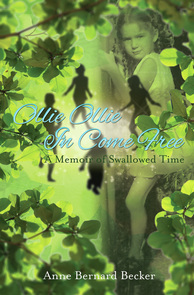 Author Anne Becker and I both live in Cincinnati, and we met through a mutual friend, Cincinnati vocal artist Paulette Meier, a previous contributor to this blog. It's been a privilege getting to know Anne as she was completing her new book. As I read Anne's book Ollie Ollie, In Come Free: A Memoir of Swallowed Time, I was honored to listen as she shared what has been perhaps the deepest journey of her heart. Her generosity with her time and expertise is reflected in the following mutual interview about sibling loss. We both had so much to say on the subject, that this article is being posted as a series. I (Pam Richards) have no qualifications as a therapist, and don't try to talk like one unless I'm prepared to be corrected by those who know better. Anne is one of those who know better.
Here, Anne and I share the third part of a mutual interview about sibling loss.
First, I have to apologize for the delay in posting this final interview. I have been on the road far more than usual, and unfortunately I'm not a mobile blogger. The good news is, Anne has agreed to offer a book giveaway of Ollie, Ollie In Come Free despite my delayed posting of this interview. That's grace for you! Thank you Anne. And I will offer a giveaway of Singing from Silence, too. To win the giveaway, all you have to do is comment on this three-part series before August 24, 2015. One person who comments will be selected to receive a copy of Ollie Ollie, In Come Free, and one will be selected to receive Singing from Silence. We look forward to hearing from you!
* * * * * * * * * *
Pam: As a young child, you exhibited an uncommon gift for creating worlds in your imagination. What were the drawbacks and gains of living so much inside your mind?
Anne: I did have an extraordinarily active fantasy life. In fifth grade I read a book about Charlotte Bronte, which launched a life-long love for her. I realized recently, in reading an authoritative biography of her, that this bond was not just because of the multiple sibling deaths she experienced, or our common love for writing from an early age, but because she too had such an active fantasy life that she often felt scared it would take over. I am sure my fantasy life is what kept me functioning relatively healthily in daily life as a young girl. I could indulge in it daily, but move out of it to the "real world" of my family and friends, where the social demands to act normal, to play along, were very strong. I could not afford to act as different as I felt. But the girl I imagined in my head felt all the feelings I never dared express out loud,: sadness, abandonment, deprivation, and most of all, exquisite shame. This fantasy self was part of the identity I carried into adulthood. I found myself unable to resist the pull toward fantasy even as a young mother, even though I felt quite emotionally safe around my husband and adult friends. It is as if I had to tend to the lost self I had created as a child, and not to do so was to feel a terrible disconnection at the root of my psyche.
Pam: Do you still find this gift useful as an adult? If so, how do you use it?
Anne: One of the main signs of my healing in psychoanalysis in my late thirties (on which my memoir is based) was that I quit feeling a need to go into my fantasy world. I simply stopped, rather suddenly as I recall, and once I stopped, it was as if a portal closed tight. I would have no idea how to return to that world, which I no longer need. I cannot even imagine how I used to enter it!
Pam: Toward your later teen years, you describe your social development (or perhaps you'd use another term) as "frozen--" unable to go back, unable to go forward. I'm intrigued. Can you describe how this affected you in your life (e.g.; by observing your behavior, what were the signs of this trait)?
Anne: The primary area I am speaking of is sexual development. I felt no attraction to boys, nor did I perceive myself as a sexual being. I did not feel excited about any of the usual teen-age passions, as if they all belonged to an alien world. I dragged myself to dances, hated shopping for clothes, refused to experiment with makeup, avoided looking at myself in the mirror. Another issue for me was breaking free of my mother's very strong authority in my life. It was impossible for me to "become my own person" until I left home for college. I did not even identify any rebellious tendencies in myself, though they were there in seminal form.
Pam: As I understand the concept, Freud believed that deep pain underlies the creative gifts we bring to the world. I have been told he called the process of transforming pain into creativity 'sublimation.' Does this idea resonate with you? If so, please elaborate. If not, what is your personal concept of the origin of your creativity?
Anne: I actually thought Freud's idea of sublimation had to do with sexuality, rather than with pain per se. I am sure I sublimated sexual feelings as a teen-ager into my writing. Did I sublimate my pain in general into creativity while I was growing up? Possibly so. Both poetry and prose writing certainly worked as an outlet, though I would say the poetry had more of a sublimating function and the prose was more fantasy-driven. I don't believe I have used writing primarily as a tool for sublimation as an adult. I use it more as a tool for communication, to voice my truth. If it were just a means of sublimating, I would be as attracted to fiction writing and poetry as I am to memoir and personal essay. This is not the case. Telling the truth is my main need when I write.
Pam: My friend was only forty-one when he died. Somehow I don't think he ever managed to move out of his imaginary worlds, as you did in your late thirties. Not only was he not in psychoanalysis, the idea of which I believe he abhorred, I think he needed those worlds for his songs, for the same reason he needed to be in touch with his pain. There was possibly also some overlap with his own practice of mysticism.
Anne: You know, I have never felt there was a downside to losing my fantasy world. Perhaps Richard's was completely different from mine. Mine was very regressive psychologically -- very wrapped up in an alternative identity of a shamed child, a mythical Cinderella-in-the- Ashes. All my juvenile fiction pieces were created out of an obsession with this fantasy world, but in my mature adulthood, without the fantasies, I have been much more versatile with my creativity. And I don't experience the fantasy world that I created as at all connected with mystical experiences I have had, mostly since becoming a more integrated adult. While both involve crossing over into another realm, I have never thought about these two movements in the same breath. - very fascinating!
I find myself very curious about Richard's imaginary world, and how it fed both his creativity and mysticism. I wonder if he had had a chance to integrate the hurting child self fully, how this might have transformed both his creativity and mysticism without lessening them.
Pam: I guess most mystics take exception to having their worlds of vision labeled, "imaginary." They're not really imaginary like a daydream, or a fantasy. They are descriptive of a higher reality, one that the mystic knows is certainly more real than our version of the life of the senses. Our culture's current fascination with empiricism, logic and rationalism can effectively prevent us from entering those worlds. Richard consciously kept his processing, as much as he could. in line with twelfth-century thought,allowing him to access a frame of mind in which mysticism was much more the norm.
I have a feeling that Richard sensed God's pain as well as his love. Pain and love were inextricably linked, in his mind. He said some things that make me believe that he cherished the kind of pain he called "passion," because it helped him understand how God experiences our rejection of him.
That "pain" or "passion" fueled Richard's creative process. His songwriting was an act of transformation in itself. I don't know how or whether he fully integrated his hurting child self, but it seems to me his pain was redeemed rather than healed. This he did by sharing it with the world, touching hearts with it--as an artist does.
Anne: Listening to Richard's song, "Hard to Get," I certainly hear the theme of pain, and am struck especially by the lines," I can't see how you're leading me unless you've led me here to where I'm lost enough to let myself be led." Many spiritual traditions teach that suffering brings us closer to God. It creates a powerful entry point into what Cynthia Bourgeault terms the "imaginal realm," the deeper reality you speak of that underlies the life of the senses. The "way of the Cross" is particularly core to Christian spirituality. I know I have experienced its power in my own life. And I've worried (like Richard?) that being too contented, too integrated, too anxiety-free might keep me from seeking God's love -- but no worry: life events inevitably have a way of taking us deeper into the Passion! I think It's a matter of cultivating a spiritual openness, a heart that is truly awake, an energy that is attuned to the divine, "in good times and in bad." Is this easier to access the imaginal realm when emotional blocks have been healed? For me, yes, but Richard had his own path, his own way of manifesting God on this earth.
Pam: I agree there isn't much point chasing after suffering. As Richard observed, "bound to come some trouble in your life." Some people pity Richard when they hear Hard to Get, but there is no reason to single him out as the only one who ever felt this way. This song is Richard's "dark night of the soul," as experienced by many mystics who find their path leads to a temporary disconnection of their experience of God's presence. There comes a time when we walk those dark roads by faith, not by the spiritual "sight" our earlier experience has accustomed us to. It is a test of our faithfulness to God, in continuing to seek him with or without the reward of sensing his presence.
It is considered by many to be a sign of spiritual awareness to be called to walk this path. Mystics like Bourgeault would tend to agree that we all have our own journey, and this, it seems, was Richard's. Your healing may have come through psychoanalysis, mine has come through seeing the love of God through a human being; Richard's journey included the way of the cross.
In truth, shortly after he wrote this song, I believe Richard was transferred from the pain of absence into the joy of the presence of God. That is the true reunion we all long for; all the others we mourn are, in a sense, metaphors in our lives for our longing for God.
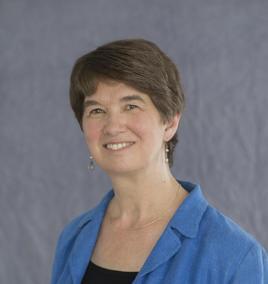 Anne Becker, Author
Anne Bernard Becker facilitates workshops exploring the effects of intergenerational trauma on families, and is also an ordained wedding officiant. Her recently published book, Ollie Ollie In Come Free: A Memoir of Swalllowed Time, explores the impact of her older siblings' deaths on her childhood and growth into adulthood. It is based on insights gained in psychoanalysis in the 1980's and 1990's. Besides writing, Anne loves choral singing and exploring history, psychology, and spirituality. She enjoys walks with her dog, and daily life with her husband of thirty-four years, Gerry. They have three adult children living in widely scattered places. She has worked part-time since 2001 as a learning coordinator at a private learning center. Since 1985, she and Gerry have belonged to New Jerusalem, an alternative Catholic community in Cincinnati.


No comments have been added yet.


