The Really GROOVY Story of the Tortoise and the Hare
Available March 1, 2011~
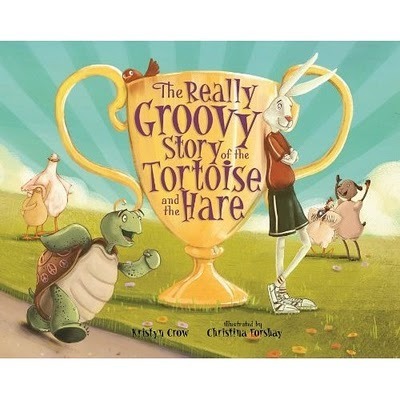 The Really GROOVY STORY of the Tortoise and the Hare ( Albert Whitman, Inc. , illustrated by Christina Forshay ) is the traditional tortoise and hare fable, snapped up with a groovy beat. It is new rhythm breathed into the old tale. As a writer, I can tell you it was grueling work—one of the pieces I worked longest on. It has sets of three rhymes per line, a hoppin' beat with an anapest meter. I worked on it for over a year.
Don't misunderstand the intent of the book. The word "groovy" in the title is not necessarily a nod to the 1970s. (Although if it makes you smile, groovy.) Kids aren't familiar with that era. This book is about movin' and groovin', hippin' and hoppin. It's about shaking your tortoise shell or your fuzzy cottontail as you hear the words of the story. It's about little hands clappin' and little feet stompin'. It's about movement and rhythm and language with a beat. It's about involving the reluctant or early reader interactively in the story. Word-play and humor.
When I visit schools, I bring more than 75 rhythm instruments. I involve the children by letting them echo some of the words in my stories. They also perform a rhythm symphony along with the text. I even sing some of the stanzas. My purpose is to teach children that rhythm is the joy of life. Rhythm exists in the rain that falls, in the music that plays, in the heart that beats. And rhythm is in LANGUAGE. You can find it if you let it move you. Close your eyes and hear it. Feel it.
A study was done in London which found that children who can find the rhythm in verse will vastly improve their reading skills. This is because children who can find the "beat" in picture book verse have learned to recognize, phonetically, stressed and unstressed syllables. They have learned to hear to the rhythm of a particular meter, and become aware of how the words are carefully ordered to align the stressed syllables just so. They hear word patterns. They are using both their left and right brains. They just don't know they're doing it—they're having too much fun.
There are folks out there who may not get me. They might attribute a less-than-stellar recommendation of GROOVY STORY based on the idea that playful words like groovy, happenin' or whooooah will be lost on kids. I beg to differ. Kids are much, much smarter than we give them credit for. It just makes me sad when someone misses the point. I haven't written a book to celebrate an era. I've written a book to celebrate rhythm in verse.
Children are wired for rhythm. It's in their blood. Put any 8-month old healthy baby in a room with music playing--music with a nice beat. That child will wiggle his bottom, bounce, and twist. As humans, we know rhythm before we speak. Rhythm infused into picture book text can motivate reluctant readers because it cries out to their basic instinct to hear, feel, and move to a steady beat.
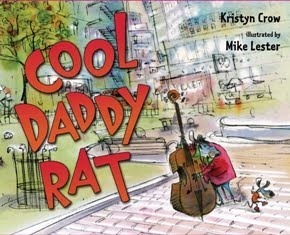
My book COOL DADDY RAT has scat lines in it. Now, when I read that story to kids, I usually start by reminding them what scat is in music. Not that they don't already know. They do. They hear scat in Disney movies (like the monkey song in the Jungle Book) and on the radio (Jason Mraz). They hopefully are also taught in school about the one form of music that is truly American—Jazz, where scat was born. I take a moment to remind kids what they already know, and then off we go. They hear the scat. They get it. They get it even though some have suggested "kids won't understand." I say, nay. Let us give our children credit.
It's hard not to be discouraged by a so-so review, but I've come to realize that I can't please the world. I've had starred reviews and blue ribbons and award nominations, too. What's more important to me is to see the kids dancing in the aisles during assemblies. To know children are reading and loving it. And to watch the reluctant reader rise up and chant the words of a book as he swivels his hips. Getting kids enthused about books—that's my passion. It's what this hard work of writing is all about.
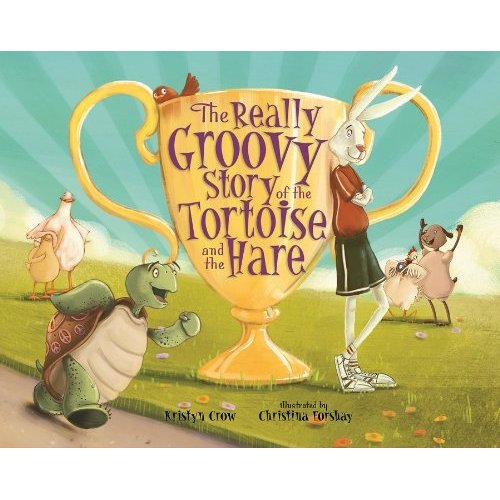 The Really GROOVY STORY of the Tortoise and the Hare ( Albert Whitman, Inc. , illustrated by Christina Forshay ) is the traditional tortoise and hare fable, snapped up with a groovy beat. It is new rhythm breathed into the old tale. As a writer, I can tell you it was grueling work—one of the pieces I worked longest on. It has sets of three rhymes per line, a hoppin' beat with an anapest meter. I worked on it for over a year.
Don't misunderstand the intent of the book. The word "groovy" in the title is not necessarily a nod to the 1970s. (Although if it makes you smile, groovy.) Kids aren't familiar with that era. This book is about movin' and groovin', hippin' and hoppin. It's about shaking your tortoise shell or your fuzzy cottontail as you hear the words of the story. It's about little hands clappin' and little feet stompin'. It's about movement and rhythm and language with a beat. It's about involving the reluctant or early reader interactively in the story. Word-play and humor.
When I visit schools, I bring more than 75 rhythm instruments. I involve the children by letting them echo some of the words in my stories. They also perform a rhythm symphony along with the text. I even sing some of the stanzas. My purpose is to teach children that rhythm is the joy of life. Rhythm exists in the rain that falls, in the music that plays, in the heart that beats. And rhythm is in LANGUAGE. You can find it if you let it move you. Close your eyes and hear it. Feel it.
A study was done in London which found that children who can find the rhythm in verse will vastly improve their reading skills. This is because children who can find the "beat" in picture book verse have learned to recognize, phonetically, stressed and unstressed syllables. They have learned to hear to the rhythm of a particular meter, and become aware of how the words are carefully ordered to align the stressed syllables just so. They hear word patterns. They are using both their left and right brains. They just don't know they're doing it—they're having too much fun.
There are folks out there who may not get me. They might attribute a less-than-stellar recommendation of GROOVY STORY based on the idea that playful words like groovy, happenin' or whooooah will be lost on kids. I beg to differ. Kids are much, much smarter than we give them credit for. It just makes me sad when someone misses the point. I haven't written a book to celebrate an era. I've written a book to celebrate rhythm in verse.
Children are wired for rhythm. It's in their blood. Put any 8-month old healthy baby in a room with music playing--music with a nice beat. That child will wiggle his bottom, bounce, and twist. As humans, we know rhythm before we speak. Rhythm infused into picture book text can motivate reluctant readers because it cries out to their basic instinct to hear, feel, and move to a steady beat.
My book COOL DADDY RAT has scat lines in it. Now, when I read that story to kids, I usually start by reminding them what scat is in music. Not that they don't already know. They do. They hear scat in Disney movies (like the monkey song in the Jungle Book) and on the radio (Jason Mraz). They hopefully are also taught in school about the one form of music that is truly American—Jazz, where scat was born. I take a moment to remind kids what they already know, and then off we go. They hear the scat. They get it. They get it even though some have suggested "kids won't understand." I say, nay. Let us give our children credit.
It's hard not to be discouraged by a so-so review, but I've come to realize that I can't please the world. I've had starred reviews and blue ribbons and award nominations, too. What's more important to me is to see the kids dancing in the aisles during assemblies. To know children are reading and loving it. And to watch the reluctant reader rise up and chant the words of a book as he swivels his hips. Getting kids enthused about books—that's my passion. It's what this hard work of writing is all about.


No comments have been added yet.