War Literature for a New Generation
 All of our veterans have their own personal stories about how they ended up on the front lines. The bravery and sense of duty that these men and women exhibit on a daily basis is something most of us back home can’t even begin to relate to. Regardless of whatever your take is on our involvement in wars on two fronts, these men and women deserve our utmost respect.
I read a lot of biographical accounts of soldiers on their tours of duty while I was drafting Preemptive. Although I never explore our country’s post-9/11 campaigns in the novel, the personal reflections from our military personnel provided me with invaluable insight into their psyches, and took me in new directions while I was writing. It bothers me when people shy away from these accounts, turning away from our troops’ sacrifices because they are either personally disinterested or they find these accounts too graphic and saddening to absorb.
A lot of WWII non-fiction is out there waiting to tell the individual tales of soldiers who served their country diligently, such as Laura Hildebrand’s biography of Japanese POW and Olympic track star Louis Zamperini, Unbroken. Sometimes these books are translated into dramatizations with respect to historical accuracy, as Tom Hanks and Steven Spielberg did responsibly with Band of Brothers and The Pacific. But alongside these accounts are the historically fictional literary works that accompany these biographies, one of the most acclaimed ones being Joseph Heller’s classic novel Catch 22.
The controversial and unpopular war in Vietnam also had it’s share of both fiction and non-fiction. Karl Marlantes’ Vietnam era novel, Matterhorn, is a haunting vision of the barbarity of that war. Written by a highly decorated Vietnam veteran, it provides the reader with perspective on the mind-sets of these soldiers in a way that non-fiction sometimes fails to do. Alongside the most gruesome real life tales of soldiers who served in Vietnam will always be the Apocalypse Nows, the Platoons, and the Full Metal Jackets.
So when the new generation’s wars erupted in both Afghanistan and Iraq, I took in as much literature as I could. I read Jon Krakauer’s Where Men Win Glory, Marcus Luttrell’s Lone Survivor, and Michael Hirsch’s None Braver. I watched the HBO mini-series Generation Kill, based on the book by Rolling Stone reporter Evan Wright, where he accompanies the First Reconnaissance Battalion Marines into Iraq in the first days of the invasion. Each chronicle allowed me to feel as if I was one step closer to seeing the bigger picture, but I sometimes felt as if the melancholy feeling I should have been experiencing was diluted by all of the facts and dates. I wanted to immerse myself in that gray area where right and wrong, good and evil, become ambiguities too complex to put into words. I realized I was waiting for a new wave of war fiction, realistic stories that would take me into the heads of the soldiers in service. This was important to me, because although I’m sure there are many parallels to the wars of the previous generations, none of the wars of the past speak to us like the ones we’re involved in right now. These books did eventually arrive. Here are three that I found exceptional.
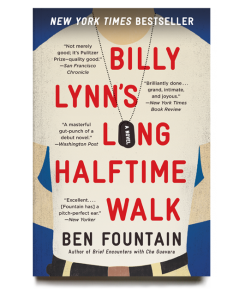 Ben Fountain’s novel, Billy Lynn’s Long Halftime Walk, tells the story of Bravo Squad, a group of young soldiers who are in the spotlight for their recent victory in a firefight with Iraqi insurgents. Invited as honorary guests to the Dallas Cowboys’ Thanksgiving Day home game, they are showcased alongside Beyonce during the halftime show, lauded as heroes in the owner’s sky box during the game , and followed around by a hotshot Hollywood producer who wants to bring their story to the big screen. What makes this story stand out is the way in which Fountain creates a very tangible communication barrier between the soldiers in the thick of the fighting and the men and women back home watching from their televisions. Billy and his Bravo Squad mates are constantly being accosted by people seeking the squad’s perspective on the war. Over time it becomes apparent that these people want only the most superficial of broad views; they’re not the ones doing the fighting, and, inwardly, they don’t really want to know. Conversely, it becomes exhausting for the soldiers of Bravo Squad to offer their takes. They are at the bottom of the chain of command, so far removed from national policy making as to make their opinions moot. They recognize this, and they accept it. Billy in particular just wants to get on with his young life without commenting or the moral repercussions of a war he wanted no part of to begin with. Often humorous, but always sobering in its realism, the novel progressively widens the divide between those who serve and those who don’t, and this is what holds the reader’s interest until the very end.
 Kevin Powers’ The Yellow Birds is the story of the friendship that develops between the novel’s protagonist, Bartle, and his teenage brother-in-arms, Murphy. Jumping back and forth in time from Bartle’s tour of duty in Iraq to his time on leave back home in Virginia, Powers’ prose shows the very disturbing disconnect Bartle is experiencing from the atrocities of war. The first-person narrative becomes increasingly devoid of all human emotion that one would expect from a traumatized veteran, which puts the emotional response in the hands of the reader. Powers, a veteran of Iraq, tells the story in memoir style that neither romanticizes or condemns the war. From Bartle’s disheartening view point, the war is what it is. Like Billy Lynn, Bartle knows his place in the grand scheme of things, and his gradual indifference, even when faced with shocking brutality, is what makes the reader want to learn how a man can psychologically remove himself from all of the tragedy that surrounds him.
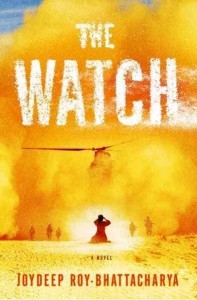 Joydeep Roy-Bhattacharya’s The Watch is a re-imagining of Sophocles’ tragic play Antigone, where an Afghan tribal woman arrives just outside of an American military base near Kandahar to claim her brother’s body and give him a burial according to religious rites. The conflict arises when the military commander of the base refuses to turn over the body because the deceased is suspected of being a Taliban operative. The story is told from many perspectives, from the grieving woman to the many American soldiers who are manning the base. Following the chaos from an intense firefight between U.S. soldiers and the Taliban, the cultural differences between two nations fuel resentment through misunderstanding, which paves the way for inevitable tragedy. Roy-Bhattacharya illustrates an attempt by the American soldiers to take the long view in an effort to justify what they’re doing, but the author himself remains pragmatically objective. His aim appears to be to convey one message only: the futility of all wars.
Sometimes when we’re faced with cold, hard statistics, or the tragic profiles of those we’ve never met and never will meet, we willingly or subconsciously remove ourselves from the heinous realities of war. We don’t choose to be apathetic; it just sometimes seems like it’s all just too much for us to comprehend. That’s when we need to read the fictional accounts of our wars. They’re written by those who have been there and seen the horror, and they’re written by those who understand those elements of human nature that many of us will never know. They break the wars down into smaller, more digestible chunks of humanity. We may not be able to relate, and we may even disapprove, but we can all choose to feel something.