
BREADFRUIT OR RICE?
The title is that of a paper published in 1979/80 that discussed the upcoming choices to be made by the islands of Micronesia -- independence or staying under the wing of the U.S. who had held the mandate over the islands since the late 1940s. Breadfruit and rice stood as symbols for homegrown or imported. The majority in the rural areas voted for breadfruit (aka keeping their old way of life), but rice won. The folks in the population centers who had acquired a taste for, or perhaps an addiction to, imported goods voted to accept large amounts of American money in lieu of independence which would have meant going back to subsistence living (breadfruit).
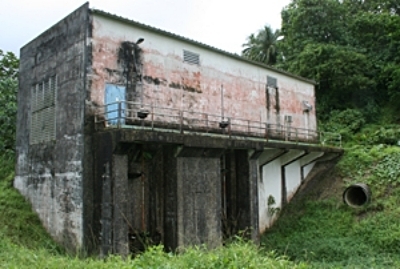
The decrepit building pictured here was once part of the hydro-electric system on the Nanpil River in Pohnpei, Micronesia. The old building is probably still there, off on the side of the road leading to the river’s famous waterfall. During the days of the Japanese mandate in the early half of the 20th century, the dam on the Nanpil River supplied the nearby district center with adequate electricity. High amounts of rainfall are a given, often several hundred inches a year in the mountains
After the end of WWII, the Americans kept the hydro plant functioning for several years. Meanwhile, they conducted surveys to measure the water flow of a number of Pohnpei rivers. The consensus of these reports was that none of the rivers had an adequate year-round flow capable of supporting uninterrupted electricity. The Japanese hydro-electric system was then deactivated and power production switched to generators that relied on imported fuel. In essence, rice was chosen over breadfruit, and this arrangement continues to this day.
Less than a month ago the US Embassy Kolonia’s facebook page showed photos of visiting engineers inspecting the current system, approving it and the continued importation of fuel. No surprise. The current local government also approves of this -- despite information that many countries no longer rely on expensive fossil fuel to generate power. And never mind that the island is renowned for the amount of rain it receives, and for the sunshine on the days it does not rain.
Granted, the amount of electricity needed today is more than a dam on the Nanpil River can produce. The island has a much larger population who live in western-style homes with refrigerators, air-conditioners and computers. Still, hydro-power could be augmented with solar, along with emergency backup generators for hospitals and other necessary enterprises. When I lived there power outages were a given. It made us live a slower, more natural life.
In the 1980s, I worked for the newly opened US State Department’s office in Kolonia. Among the shipments we received (of office equipment, furnishings, vehicles, etc) was a generator large enough to electrify the whole town. We left it down at the dock to rust and rot. During the occasional power outages when a backup was necessary for our communication system, I merely called someone I knew who had a small portable generator. It worked just fine. For the service of his generator we paid the fellow a case of beer (aka rice) -- though he would likely have accepted some chits to a sakau bar (aka breadfruit). I hid the expenditure in our entertainment budget.


No comments have been added yet.


