Anglo Saxon

In the history of Great Britain, Anglo-Saxon England refers to the historical land roughly corresponding to present-day England, as it existed from the 5th to the 11th century, but not including Devon until the 9th century.

Most Read This Week Tagged "Anglo Saxon"

The Anglo-Saxons: A History of the Beginnings of England, 400–1066
The Wordhord: Daily Life in Old English
The Dream Weavers
Uhtred's Feast: Inside The Last Kingdom World – Exclusive Stories and Anglo-Saxon Recipes with Viking Lore
Buried: An Alternative History of the First Millennium in Britain
The Bone Chests
Never Greater Slaughter: Brunanburh and the Birth of England
The Battle of Maldon together with The Homecoming of Beorhtnoth Beorhthelm's Son and 'The Tradition of Versification in Old English'
Winters in the World: A Journey through the Anglo-Saxon Year
Beowulf: Translation and Commentary
Conquered: The Last Children of Anglo-Saxon England
The First Kingdom: Britain in the Age of Arthur
Beowulf
The Last Kingdom (The Saxon Stories, #1)
The Pale Horseman (The Saxon Stories, #2)
Lords of the North (The Saxon Stories, #3)
Sword Song (The Saxon Stories, #4)
The Burning Land (The Saxon Stories, #5)
The Anglo-Saxon World: An Anthology
Ecclesiastical History of the English People
The Anglo Saxon Chronicle
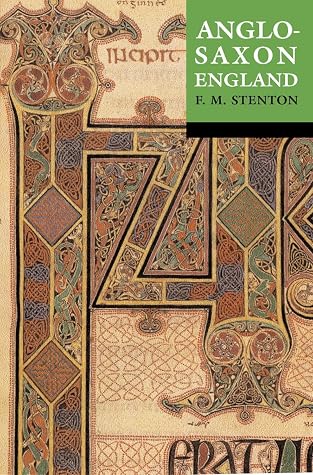
Anglo-Saxon England
Death of Kings (The Saxon Stories, #6)
Beowulf: A Translation and Commentary, together with Sellic Spell
The Anglo-Saxons: A History of the Beginnings of England, 400–1066
The Anglo-Saxons
The Pagan Lord (The Saxon Stories, #7)

I’ve always like Medieval literature. As a young girl I read mythologies and Norse legends, that sort of thing. I loved Sir Gawain and the Green Knight. While I was studying at Middle Tennessee State University for doctoral program I came in contact with more ancient literature. I examined older literature more seriously which intrigued and fascinated me very much; I was drawn to it. For the book I used all my own translations of Beowulf from my doctorate. Culture is contained in language, if yo ...more
Deborah A. Higgens

If nature abhors a vacuum, historiography loves a void because it can be filled with any number of plausible accounts; Howe, Nicholas, Anglo-Saxon England and the postcolonial void
Deanne Williams, Postcolonial Approaches to the European Middle Ages: Translating Cultures

More quotes...
MIDGARD Welcome to Scandinavia, home of elves, trolls, giants, and dwarves.
1 member, last active 6 years ago
Beowulf This page was created in hopes to bring like-minded people together and share their passion for …more
2 members, last active 9 years ago
This group is for students in Ms. T's 12th grade literature class to discuss current works of li…more
1 member, last active 10 years ago
Odinism and Odinist Books, Websites, and Videos This is a place for us to enjoy sharing interesting books on our native European history, cultur…more
17 members, last active 10 years ago