Phenomenology

Phenomenology (from Greek phainómenon "that which appears" and lógos "study") is the philosophical study of the structures of experience and consciousness. ...more

Phenomenology of Perception
Being and Time
Cartesian Meditations: An Introduction to Phenomenology
Ideas
The Crisis of European Sciences and Transcendental Phenomenology
Introduction to Phenomenology
The Visible and the Invisible (Studies in Phenomenology and Existential Philosophy)
Being and Nothingness
Introduction to Phenomenology
The World of Perception
The Idea of Phenomenology (Husserliana: Edmund Husserl – Collected Works, 8)
The Poetics of Space
Phenomenology of Spirit
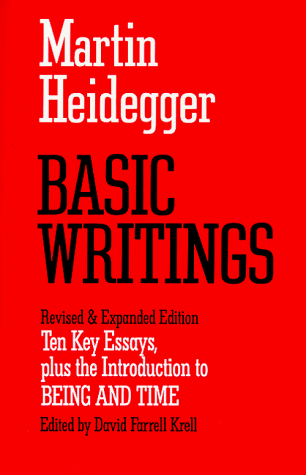
Basic Writings
The Basic Problems of Phenomenology (Studies in Phenomenology & Existential Philosophy)
The Dialogic Imagination by Mikhail BakhtinPedagogy of the Oppressed by Paulo FreireRabelais and His World by Mikhail BakhtinStructuralist Poetics by Jonathan D. CullerThe State and Revolution by Vladimir Lenin
theLitCritGuy
100 books — 14 voters
Mind in Life by Evan ThompsonDrop by Helen McKibbenThe Embodied Mind by Francisco J. VarelaEncounters with Living Language by Christina  DonnellWhat Computers Still Can't Do by Hubert L. Dreyfus
Embodied Cognition
107 books — 48 voters

Sein Und Zeit by Martin HeideggerContributions to Philosophy (From Enowning) by Martin HeideggerThe Fundamental Concepts of Metaphysics by Martin HeideggerPoetry, Language, Thought by Martin HeideggerThe Question Concerning Technology and Other Essays by Martin Heidegger
Husserl and Heidegger
120 books — 33 voters
Merleau-Ponty and the Paradoxes of Expression by Donald A. LandesThe Visible and the Invisible by Maurice Merleau-PontyPhenomenology of Perception by Maurice Merleau-PontyMerleau-Ponty’s Philosophy of Nature by Ted ToadvineMerleau-Ponty's Ontology by M.C. Dillon
Merleau-Ponty's Philosophy
186 books — 4 voters

James Baldwin
Take no one’s word for anything, including mine - but trust your experience.
James Baldwin, The Fire Next Time

Donald Davidson
There are three basic problems: how a mind can know the world of nature, how it is possible for one mind to know another, and how it is possible to know the contents of our own minds without resort to observation or evidence. It is a mistake, I shall urge, to suppose that these questions can be collapsed into two, or taken into isolation.
Donald Davidson

More quotes...
Hermeneutics A group mainly for the discussion about books and ideas on the topic of hermeneutics. Hermeneu…more
9 members, last active 10 years ago
Underground Knowledge — A discussion group This global discussion group has been designed to encourage debates about important and underrep…more
26,209 members, last active 8 hours ago
Ethnomethodology & Conversation Analysis A group to share and discuss Ethnomethodology and Conversation Analysis books. Harold Garfinkel,…more
3 members, last active 8 years ago
Trying this until I write my own book club app.
3 members, last active 5 years ago