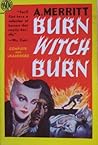
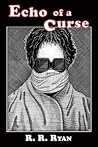
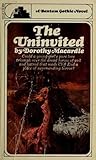
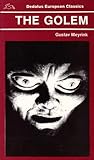
A “weird tale,” as defined by H.P. Lovecraft in his nonfiction writings and given early sanctuary within the pages of magazines like Weird Tales (est. 1923) is a story that has a supernatural element but does not fall into the category of traditional ghost story or Gothic tale, both popular in the 1800s. As Lovecraft wrote in 1927, the weird tale “has something more than secret murder, bloody bones, or a sheeted form clanking chains.” Instead, it represents the pursuit of some indefinable and perhaps maddeningly unreachable understanding of the world beyond the mundane — a ‘certain atmosphere A “weird tale,” as defined by H.P. Lovecraft in his nonfiction writings and given early sanctuary within the pages of magazines like Weird Tales (est. 1923) is a story that has a supernatural element but does not fall into the category of traditional ghost story or Gothic tale, both popular in the 1800s. As Lovecraft wrote in 1927, the weird tale “has something more than secret murder, bloody bones, or a sheeted form clanking chains.” Instead, it represents the pursuit of some indefinable and perhaps maddeningly unreachable understanding of the world beyond the mundane — a ‘certain atmosphere of breathless and unexplainable dread” or “malign and particular suspension or defeat of…fixed laws of Nature” — through fiction that comes from the more unsettling, shadowy side of the fantastical tradition.
Weird fiction - since its rise to prominence in the 1890s - has long been the generic depository for literature that seamlessly fits the definitions of several genres of speculative fiction. If it wasn't exactly horror or fantasy, quite possibly it could be termed weird. In fact, a basic definition of weird fiction could truthfully be a story that combines elements of fantasy and horror. A broader definition would be a story that includes and merges any number of plot devices, elements, sensibilities, and tropes of horror, science fiction, fantasy, the ghost story, supernatural fiction, mythology, mystery, or Gothic fiction. Literature that includes standards from more than one of these traditions might be considered weird.
Michael Kelly, editor of Weird Horror magazine, agrees that to properly define and categorize the term "weird fiction" could be a difficult task. He writes: ”[…] it can often be unclassifiable and hard to precisely define. […] In my view weird fiction is speculative, and often (but not always) works to explore and subvert the laws of nature, or the natural order. I like to think of it as an unceasing distortion and buckling of ambient space and time; where plot, theme, atmosphere and voice coalesce. Hence, the lens from which you view the world is askew and occluded. A feeling. A mood. A sense of dislocation. Weird fiction is a large umbrella, encompassing many modes of fiction. Before genre rules were established, weird fiction could be said to consist of the science fictional, the ghostly supernatural, the mythical, the cosmic, and the fantastic. An extensive mode of literature. In that regard it shares many properties with its Horror brethren. It’s why weird fiction is, I’d say, most commonly associated with horror fiction. [...] Weird fiction, perhaps more than any other mode, is fluid, adaptable, and ever-changing. I certainly take an expansive view of it, not constrained to the American-based strand (terror and awe) or the European-based (strange tale).”
This view finds further resonance in noted writer Simon Strantzas’ statement: “Instead, these sorts of stories exist in a liminal world of rationalities where things are not quite right. Slightly askew, their axes tilted, they are stories where the everyday is corrupted just enough that the strange can leak through.” ...more
“
We are all of us lost in the vast and endless night that is ourselves. We wander, hopelessly and eternally abandoned, through our own secret chambers of hell. Just as shadows are devoured by the night so our souls cry out for their source.
”
―
Mark Samuels,
The White Hands and Other Weird Tales
“
In hindsight, we should have been more vigilant, more aware that these were the places of a town where spticemia and putrification creep in first, those lonely and familiar sections we slipped into and through every day without concern or care-not the seedy crumbling but flashy edges where decay was expected, and, from a certain element of our small society, even accepted and encouraged. These quiet streets of lonely backwater districts, these were the places we never gave a single thought aboutIn hindsight, we should have been more vigilant, more aware that these were the places of a town where spticemia and putrification creep in first, those lonely and familiar sections we slipped into and through every day without concern or care-not the seedy crumbling but flashy edges where decay was expected, and, from a certain element of our small society, even accepted and encouraged. These quiet streets of lonely backwater districts, these were the places we never gave a single thought about, because we thought they would be here forever, unchanging in the antiseptic amber of our fixed memories. These quiet streets of lonely backwater districts were always the first to go....more
”
―
Livia Llewellyn,
Furnace
Valancourt Books is an independent small press specializing in the rediscovery of rare, neglecte…more
[close]
Valancourt Books is an independent small press specializing in the rediscovery of rare, neglected, and out-of-print fiction.
Horror & Supernatural, Weird Fiction, Literary Classics, Gothic & Victorian, LGBT Interest
Website | Facebook | Twitter
We publish works by:
Michael McDowell, Christopher Priest, Richard Matheson, Robert Aickman, Iain Sinclair, Stephen Gregory, Bernard Taylor, J.B. Priestley, and many others.
This group is for people who enjoy both literature and what I describe as "literary-genre fictio…more
[close]
This group is for people who enjoy both literature and what I describe as "literary-genre fiction", a very loose category of books that could include anything from H.P. Lovecraft and J.R.R. Tolkien to Ursula K. LeGuin and Naomi Novik. Also for anyone who enjoys reading the books presented here.
Horror Enthusiast Book Club for horror fans in the Twin Cities, Minnesota, USA. We read frighten…more
[close]
Horror Enthusiast Book Club for horror fans in the Twin Cities, Minnesota, USA. We read frightening & unsettling books for discussion! This complements our in-person adult meetings that take place in the Twin Cities. Connect with us on Facebook & on the BookClubs app!








 Valancourt Books is an independent small press specializing in the rediscovery of rare, neglecte…more
 Horror Enthusiast Book Club for horror fans in the Twin Cities, Minnesota, USA. We read frighten…more