
Find & Share Quotes with Friends
Acculturation Quotes
Quotes tagged as "acculturation"
Showing 1-26 of 26

“Here was a king who saw his subjects as peers and allies around whom he had growing up rather than semi-alien entities to be suspected and persecuted.”
― The Wars of the Roses: The Fall of the Plantagenets and the Rise of the Tudors
― The Wars of the Roses: The Fall of the Plantagenets and the Rise of the Tudors

“Tradition is not only bending down, or process of benign transmission. It is also a conflict between past genius and present aspiration in which the price is literary survival or canonical inclusion.”
― The Western Canon: The Books and School of the Ages
― The Western Canon: The Books and School of the Ages

“He opposed the hardness acquired during the last twenty years of his life. This state of mind fatigued him. He perceived with dismay that the sort of frightful calm which the injustice of his misfortune had conferred upon him was giving way within them.”
― Les Misérables
― Les Misérables

“If you want to be relevant only in your household, then you only need to know the things that are important in your house, and if you want to be relevant in your neighborhood, you need to know what's important in your neighborhood. The same thing applies to your city, state, and country. And if you want to be relevant to the entire world, program that computer known as your brain with all kinds of information from everywhere in order to prepare yourself.”
― One Nation: What We Can All Do to Save America's Future
― One Nation: What We Can All Do to Save America's Future

“Lydia's English is a help, but there are many different languages in el norte. There are codes Lydia hasn't yet learned to decipher, subtle differences between words that mean almost, but not quite the same thing: migrant, immigrant, illegal alien. She learns that there are flags that people use here, and those flags may be a warning or a welcome. She is learning.”
― American Dirt
― American Dirt

“Terry Eagleson says his family's aim was to have the words "We Were No Trouble" engraved on their gravestones.”
― Leave Me Alone, I'm Reading: Finding and Losing Myself in Books
― Leave Me Alone, I'm Reading: Finding and Losing Myself in Books

“Cultures reflect the interactions of mixed populations.”
― The Fall of the Roman Empire: A New History of Rome and the Barbarians
― The Fall of the Roman Empire: A New History of Rome and the Barbarians
“Many students go through "imposter syndrome" as they try to assimilate into a professional culture.”
― Whistling Vivaldi: And Other Clues to How Stereotypes Affect Us
― Whistling Vivaldi: And Other Clues to How Stereotypes Affect Us
“In fact, second lieutenants were primary-school teachers. Sure, teachers with guns, but a platoon commander was, nonetheless, the guy who sorted out the working day for 30 men under his command, taught their lessons, helped them with their homework, sorted out their petty squabbles and put plasters on their knees when they fell over in the playground.”
― The Junior Officers' Reading Club: Killing Time And Fighting Wars
― The Junior Officers' Reading Club: Killing Time And Fighting Wars
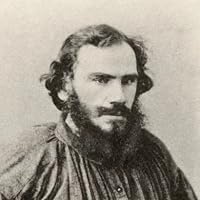
“C'est ridiule et bizarre a dire mais je suis persuade qu'il y a encore nombre de gens d'une certaine societe, en particulier des femmes, qui auraient vu disparaitre instantanement leur amour pour leurs amis, pour leur mari, pour leurs enfants, si seulement on leur avait interdi d'en parler en francais”
― Jeunesse
― Jeunesse

“Edith (the future Mrs. Teddy Roosevelt) developed a lifelong devotion to drama and poetry. "I have gone back to Shakespeare, as I always do," she would write seven decades later.”
― The Bully Pulpit: Theodore Roosevelt, William Howard Taft, and the Golden Age of Journalism
― The Bully Pulpit: Theodore Roosevelt, William Howard Taft, and the Golden Age of Journalism


“She would only make me take my seat if I didn't act calm and Swiss about it all.”
― Neither Here nor There: Travels in Europe
― Neither Here nor There: Travels in Europe
“A young and clueless second-lieutenant straight out of the factory, I was very much surplus to the requirements.”
― The Junior Officers' Reading Club: Killing Time And Fighting Wars
― The Junior Officers' Reading Club: Killing Time And Fighting Wars

“Pour les fils de paysans, d'ouvriers, d'employés ou de petits commerçants, l'acquisition de la culture scolaire est acculturation.”
― Les héritiers. Les étudiants et la culture
― Les héritiers. Les étudiants et la culture

“The farm work they hated was the only work they knew. Often, even the basic skills of plumbing or electricity or mechanical work were mysteries to them – as were the job discipline and the subtleties that children raised in the industrial world learn without thinking about them; starting work on time, working set hours, taking orders from strangers instead of their father, playing office politics.”
― The Path to Power
― The Path to Power

“What we have before us then, is three distinct purposes for a university: the commercial purpose (starting a career), Stephen Pinker’s cognitive purpose (acquiring information and learning how to think) and (William) Deresiewicz’s moral purpose (building an integrated self).”
―
―

“Their lot in life, their station, became a part of their personalities and helped to for my worldview.”
― Every Other Monday: Twenty Years of Life, Lunch, Faith, and Friendship
― Every Other Monday: Twenty Years of Life, Lunch, Faith, and Friendship
“An exchange student from Afghanistan "finds himself in the midst of America's circus of self-invention" as he experiences Halloween for the first time. His hosts bauble, "It's the greatest of holidays when you can become anything you want.”
― The Way of the World: A Story of Truth and Hope in an Age of Extremism
― The Way of the World: A Story of Truth and Hope in an Age of Extremism

“She has become part of the tribe by behaving like its members.”
― Alone Together: Why We Expect More from Technology and Less from Each Other
― Alone Together: Why We Expect More from Technology and Less from Each Other

“The author says his young son, adopted from South Korea, occasionally burps and says thank you but otherwise is doing all right.”
― Ball Four
― Ball Four

“I laughed at myself for getting so peeved. It did not matter that it had taken a week for the tailor to make the mattress. I had time and so did everyone else: time was the one resource everyone was rich in and generous with in Nepal. How maladjusted of me not to recognize this.”
― A Glimpse of Eternal Snows: A Journey of Love and Loss in the Himalayas
― A Glimpse of Eternal Snows: A Journey of Love and Loss in the Himalayas

“The Englishmen in the Middle East divided into two classes. Class one, subtle and insinuating, caught the characteristics of the people about him, their speech, their conventions of thought, almost their manner. He directed men secretly, guiding them as he would. In such frictionless habit of influence his own nature lay hid, unnoticed.
Class two, the John Bull of the books, became the more rampantly English the longer he was away from England. He invented an Old Country for himself, a home of all remembered virtues, so splendid in the distance that, on return, he often found reality a sad falling off and withdrew his muddle-headed self into fractious advocacy of the good old times. Abroad, through his armoured certainty, he was a rounded sample of our traits. He showed the complete Englishman. There was friction in his track, and his direction was less smooth than that of the intellectual type: yet his stout example cut wider swathe.
Both sorts took the same direction in example, one vociferously, the other by implication. Each assumed the Englishman a chosen being, inimitable, and the copying him blasphemous or impertinent. In this conceit they urged on people the next best thing. God had not given it them to be English; a duty remained to be good of their type. Consequently we admired native custom; studied the language; wrote books about its architecture, folklore, and dying industries. Then one day, we woke up to find this chthonic spirit turned political, and shook our heads with sorrow over its ungrateful nationalism - truly the fine flower of our innocent efforts.
The French, though they started with a similar doctrine of the Frenchman as the perfection of mankind (dogma amongst them, not secret instinct), went on, contrarily, to encourage their subjects to imitate them; since, even if they could never attain the true level, yet their virtue would be greater as they approached it. We looked upon imitation as a parody; they as a compliment.”
― The Seven Pillars of Wisdom
Class two, the John Bull of the books, became the more rampantly English the longer he was away from England. He invented an Old Country for himself, a home of all remembered virtues, so splendid in the distance that, on return, he often found reality a sad falling off and withdrew his muddle-headed self into fractious advocacy of the good old times. Abroad, through his armoured certainty, he was a rounded sample of our traits. He showed the complete Englishman. There was friction in his track, and his direction was less smooth than that of the intellectual type: yet his stout example cut wider swathe.
Both sorts took the same direction in example, one vociferously, the other by implication. Each assumed the Englishman a chosen being, inimitable, and the copying him blasphemous or impertinent. In this conceit they urged on people the next best thing. God had not given it them to be English; a duty remained to be good of their type. Consequently we admired native custom; studied the language; wrote books about its architecture, folklore, and dying industries. Then one day, we woke up to find this chthonic spirit turned political, and shook our heads with sorrow over its ungrateful nationalism - truly the fine flower of our innocent efforts.
The French, though they started with a similar doctrine of the Frenchman as the perfection of mankind (dogma amongst them, not secret instinct), went on, contrarily, to encourage their subjects to imitate them; since, even if they could never attain the true level, yet their virtue would be greater as they approached it. We looked upon imitation as a parody; they as a compliment.”
― The Seven Pillars of Wisdom

“It’s one thing to get by in a language. It’s another to absorb inferences babies learn while growing up. If you didn’t learn English that way, you can miss unspoken rules, especially when you’re caught in brawling American life, from which Xanthi was insulated when she lived with my suburban family outside Chicago. Incomplete acculturation can go very wrong.”
― My Xanthi
― My Xanthi

“You do not belong in a place until you have made a joke in the native tongue.”
― The Hole in the Flag: A Romanian Exile's Story of Return & Revolution
― The Hole in the Flag: A Romanian Exile's Story of Return & Revolution

“[She] was to consider her own experience in the field and examine the implications of being a woman, with the wisdom of hindsight and comparisons of her reception by different cultures and communities. She was to record her own problems in relation to such questions as conformity, reciprocity and culture shock, and discuss how her own attitudes and methods of adjustment had altered over the years. She was to take a long view. She was to consider her self a guru, a pundit.”
― Spiderweb
― Spiderweb
All Quotes
|
My Quotes
|
Add A Quote
Browse By Tag
- Love Quotes 102.5k
- Life Quotes 81k
- Inspirational Quotes 77.5k
- Humor Quotes 45.5k
- Philosophy Quotes 32k
- Inspirational Quotes Quotes 28.5k
- God Quotes 27k
- Wisdom Quotes 25k
- Romance Quotes 25k
- Truth Quotes 25k
- Poetry Quotes 24.5k
- Life Lessons Quotes 23k
- Quotes Quotes 21.5k
- Death Quotes 21k
- Happiness Quotes 19k
- Hope Quotes 19k
- Faith Quotes 18.5k
- Inspiration Quotes 18k
- Relationships Quotes 16k
- Spirituality Quotes 16k
- Motivational Quotes 16k
- Religion Quotes 15.5k
- Life Quotes Quotes 15.5k
- Writing Quotes 15k
- Love Quotes Quotes 15k
- Success Quotes 14.5k
- Motivation Quotes 14k
- Time Quotes 13k
- Science Quotes 12.5k
- Motivational Quotes Quotes 12k