
Find & Share Quotes with Friends
Antiquity Quotes
Quotes tagged as "antiquity"
Showing 1-30 of 57

“Astrology is assured of recognition from psychology, without further restrictions, because astrology represents the summation of all the psychological knowledge of antiquity.”
―
―

“I came to the Greeks early, and I found answers in them. Greece's great men let all their acts turn on the immortality of the soul. We don't really act as if we believed in the soul's immortality and that's why we are where we are today.”
―
―

“It is India that gave us the ingenious method of expressing all numbers by means of ten symbols, each symbol receiving a value of position as well as an absolute value; a profound and important idea which appears so simple to us now that we ignore its true merit. But its very simplicity and the great ease which it has lent to computations put our arithmetic in the first rank of useful inventions; and we shall appreciate the grandeur of the achievement the more when we remember that it escaped the genius of Archimedes and Apollonius, two of the greatest men produced by antiquity.”
―
―

“[O]ver the years I travelled to another universe. However alert we are, however much we think we know what will happen, antiquity remains an unknown, unanticipated galaxy. It is alien, and old people are a separate form of life. They have green skin, with two heads that sprout antennae. They can be pleasant, they can be annoying--in the supermarket, these old ladies won't get out of my way--but most important they are permanently other. When we turn eighty, we understand that we are extraterrestrial. If we forget for a moment that we are old, we are reminded when we try to stand up, or when we encounter someone young, who appears to observe green skin, extra heads, and protuberances.”
―
―

“Among the many subjects which interested me, I dwelt especially upon antiquity, for our own age has always repelled me, so that, had it not been for the love of those dear to me, I should have preferred to place myself in spirit in other ages, and consequently I delighted in history.”
―
―

“A very long time ago, some 2.5 million years B.C., the mother of human species as we know it, our ultimate ancestor, appeared in East Africa... She was four feet tall and probably black..”
― Antiquity: From the Birth of the Sumerian Civilization to the Fall of the Roman Empire
― Antiquity: From the Birth of the Sumerian Civilization to the Fall of the Roman Empire

“The “olden times” are only such in reference to us. The past is rendered strange, mysterious, visionary, awful from this great gap in time that parts us from it, and the long perspective of waning years. Things gone by and almost forgotten, look dim and dull, uncouth and quaint, from our ignorance of them, and the mutability of customs. But in their day—they were fresh, unimpaired, in full vigour, familiar and glossy.”
― The Plain Speaker: Opinions On Books, Men, And Things [by W. Hazlitt]
― The Plain Speaker: Opinions On Books, Men, And Things [by W. Hazlitt]

“The ship and all in it are imbued with the spirit of Eld. The crew glide to and fro like the ghosts of buried centuries; their eyes have an eager and uneasy meaning; and when their fingers fall athwart my path in the wild glare of the battle-lanterns, I feel as I have never felt before, although I have been all my life a dealer in antiquities, and have imbibed the shadows of fallen columns at Balbec, and Tadmor, and Persepolis, until my very soul has become a ruin.”
―
―
“The fundamental challenge of ancient man was to be wise. The fundamental challenge of medieval man was to be holy. The fundamental challenge of modern man was to be effective. The fundamental challenge of contemporary man is not to be ridiculous.”
―
―
“Robert Ingersoll's character was as nearly perfect as it is possible for the character of mortal man to be... none sweeter or nobler had ever blessed the world. The example of his life was of more value to posterity than all the sermons that were ever written on the doctrine of original sin... The genius for humor and wit and satire of a Voltaire, a wide amplitude of imagination, and a greatness of heart and brain that placed him upon an equal footing with the greatest thinkers of antiquity. He stands, at the close of his career, the first great reformer of the age.
{Thomas' words at the funeral of the great Robert Ingersoll}”
―
{Thomas' words at the funeral of the great Robert Ingersoll}”
―

“While there is no way to definitively distinguish between the ancient and the modern, “culture” is more ancient and closer to biology, while “civilization” is more modern and closer to technology.”
― Suicide Note
― Suicide Note

“And then they were at the end of the line, the silver tracks, abandoned for eighteen years, ran on into rolling country. In 1910 people took the trolley out to Chessman's Park with vast picnic hampers. The track, never ripped up, still lay rusting among the hills.”
― Dandelion Wine
― Dandelion Wine
“Charlie and Douglas were the last to stand near the opened tongue of the trolley, the folding step, breathing electricity, watching Mr. Tridden's gloves on the brass controls....
"Well...so long again, Mir. Tridden."
"Good-by, boys."
"See you around, Mr. Tridden."
"See you around."
There was a soft sigh of the air; the door collapsed gently shut, tucking up its corrugated tongue. The trolley sailed slowly down the late afternoon, brighter than the sun, all tangerine, all flashing gold and lemon, turned a far corner, wheeling, and vanished, gone away.”
― Dandelion Wine
"Well...so long again, Mir. Tridden."
"Good-by, boys."
"See you around, Mr. Tridden."
"See you around."
There was a soft sigh of the air; the door collapsed gently shut, tucking up its corrugated tongue. The trolley sailed slowly down the late afternoon, brighter than the sun, all tangerine, all flashing gold and lemon, turned a far corner, wheeling, and vanished, gone away.”
― Dandelion Wine

“The persistence of superannuated institutions in striving to perpetuate themselves is like the obstinacy of a rancid odour clinging to the hair; the pretension of spoiled fish that insists on being eaten, the tenacious folly of a child's garment trying to clothe a man, or the tenderness of a corpse returning to embrace the living.
"Ingrates!" exclaims the garment. "I shielded you in weakness. Why do you reject me now?" "I come from the depths of the sea," says the fish; "I was once a rose," cries the odour; "I loved you," murmurs the corpse; "I civilized you," says the convent.
To this there is but one reply; "In the past."
To dream of the indefinite prolongation of things dead and the government of mankind by embalming; to restore dilapidated dogmas, regild the shrines, replaster the cloisters, reconsecrate the reliquaries, revamp old superstitions, replenish fading fanaticism, put new handles in worn-out sprinkling brushes, reconstitute monasticism; to believe in the salvation of society by the multiplication of parasites; to foist the past upon the present, all this seems strange. There are, however, advocates for such theories as these. These theorists, men of mind too, in other things, have a very simple process; they apply to the past a coating of what they term divine right, respect for our forefathers, time-honored authority, sacred tradition, legitimacy; and they go about, shouting, "Here! take this, good people!" This logic was familiar to the ancients; their soothsayers practised it. Rubbing over a black heifer with chalk, they would exclaim, "She is white" Bos cretatus.
As for ourselves, we distribute our respect, here and there, and spare the past entirely, provided it will but consent to be dead. But, if it insists upon being alive, we attack it and endeavor to kill it.
Superstitions, bigotries, hypocrisies, prejudices, these phantoms, phantoms though they are, are tenacious of life; they have teeth and nails in their shadowy substance, and we must grapple with them, body to body, and make war upon them and that, too, without cessation; for it is one of the fatalities of humanity to be condemned to eternal struggle with phantoms. A shadow is hard to seize by the throat and dash upon the ground.”
― Les Misérables
"Ingrates!" exclaims the garment. "I shielded you in weakness. Why do you reject me now?" "I come from the depths of the sea," says the fish; "I was once a rose," cries the odour; "I loved you," murmurs the corpse; "I civilized you," says the convent.
To this there is but one reply; "In the past."
To dream of the indefinite prolongation of things dead and the government of mankind by embalming; to restore dilapidated dogmas, regild the shrines, replaster the cloisters, reconsecrate the reliquaries, revamp old superstitions, replenish fading fanaticism, put new handles in worn-out sprinkling brushes, reconstitute monasticism; to believe in the salvation of society by the multiplication of parasites; to foist the past upon the present, all this seems strange. There are, however, advocates for such theories as these. These theorists, men of mind too, in other things, have a very simple process; they apply to the past a coating of what they term divine right, respect for our forefathers, time-honored authority, sacred tradition, legitimacy; and they go about, shouting, "Here! take this, good people!" This logic was familiar to the ancients; their soothsayers practised it. Rubbing over a black heifer with chalk, they would exclaim, "She is white" Bos cretatus.
As for ourselves, we distribute our respect, here and there, and spare the past entirely, provided it will but consent to be dead. But, if it insists upon being alive, we attack it and endeavor to kill it.
Superstitions, bigotries, hypocrisies, prejudices, these phantoms, phantoms though they are, are tenacious of life; they have teeth and nails in their shadowy substance, and we must grapple with them, body to body, and make war upon them and that, too, without cessation; for it is one of the fatalities of humanity to be condemned to eternal struggle with phantoms. A shadow is hard to seize by the throat and dash upon the ground.”
― Les Misérables
“The allure of antiquity...
The echoes of bygone eras, where time seems to linger in the aged textures of ancients.
A visceral connection to history, a sense of mystery wrapped in the patina of time, evoking a profound appreciation for the stories embedded in each weathered relic.
I'm in love with the feel of this very feeling.
I belong here. Relics. Ruins.”
―
The echoes of bygone eras, where time seems to linger in the aged textures of ancients.
A visceral connection to history, a sense of mystery wrapped in the patina of time, evoking a profound appreciation for the stories embedded in each weathered relic.
I'm in love with the feel of this very feeling.
I belong here. Relics. Ruins.”
―

“There is a place at the centre of the World, between the zones of earth, sea, and sky, at the boundary of the three worlds. From here, whatever exists is seen, however far away, and every voice reaches listening ears. Rumour lives there, choosing a house for herself on a high mountain summit, adding innumerable entrances, a thousand openings, and no doors to bar the threshold. It is open night and day: and is all of sounding bronze. All rustles with noise, echoes voices, and repeats what is heard. There is no peace within: no silence anywhere. Yet there is no clamour, only the subdued murmur of voices, like the waves of the sea, if you hear them far off, or like the sound of distant thunder when Jupiter makes the dark clouds rumble.
Crowds fill the hallways: a fickle populace comes and goes, and, mingling truth randomly with fiction, a thousand rumours wander, and confused words circulate. Of these, some fill idle ears with chatter, others carry tales, and the author adds something new to what is heard. Here is Credulity: here is rash Error, empty Delight, and alarming Fear, sudden Sedition, and Murmurings of doubtful origin. Rumour herself sees everything that happens in the heavens, throughout the ocean, and on land, and inquires about everything on earth.”
― Metamorfosis VII - XV
Crowds fill the hallways: a fickle populace comes and goes, and, mingling truth randomly with fiction, a thousand rumours wander, and confused words circulate. Of these, some fill idle ears with chatter, others carry tales, and the author adds something new to what is heard. Here is Credulity: here is rash Error, empty Delight, and alarming Fear, sudden Sedition, and Murmurings of doubtful origin. Rumour herself sees everything that happens in the heavens, throughout the ocean, and on land, and inquires about everything on earth.”
― Metamorfosis VII - XV
“Read the books which they [the ancients] have written, read those which you prefer, they will speak to you and you will speak to them” - St Bernardino of Siena (d. 1444)”
―
―

“Would that we loved the ancients more and copied them less! It has been said that the Greeks were great because they never drew from the antique.”
― The Book of Tea
― The Book of Tea

“We cannot hope to live so long in our names, as some have done in their persons, one face of Janus holds no proportion unto the other. ’Tis too late to be ambitious. The great mutations of the world are acted, or time may be too short for our designes...We whose generations are ordained in this setting part of time, are providentially taken off from such imaginations.”
― Religio Medici / Urne-Buriall
― Religio Medici / Urne-Buriall

“Who on earth, alive in the midst of so much grief as I, could fail to find his death a rich reward?”
―
―

“Never did a book reveal such truths,
Why seek a name? It matters not;
The boundless found a shape and form
In sacrifice's sacred knot.
Oh see, what is possession's worth
If it knows not to offer its all?
Things pass away. Aid them in passing,
Lest life from a hidden crack should fall.
Forever, be the giver, not the taker.
The mule, the cow—all press their way
To where the king’s image, like a child,
Is sated, smiles, and softly lays.
His temple breathes unceasing calm,
He takes and takes, yet grants reprieve,
So gentle even, the princess's hand
Holds the papyrus bloom, but does not cleave.
Here, sacrifice’s paths are cut,
The Sunday rises, ungrasped by weeks.
Man and beast drag gains aside,
Unseen by gods, as profit speaks.
Though hard, commerce bends to will,
Earth cheapened, tamed by practiced skill,
But one who pays the ultimate price,
Surrenders all—they too are sacrificed.
(Translation by CoPilot AI)”
― Samtliche Werke
Why seek a name? It matters not;
The boundless found a shape and form
In sacrifice's sacred knot.
Oh see, what is possession's worth
If it knows not to offer its all?
Things pass away. Aid them in passing,
Lest life from a hidden crack should fall.
Forever, be the giver, not the taker.
The mule, the cow—all press their way
To where the king’s image, like a child,
Is sated, smiles, and softly lays.
His temple breathes unceasing calm,
He takes and takes, yet grants reprieve,
So gentle even, the princess's hand
Holds the papyrus bloom, but does not cleave.
Here, sacrifice’s paths are cut,
The Sunday rises, ungrasped by weeks.
Man and beast drag gains aside,
Unseen by gods, as profit speaks.
Though hard, commerce bends to will,
Earth cheapened, tamed by practiced skill,
But one who pays the ultimate price,
Surrenders all—they too are sacrificed.
(Translation by CoPilot AI)”
― Samtliche Werke

“I was particularly impressed by the varying degrees of weathering and erosion seen on the different moai, which could be telltale signs of major discrepancies in their ages. The levels of sedimentation around certain moai also impressed me. Some moai have been buried in up to an estimated six meters of sediment, or more, such that even though they are standing erect, only their chins and heads are above the current ground level. Such high levels of sedimentation could occur quickly, for instance if there were catastrophic landslides, mudflows, or possibly tsunamis washing over the island, but I could not find any such evidence (and landslides or tsunamis would tend to shift and knock over the tall statues). Rather, to my eye, the sedimentation around certain moai suggests a much more extreme antiquity than most conventional archaeologists and historians believe to be the case--or believe to be possible.”
― Forgotten Civilization: The Role of Solar Outbursts in Our Past and Future
― Forgotten Civilization: The Role of Solar Outbursts in Our Past and Future
“BUNAHAN
When the last speaker of Boro
falls silent,
who will notice
the first-grown feather
of a bird’s wing? (gansuthi)
or feel how far pretending
to love (onsay) is
from loving
for the last time (onsra)?
Quiet and uneasy, in an
unfamiliar place (asusu)
no one sees her, or listens;
there is less of her
than there was.
The last speaker feels
Boro’s world fall apart,
knowledge unravels:
healing plants go
unseen; the bodies of animals
are unreadable.
With a last thought, onguboy
(to love it all, from the heart),
she leaves fragments
of the world she held in place.
We touch their husks,
about to speak and
about not to speak
(bunhan, bunahan);
awash in loss,
incomplete.
Note:
The italicized words are from Boro, an endangered language still spoken in parts of northern India. For more on this story, see Mark Abley’s Spoken Here: Travels Among Threatened Languages.”
―
When the last speaker of Boro
falls silent,
who will notice
the first-grown feather
of a bird’s wing? (gansuthi)
or feel how far pretending
to love (onsay) is
from loving
for the last time (onsra)?
Quiet and uneasy, in an
unfamiliar place (asusu)
no one sees her, or listens;
there is less of her
than there was.
The last speaker feels
Boro’s world fall apart,
knowledge unravels:
healing plants go
unseen; the bodies of animals
are unreadable.
With a last thought, onguboy
(to love it all, from the heart),
she leaves fragments
of the world she held in place.
We touch their husks,
about to speak and
about not to speak
(bunhan, bunahan);
awash in loss,
incomplete.
Note:
The italicized words are from Boro, an endangered language still spoken in parts of northern India. For more on this story, see Mark Abley’s Spoken Here: Travels Among Threatened Languages.”
―

“I am armed with a tenacious conviction that somehow the presence of the people who live in a home reside in the atmosphere of the walls forever.”
― Mozart's Starling
― Mozart's Starling

“Turks, like Russians and Israelites, seem to want you to see the things that show you how they have got on since Atatürk, or since the Bolshevik revolution, or since they took over Palestine. But how people have got on is actually only interesting to the country which has got on. What foreign visitors care about are the things that were there before they began to get on. I dare say foreigners in England really only want to see Stonehenge, and Roman walls and villas, and the field under which Silchester lies buried, and Norman castles and churches, and the ruins of medieval abbeys, and don't care a bit about Sheffield and Birmingham, or our model farms and new towns and universities and schools and dams and aerodromes and things.”
―
―
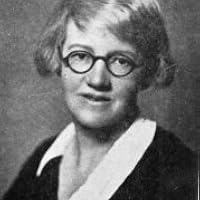
“Even at its most spontaneous, [the Carmina] has not the sudden miracle of the earliest vernacular ... It is the contrast between the thrushes in February and the violin.”
― The Wandering Scholars of the Middle Ages
― The Wandering Scholars of the Middle Ages

“Above all, we have to remember, Marx is greedy. He wants more of everything. He is suspicious of quality unless it is simply the mark of greater quantity: even if quality could exist alone, it would always be less admirable than a quantity in continual prospect of increase.”
― The Ruin of Kasch
― The Ruin of Kasch
“I'm drawn to the etching of
ancient wisdom in worn pages.
I crave the depths of connection –
soulful poetry written with genuine feelings and raw vulnerability.”
―
ancient wisdom in worn pages.
I crave the depths of connection –
soulful poetry written with genuine feelings and raw vulnerability.”
―

“I am not one who was born in the possession of knowledge; I am one who is fond of antiquity, and earnest in seeking it there”
―
―
All Quotes
|
My Quotes
|
Add A Quote
Browse By Tag
- Love Quotes 102.5k
- Life Quotes 81k
- Inspirational Quotes 77.5k
- Humor Quotes 45.5k
- Philosophy Quotes 32k
- Inspirational Quotes Quotes 28.5k
- God Quotes 27k
- Wisdom Quotes 25k
- Romance Quotes 25k
- Truth Quotes 25k
- Poetry Quotes 24.5k
- Life Lessons Quotes 23k
- Quotes Quotes 21.5k
- Death Quotes 21k
- Happiness Quotes 19k
- Hope Quotes 19k
- Faith Quotes 18.5k
- Inspiration Quotes 18k
- Relationships Quotes 16k
- Spirituality Quotes 16k
- Motivational Quotes 16k
- Religion Quotes 15.5k
- Life Quotes Quotes 15.5k
- Writing Quotes 15k
- Love Quotes Quotes 15k
- Success Quotes 14.5k
- Motivation Quotes 14k
- Time Quotes 13k
- Science Quotes 12.5k
- Motivational Quotes Quotes 12k