
Find & Share Quotes with Friends
Finance Capital Quotes
Quotes tagged as "finance-capital"
Showing 1-6 of 6
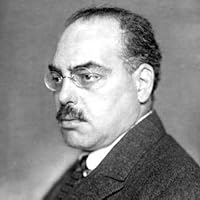
“The national idea . . . [that] regarded the frontiers of the state as being determined by the natural boundaries of the nation, is now transformed into the notion of elevating one’s own nation above all others. The ideal now is to secure for one’s own nation the domination of the world, an aspiration which is as unbounded as the capitalist lust for profit from which it springs. . . . These efforts become an economic necessity, because every failure to advance reduces the profit and the competitiveness of finance capital, and may finally turn the smaller economic territory into a mere tributary of a larger one. . . . Since the subjugation of foreign nations takes place by force—that is, in a perfectly natural way—it appears to the ruling nation that this domination is due to some special natural qualities, in short to its racial characteristics. Thus there emerges a racist ideology, cloaked in the garb of natural science, a justification for finance capital’s lust for power, which is thus shown to have the specificity and necessity of a natural phenomenon.”
― Finance Capital: A Study in the Latest Phase of Capitalist Development
― Finance Capital: A Study in the Latest Phase of Capitalist Development
“The socializing function of finance capital facilitates enormously the
task of overcoming capitalism. Once finance capital has brought the most
importance branches of production under its control, it is enough for
society, through its conscious executive organ - the state conquered by
the working class - to seize finance capital in order to gain immediate
control of these branches of production. Since all other branches of
production depend upon these, control of large-scale industry already
provides the most effective form of social control even without any
further socialization. A society which has control over coal mining, the
iron and steel industry, the machine tool, electricity, and chemical
industries, and runs the transport system, is able, by virtue of its
control of these most important spheres of production, to determine the
distribution of raw materials to other industries and the transport of
their products. Even today, taking possession of six large Berlin banks
would mean taking possession of the most important spheres of
large-scale industry, and would greatly facilitate the initial phases of
socialist policy during the transition period, when capitalist
accounting might still prove useful. There is no need at all to extend
the process of expropriation to the great bulk of peasant farms and
small businesses, because as a result of the seizure of large-scale
industry, upon which they have long been dependent, they would be
indirectly socialized just as industry is directly socialized. It is
therefore possible to allow the process of expropriation to mature
slowly, precisely in those spheres of decentralized production where it
would be a long drawn out and politically dangerous process. In other
words, since finance capital has already achieved expropriation to the
extent required by socialism, it is possible to dispense with a sudden
act of expropriation by the state, and to substitute a gradual process
of socialization through the economic benefits which society will confer.
[pp. 367-368]”
― Finance Capital: A study in the latest phase of capitalist development
task of overcoming capitalism. Once finance capital has brought the most
importance branches of production under its control, it is enough for
society, through its conscious executive organ - the state conquered by
the working class - to seize finance capital in order to gain immediate
control of these branches of production. Since all other branches of
production depend upon these, control of large-scale industry already
provides the most effective form of social control even without any
further socialization. A society which has control over coal mining, the
iron and steel industry, the machine tool, electricity, and chemical
industries, and runs the transport system, is able, by virtue of its
control of these most important spheres of production, to determine the
distribution of raw materials to other industries and the transport of
their products. Even today, taking possession of six large Berlin banks
would mean taking possession of the most important spheres of
large-scale industry, and would greatly facilitate the initial phases of
socialist policy during the transition period, when capitalist
accounting might still prove useful. There is no need at all to extend
the process of expropriation to the great bulk of peasant farms and
small businesses, because as a result of the seizure of large-scale
industry, upon which they have long been dependent, they would be
indirectly socialized just as industry is directly socialized. It is
therefore possible to allow the process of expropriation to mature
slowly, precisely in those spheres of decentralized production where it
would be a long drawn out and politically dangerous process. In other
words, since finance capital has already achieved expropriation to the
extent required by socialism, it is possible to dispense with a sudden
act of expropriation by the state, and to substitute a gradual process
of socialization through the economic benefits which society will confer.
[pp. 367-368]”
― Finance Capital: A study in the latest phase of capitalist development
“Finance capital, in its maturity, is the highest stage of the
concentration of economic and political power in the hands of the
capitalist oligarchy. It is the climax of the dictatorship of the
magnates of capital. At the same time it makes the dictatorship of the
capitalist lords of one country increasingly incompatible with the
capitalist interests of other countries, and the internal domination of
capital increasingly irreconcilable with the interests of the mass of
the people, exploited by finance capital but also summoned into battle
against it. In the violent clash of these hostile interests the
dictatorship of the magnates of capital will finally be transformed into
the dictatorship of the proletariat.
[p. 370]”
― Finance Capital: A study in the latest phase of capitalist development
concentration of economic and political power in the hands of the
capitalist oligarchy. It is the climax of the dictatorship of the
magnates of capital. At the same time it makes the dictatorship of the
capitalist lords of one country increasingly incompatible with the
capitalist interests of other countries, and the internal domination of
capital increasingly irreconcilable with the interests of the mass of
the people, exploited by finance capital but also summoned into battle
against it. In the violent clash of these hostile interests the
dictatorship of the magnates of capital will finally be transformed into
the dictatorship of the proletariat.
[p. 370]”
― Finance Capital: A study in the latest phase of capitalist development

“... Why do bank runs commence? The answer is psychology period some customers or counterparties come to believe a bank will not repay them so they pull their money out or close transactions as quickly as possible. They are not reassured by ... Press releases or positive comments by management. Word spreads, the withdrawals accelerate, and within days, sometimes hours, the bank closes its doors. From there it's an open issue whether the lost confidence spreads to other banks, in a process called contagion. No amount of capital or comment can stop a bank panic; it has a life of its own.”
― MoneyGPT: AI and the Threat to the Global Economy
― MoneyGPT: AI and the Threat to the Global Economy
“... why do bank runs commence? The answer is psychology. Some customers or counterparties come to believe a bank will not repay them so they pull their money out or close transactions as quickly as possible. They are not reassured by ... press releases or positive comments by management. Word spreads, the withdrawals accelerate, and within days, sometimes hours, the bank closes its doors. From there it's an open issue whether the lost confidence spreads to other banks, in a process called contagion. No amount of capital or comment can stop a bank panic; it has a life of its own.”
― MoneyGPT: AI and the Threat to the Global Economy
― MoneyGPT: AI and the Threat to the Global Economy
All Quotes
|
My Quotes
|
Add A Quote
Browse By Tag
- Love Quotes 102.5k
- Life Quotes 81k
- Inspirational Quotes 77.5k
- Humor Quotes 45.5k
- Philosophy Quotes 32k
- Inspirational Quotes Quotes 28.5k
- God Quotes 27k
- Wisdom Quotes 25k
- Romance Quotes 25k
- Truth Quotes 25k
- Poetry Quotes 24.5k
- Life Lessons Quotes 23k
- Quotes Quotes 21.5k
- Death Quotes 21k
- Happiness Quotes 19k
- Hope Quotes 19k
- Faith Quotes 18.5k
- Inspiration Quotes 18k
- Relationships Quotes 16k
- Spirituality Quotes 16k
- Motivational Quotes 16k
- Religion Quotes 15.5k
- Life Quotes Quotes 15.5k
- Writing Quotes 15k
- Love Quotes Quotes 15k
- Success Quotes 14.5k
- Motivation Quotes 14k
- Time Quotes 13k
- Science Quotes 12.5k
- Motivational Quotes Quotes 12k