
Find & Share Quotes with Friends
Group Selection Quotes
Quotes tagged as "group-selection"
Showing 1-7 of 7

“Perhaps we should rejoice that people’s emotions aren’t designed for the good of the group. Often the best way to benefit one’s group is to displace, subjugate, or annihilate the group next door. Ants in a colony are closely related, and each is a paragon of unselfishness. That’s why ants are one of the few kinds of animal that wage war and take slaves. When human leaders have manipulated or coerced people into submerging their interests into the group’s, the outcomes are some of the history’s worst atrocities.”
― How the Mind Works
― How the Mind Works

“Page 43:
Natural selection is a multilevel process that operates among groups in addition to among individuals within groups. Any unit becomes endowed with the properties inherent in the word organism to the degree that it is a unit of selection. The history of life on earth has been marked by many transitions from groups of organisms to groups as organisms. Organismic groups achieve their unity with mechanisms that suppress selection within without themselves being overtly altruistic. Human evolution falls within the paradigm of multilevel selection and the major transitions of life. Moral systems provide many of the mechanisms that enable human groups to function as adaptive units.”
― Darwin's Cathedral: Evolution, Religion, and the Nature of Society
Natural selection is a multilevel process that operates among groups in addition to among individuals within groups. Any unit becomes endowed with the properties inherent in the word organism to the degree that it is a unit of selection. The history of life on earth has been marked by many transitions from groups of organisms to groups as organisms. Organismic groups achieve their unity with mechanisms that suppress selection within without themselves being overtly altruistic. Human evolution falls within the paradigm of multilevel selection and the major transitions of life. Moral systems provide many of the mechanisms that enable human groups to function as adaptive units.”
― Darwin's Cathedral: Evolution, Religion, and the Nature of Society
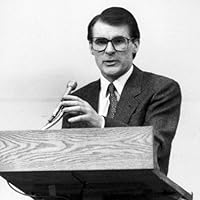
“EVOLUTION, ALTRUISM AND GENETIC SIMILARITY THEORY by J. PHILIPPE RUSHTON
The reason people give preferential treatment to genetically similar others is both simple and profound: they thereby replicate their genes more effectively. Altruism is a very interesting phenomenon, even recognized by Darwin as an anomaly for his theory. How could it evolve through his hypothesized "survival of the fittest" individual when such behavior would appear to diminish personal fitness? If the most altruistic members of a group sacrificed themselves for others, they ran the risk of leaving fewer offspring to carry forward their genes for altruistic behavior? Hence altruism would be selected out, and indeed, selfishness would be selected in. Altruistic behaviors, however, occur in many animal species, some to the point of self-sacrifice (Wilson, 1975). For example, honey bees die when they sting in the process of protecting their nests.
Darwin proposed the competition of "tribe with tribe" to explain altruism (1871, p. 179). Thus, a tribe of people willing to cooperate and, if necessary, sacrifice themselves for the common good would be victorious over tribes made up of those less willing or able. Subsequently Herbert Spencer (1892/93) extended this, suggesting that the operation of a 'code of amity' towards the members of their own group, and a 'code of enmity' toward those of out-groups prevailed in successful groups. In non-elaborated forms, some version of "group-selection" was held by most evolutionists for several decades.
A degree of polarization followed [Wynne-Edwards' advocacy of group selection] As D. S. Wilson put it, "For the next decade, group selection rivaled Lamarkianism as the most thoroughly repudiated idea in evolutionary theory" Essentially, there did not seem to exist a mechanism by which altruistic individuals would leave more genes than individuals who cheated. The solution to this paradox is one of the triumphs that led to the new synthesis of sociobiology. Following Hamilton (1964) the answer proposed was that individuals behave so as to maximize their "inclusive fitness" rather than only their individual fitness by increasing the production of successful offspring by both themselves and their relatives, a process that has become known as kin selection. This formulation provided a conceptual breakthrough, redirecting the unit of analysis from the individual organism to his or her genes, for it is these which survive and are passed on. Some of the same genes will be found in siblings, nephews and nieces, grandchildren, cousins, etc., as well as offspring. If an animal sacrifices its life for its siblings' offspring, it ensures the survival of shared genes for, by common descent, it shares 50% of its genes with each sibling and 25% with each siblings' offspring.
…the makeup of a gene pool causally affects the probability of any particular ideology being adopted, which subsequently affects relative gene frequencies. Religious, political, and other ideological battles may become as heated as they do because they have implications for genetic fitness; genotypes will thrive more in some cultures than others. … Obviously causation is complex, and it is not intended to reduce relationships between ethnic groups to a single cause. Fellow ethnics will not always stick together, nor is conflict inevitable between groups any more than it is between genetically distinct individuals. Behavioral outcomes are always mediated by multiple causes.”
―
The reason people give preferential treatment to genetically similar others is both simple and profound: they thereby replicate their genes more effectively. Altruism is a very interesting phenomenon, even recognized by Darwin as an anomaly for his theory. How could it evolve through his hypothesized "survival of the fittest" individual when such behavior would appear to diminish personal fitness? If the most altruistic members of a group sacrificed themselves for others, they ran the risk of leaving fewer offspring to carry forward their genes for altruistic behavior? Hence altruism would be selected out, and indeed, selfishness would be selected in. Altruistic behaviors, however, occur in many animal species, some to the point of self-sacrifice (Wilson, 1975). For example, honey bees die when they sting in the process of protecting their nests.
Darwin proposed the competition of "tribe with tribe" to explain altruism (1871, p. 179). Thus, a tribe of people willing to cooperate and, if necessary, sacrifice themselves for the common good would be victorious over tribes made up of those less willing or able. Subsequently Herbert Spencer (1892/93) extended this, suggesting that the operation of a 'code of amity' towards the members of their own group, and a 'code of enmity' toward those of out-groups prevailed in successful groups. In non-elaborated forms, some version of "group-selection" was held by most evolutionists for several decades.
A degree of polarization followed [Wynne-Edwards' advocacy of group selection] As D. S. Wilson put it, "For the next decade, group selection rivaled Lamarkianism as the most thoroughly repudiated idea in evolutionary theory" Essentially, there did not seem to exist a mechanism by which altruistic individuals would leave more genes than individuals who cheated. The solution to this paradox is one of the triumphs that led to the new synthesis of sociobiology. Following Hamilton (1964) the answer proposed was that individuals behave so as to maximize their "inclusive fitness" rather than only their individual fitness by increasing the production of successful offspring by both themselves and their relatives, a process that has become known as kin selection. This formulation provided a conceptual breakthrough, redirecting the unit of analysis from the individual organism to his or her genes, for it is these which survive and are passed on. Some of the same genes will be found in siblings, nephews and nieces, grandchildren, cousins, etc., as well as offspring. If an animal sacrifices its life for its siblings' offspring, it ensures the survival of shared genes for, by common descent, it shares 50% of its genes with each sibling and 25% with each siblings' offspring.
…the makeup of a gene pool causally affects the probability of any particular ideology being adopted, which subsequently affects relative gene frequencies. Religious, political, and other ideological battles may become as heated as they do because they have implications for genetic fitness; genotypes will thrive more in some cultures than others. … Obviously causation is complex, and it is not intended to reduce relationships between ethnic groups to a single cause. Fellow ethnics will not always stick together, nor is conflict inevitable between groups any more than it is between genetically distinct individuals. Behavioral outcomes are always mediated by multiple causes.”
―
“LOVE THY NEIGHBOR The Evolution of In-Group Morality By John Hartung
January 1995 Skeptic 3(4)
The world's major religions espouse a moral code that includes injunctions against
murder, theft, and lying — or so conventional 19th- and 20th-century Western wisdom would have it. Evidence put forth here argues that this convention is a conceit which does not apply to the West's own religious foundations. In particular, rules against murder, theft, and lying codified by the Ten Commandments were intended to apply only within a cooperating group for the purpose of enabling that group to compete successfully against other groups. In addition, this in-group morality has functioned, both historically and by express intent, to create adverse circumstances between groups by actively promoting murder, theft, and lying as tools of competition. Contemporary efforts to present Judeo-Christian in-group morality as universal morality defy the plain meaning of the texts upon which Judaism and Christianity are based. Accordingly, that effort is ultimately hopeless.”
―
January 1995 Skeptic 3(4)
The world's major religions espouse a moral code that includes injunctions against
murder, theft, and lying — or so conventional 19th- and 20th-century Western wisdom would have it. Evidence put forth here argues that this convention is a conceit which does not apply to the West's own religious foundations. In particular, rules against murder, theft, and lying codified by the Ten Commandments were intended to apply only within a cooperating group for the purpose of enabling that group to compete successfully against other groups. In addition, this in-group morality has functioned, both historically and by express intent, to create adverse circumstances between groups by actively promoting murder, theft, and lying as tools of competition. Contemporary efforts to present Judeo-Christian in-group morality as universal morality defy the plain meaning of the texts upon which Judaism and Christianity are based. Accordingly, that effort is ultimately hopeless.”
―
“Max Hartshorn, Artem Kaznatcheev and Thomas Shultz (2013)
The Evolutionary Dominance of Ethnocentric Cooperation
Journal of Artificial Societies and Social Simulation 16 (3) 7
Abstract
Recent agent-based computer simulations suggest that ethnocentrism, often thought to rely on complex social cognition and learning, may have arisen through biological evolution. From a random start, ethnocentric strategies dominate other possible strategies (selfish, traitorous, and humanitarian) based on cooperation or non-cooperation with in-group and out-group agents. Here we show that ethnocentrism eventually overcomes its closest competitor, humanitarianism, by exploiting humanitarian cooperation across group boundaries as world population saturates. Selfish and traitorous strategies are self-limiting because such agents do not cooperate with agents sharing the same genes. Traitorous strategies fare even worse than selfish ones because traitors are exploited by ethnocentrics across group boundaries in the same manner as humanitarians are, via unreciprocated cooperation.”
―
The Evolutionary Dominance of Ethnocentric Cooperation
Journal of Artificial Societies and Social Simulation 16 (3) 7
Abstract
Recent agent-based computer simulations suggest that ethnocentrism, often thought to rely on complex social cognition and learning, may have arisen through biological evolution. From a random start, ethnocentric strategies dominate other possible strategies (selfish, traitorous, and humanitarian) based on cooperation or non-cooperation with in-group and out-group agents. Here we show that ethnocentrism eventually overcomes its closest competitor, humanitarianism, by exploiting humanitarian cooperation across group boundaries as world population saturates. Selfish and traitorous strategies are self-limiting because such agents do not cooperate with agents sharing the same genes. Traitorous strategies fare even worse than selfish ones because traitors are exploited by ethnocentrics across group boundaries in the same manner as humanitarians are, via unreciprocated cooperation.”
―
“Conway Zirkle and the Persistence of "Marxian Biology" in the Western Social Sciences" by J.W. Jamieson
There can be no doubt that the influence of those who oppose the application of the findings of biological and genetic research to the understanding of human social behavior was greatly enhanced by the temporary fashion for "Social Darwinism" at the turn of the century, with its erroneous emphasis upon individual competition in evolution to the exclusion of group competition. Social Darwinists did not see that cooperation within the group enhanced the competitiveness of the group in its struggle for survival against other groups - and that altruism and loyalty were powerful forces for the survival of the group, race or lineage. The fact that altruism has survival value, when practiced in favor of members of the altruist's own gene pool, was not apparent to the Social Darwinists, who did not fully realize that from the evolutionary point of view it is the gene pool, the race or lineage which is important, not the individual per se. This defect in primitive Social Darwinists thinking made it easier for Marxian social philosophers to downplay the significance of biological forces to the human social system and to promote instead their own distorted concepts of direct genetic subordination to environmental forces.”
―
There can be no doubt that the influence of those who oppose the application of the findings of biological and genetic research to the understanding of human social behavior was greatly enhanced by the temporary fashion for "Social Darwinism" at the turn of the century, with its erroneous emphasis upon individual competition in evolution to the exclusion of group competition. Social Darwinists did not see that cooperation within the group enhanced the competitiveness of the group in its struggle for survival against other groups - and that altruism and loyalty were powerful forces for the survival of the group, race or lineage. The fact that altruism has survival value, when practiced in favor of members of the altruist's own gene pool, was not apparent to the Social Darwinists, who did not fully realize that from the evolutionary point of view it is the gene pool, the race or lineage which is important, not the individual per se. This defect in primitive Social Darwinists thinking made it easier for Marxian social philosophers to downplay the significance of biological forces to the human social system and to promote instead their own distorted concepts of direct genetic subordination to environmental forces.”
―

“We can now apply our lessons from our discussion of multilevel selection: if there are two levels of selection operating on a moral rule, then the strength of the different selective pressures will be critical in determining which of the two is more influential. If cultural competition decreases or moderates, then we can expect INDIVIDUAL-level selection to be a much stronger determinant. An interesting hypothesis thus emerges: if cultural evolution is genuinely multilevel in this way, then in eras of decreased GROUP competition, public justification of a rule should be a much stronger force in a rule's selection as it is competing for individual agents' endorsement against alternative rules. On the other hand, in eras of intense inter-group competition, we should expect that rules are not well-aligned with the moral commitment of individuals, but which are selected at the group level, may predominate.
This in turn, leads to another important point. In multilevel analysis, effective high-level GROUP selection inherently restraints lower-level INDIVIDUAL selection. There really is no point to invoking higher-level selection if it does not. In the evolution of cooperation literature, the point of invoking a GROUP-level selection is to restrain the success of INDIVIDUAL (selfish) agents so that within-group less adaptive, cooperative agents can thrive. A mammal can be seen as a case of GROUP-level selection, insofar as the possible strategies of individual cells are constrained by the adaptive needs of the GROUP (individual mammal). A cancer cell is precisely a part that has broken free of these restraints, and because of this threatens ultimately system collapse. We might say, in a rough and ready way, that restricting the social influence of INDIVIDUAL-level preferences (in which a rule's within group fitness is determined by its attractiveness to individuals) in order to secure system-wide functionality is precisely what GROUP selection accomplishes. If GROUP-level pressures are great, the rules will be less responsive to the aims of the INDIVIDUAL agents, and indeed significantly restricting their actions will be critical to the culture's success. When GROUP-level selection is strong, it is entirely appropriate to call a culture a 'superorganism.' In such a culture, rules will tend to be more restrictive, and public justification may be less important”
― THE OPEN SOCIETY AND ITS COMPLEXITIES
This in turn, leads to another important point. In multilevel analysis, effective high-level GROUP selection inherently restraints lower-level INDIVIDUAL selection. There really is no point to invoking higher-level selection if it does not. In the evolution of cooperation literature, the point of invoking a GROUP-level selection is to restrain the success of INDIVIDUAL (selfish) agents so that within-group less adaptive, cooperative agents can thrive. A mammal can be seen as a case of GROUP-level selection, insofar as the possible strategies of individual cells are constrained by the adaptive needs of the GROUP (individual mammal). A cancer cell is precisely a part that has broken free of these restraints, and because of this threatens ultimately system collapse. We might say, in a rough and ready way, that restricting the social influence of INDIVIDUAL-level preferences (in which a rule's within group fitness is determined by its attractiveness to individuals) in order to secure system-wide functionality is precisely what GROUP selection accomplishes. If GROUP-level pressures are great, the rules will be less responsive to the aims of the INDIVIDUAL agents, and indeed significantly restricting their actions will be critical to the culture's success. When GROUP-level selection is strong, it is entirely appropriate to call a culture a 'superorganism.' In such a culture, rules will tend to be more restrictive, and public justification may be less important”
― THE OPEN SOCIETY AND ITS COMPLEXITIES
All Quotes
|
My Quotes
|
Add A Quote
Browse By Tag
- Love Quotes 102.5k
- Life Quotes 81k
- Inspirational Quotes 77.5k
- Humor Quotes 45.5k
- Philosophy Quotes 32k
- Inspirational Quotes Quotes 28.5k
- God Quotes 27k
- Wisdom Quotes 25k
- Romance Quotes 25k
- Truth Quotes 25k
- Poetry Quotes 24.5k
- Life Lessons Quotes 23k
- Quotes Quotes 21.5k
- Death Quotes 21k
- Happiness Quotes 19k
- Hope Quotes 19k
- Faith Quotes 18.5k
- Inspiration Quotes 18k
- Relationships Quotes 16k
- Spirituality Quotes 16k
- Motivational Quotes 16k
- Religion Quotes 15.5k
- Life Quotes Quotes 15.5k
- Writing Quotes 15k
- Love Quotes Quotes 15k
- Success Quotes 14.5k
- Motivation Quotes 14k
- Time Quotes 13k
- Science Quotes 12.5k
- Motivational Quotes Quotes 12k