
Find & Share Quotes with Friends
Individuals Quotes
Quotes tagged as "individuals"
Showing 1-30 of 110
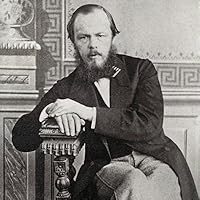
“I love mankind, he said, "but I find to my amazement that the more I love mankind as a whole, the less I love man in particular.”
― The Brothers Karamazov
― The Brothers Karamazov

“If there is a hard, high wall and an egg that breaks against it, no matter how right the wall or how wrong the egg, I will stand on the side of the egg. Why? Because each of us is an egg, a unique soul enclosed in a fragile egg. Each of us is confronting a high wall. The high wall is the system which forces us to do the things we would not ordinarily see fit to do as individuals . . . We are all human beings, individuals, fragile eggs. We have no hope against the wall: it's too high, too dark, too cold. To fight the wall, we must join our souls together for warmth, strength. We must not let the system control us -- create who we are. It is we who created the system. (Jerusalem Prize acceptance speech, JERUSALEM POST, Feb. 15, 2009)”
―
―

“Justice is the first virtue of social institutions, as truth is of systems of thought. A theory however elegant and economical must be rejected or revised if it is untrue; likewise laws and institutions no matter how efficient and well-arranged must be reformed or abolished if they are unjust. Each person possesses an inviolability founded on justice that even the welfare of society as a whole cannot override. For this reason justice denies that the loss of freedom for some is made right by a greater good shared by others. It does not allow that the sacrifices imposed on a few are outweighed by the larger sum of advantages enjoyed by many. Therefore in a just society the liberties of equal citizenship are taken as settled; the rights secured by justice are not subject to political bargaining or to the calculus of social interests.”
― A Theory of Justice
― A Theory of Justice

“First, individual rights cannot be sacrificed for the sake of the general good, and second, the principles of justice that specify these rights cannot be premised on any particular vision of the good life. What justifies the rights is not that they maximize the general welfare or otherwise promote the good, but rather that they comprise a fair framework within which individuals and groups can choose their own values and ends, consistent with a similar liberty for others.”
― Liberalism and Its Critics
― Liberalism and Its Critics

“Of all individuals, the hated, the shunned, and the peculiar are arguably most themselves. They wear no masks whatsoever in order to be accepted and liked; they do seem most guarded, but only by their own hands: as compared to the populace, they are naked.”
― Healology
― Healology

“Scopul existenței fiecărui individ este plăcerea și cine o contestă ori e ipocrit, ori imbecil.”
― O toaletă à la Liz Taylor
― O toaletă à la Liz Taylor

“There is a certain way of being human that is my way. I am called upon to live my life in this way, and not in imitation of anyone else's life. But this notion gives a new importance to being true to myself. If I am not, I miss the point of my life; I miss what being human is for me.”
― Multiculturalism
― Multiculturalism
“[E]ach of our voices has something unique to say. Not only should I not mold my life to the demands of external conformity; I can't even find the model by which to live outside myself. I can only find it within.”
― Multiculturalism
― Multiculturalism

“You have been created in order that you might make a difference. You have within you the power to change the world.”
― The Butterfly Effect: How Your Life Matters – The Perfect Inspirational Gift
― The Butterfly Effect: How Your Life Matters – The Perfect Inspirational Gift


“We are each individual, but the far greater thing is what we are together, and if that isn't protected and cherished, we are headed to a bad place.”
― An Absolutely Remarkable Thing
― An Absolutely Remarkable Thing
“[E]ach person is to have an equal right to the most extensive basic liberty compatible with a similar liberty for others.”
― A Theory of Justice
― A Theory of Justice
“The curious thing about individuals is that their singularity always goes beyond any category or generalization in the book.”
― The Elephant Vanishes
― The Elephant Vanishes

“There is history the way Tolstoy imagined it, as a great, slow-moving weather system in which even tsars and generals are just leaves before the storm. And there is history the way Hollywood imagines it, as a single story line in which the right move by the tsar or the wrong move by the general changes everything. Most of us, deep down, are probably Hollywood people. We like to invent “what if” scenarios--what if x had never happened, what if y had happened instead?--because we like to believe that individual decisions make a difference: that, if not for x, or if only there had been y, history might have plunged forever down a completely different path. Since we are agents, we have an interest in the efficacy of agency.”
―
―

“We must know the whole play in order to properly act our parts; the conception of totality must never be lost in that of the individual.”
― The Book of Tea
― The Book of Tea
“It turns out that indecision is a path itself; but figuratively, a vertical path - up or down - meaning it isn't always a fruitless path. One is forgotten, but the other is glorified. To be what they call 'middle-of-the-road' in most cases just means you have a hard time figuring out who between options is dumber. So quite often those who refused to decide were, after all, the bold individuals, the influential ones, the creative ones, those who snatched their own authority.”
― Killosophy
― Killosophy

“The shape does not change. There was a human being who was born, lived, and then, by some means or another, died. There. you may fill in the details from your own experience. As unoriginal as any other tale, as unique as any other life. Lives are like snowflakes - forming patterns we have seen before, (...) but still unique.”
― American Gods
― American Gods
“[T]he state should not impose a preferred way of life, but should leave its citizens as free as possible to choose their own values and ends, consistent with a similar liberty for others.”
― Liberalism and Its Critics
― Liberalism and Its Critics

“When you have lived your individual life in your own adventurous way and then look back upon its course, you will find that you have lived a model human life, after all.”
― Thou Art That: Transforming Religious Metaphor
― Thou Art That: Transforming Religious Metaphor
“All individuals have moral deficiencies, and when introducing these to reality one not only strengthens himself but also the confidence of others in the human exigency for Christ due to a reflection throughout the body of Christ.”
― Salomé: In Every Inch In Every Mile
― Salomé: In Every Inch In Every Mile
“... unfools of unbeing ... means quite clearly people who are too stereotyped to be eccentric – people who are too dead spiritually to exist at all and who call alive individual fools”
― E.E. Cummings: The Art of His Poetry
― E.E. Cummings: The Art of His Poetry

“The state does not oppose the freedom of people to express their particular cultural attachments, but nor does it nurture such expression—rather [...] it responds with 'benign neglect' [....] The members of ethnic and national groups are protected against discrimination and prejudice, and they are free to maintain whatever part of their ethnic heritage or identity they wish, consistent with the rights of others. But their efforts are purely private, and it is not the place of public agencies to attach legal identities or disabilities to cultural membership or ethnic identity. This separation of state and ethnicity precludes any legal or governmental recognition of ethnic groups, or any use of ethnic criteria in the distribution of rights, resources, and duties.”
― Multicultural Citizenship: A Liberal Theory of Minority Rights
― Multicultural Citizenship: A Liberal Theory of Minority Rights

“When the lights go off in a movie theatre, everyone becomes this one entity: the audience watching the film. And most films aim to get the same emotions out of people. The same reactions. To laugh or be scared or cry or be inspired. The audience goes in as individuals and comes out as people who’ve all experienced the same thing, are all feeling the same way.”
― This Is Kind of an Epic Love Story
― This Is Kind of an Epic Love Story

“I have always lived in a world in which I'm just a spot in history. My life is not the important point. I'm just part of the continuum, and that continuum, to me, is a marvelous thing. The history of life, and the history of the planet, should go on and on and on and on. I cannot conceive of anything in the universe that has more meaning than that."
[Sheri S. Tepper: Speaking to the Universe, Locus Magazine, September 1998]”
―
[Sheri S. Tepper: Speaking to the Universe, Locus Magazine, September 1998]”
―

“When Americans think of freedom, we usually imagine a contest between a lone individual and a powerful government. We tend to conclude that the individual should be empowered and the government kept at bay. This is all well and good. But one element of freedom is the choice of associates, and one defense of freedom is the activity of groups to sustain their members. This is why we should engage in activities that are of interest to us, our friends, our families. These need not be expressly political: Václav Havel, the Czech dissident thinker, gave the example of brewing good beer.
Insofar as we take pride in these activities, and come to know others who do so as well, we are creating civil society. Sharing in an undertaking teaches us that we can trust people beyond a narrow circle of friends and families, and helps us to recognize authorities from whom we can learn. The capacity for trust and learning can make life seem less chaotic and mysterious, and democratic politics more plausible and attractive.”
― On Tyranny: Twenty Lessons from the Twentieth Century
Insofar as we take pride in these activities, and come to know others who do so as well, we are creating civil society. Sharing in an undertaking teaches us that we can trust people beyond a narrow circle of friends and families, and helps us to recognize authorities from whom we can learn. The capacity for trust and learning can make life seem less chaotic and mysterious, and democratic politics more plausible and attractive.”
― On Tyranny: Twenty Lessons from the Twentieth Century

“It is all about the individual. And we can all become a better world if we become better, more loving individuals ourselves. There is no other way that will ever work better than love.”
― Single Dad Laughing: The Best of Year One
― Single Dad Laughing: The Best of Year One
“...there is nothing so dangerous in its consequences as injustice to individuals- whether it arise from prejudice of color or from any other source; that a wrong done to one man is a wrong to society and to the world.”
― Life and Adventures of Joaquin Murieta: Celebrated California Bandit (Volume 4)
― Life and Adventures of Joaquin Murieta: Celebrated California Bandit (Volume 4)

“All isolated individuals always become comic by asserting their own accidental individuality in the face of evolutionary necessity. There is no doubt that it would be most deeply comical to have some accidental individual come by the universal idea of wanting to be the saviour of the whole world.”
― Either/Or: A Fragment of Life
― Either/Or: A Fragment of Life

“There can be no salvation for us as individuals; there is salvation because there are others.”
― When the House Burns Down: From the Dialect of Thought
― When the House Burns Down: From the Dialect of Thought

“وسيضل الناس حين يعتقدون أن الجماعة أعظم من الفرد، وأن خيرها أعظم من خير الفرد، وأن نفعها يسوغ لإغضاء عن ضمير الفرد. إنما الجماعة صنم يدعوكم إلى عبادته من تنفعهم هذه العبادة.
ويزينون لكم أن الجماعة تسعد وإن لم يسعد أفرادها، وهو وهم يقول به من يعنيه أن يشقى عدد كبير من الناس ليسعد عدد قليل منهم، إن الصالح العام لأخطر الأوثان وأشدها ضررا حين يعبد فيطغى على أوامر الضمير.”
― قرية ظالمة
ويزينون لكم أن الجماعة تسعد وإن لم يسعد أفرادها، وهو وهم يقول به من يعنيه أن يشقى عدد كبير من الناس ليسعد عدد قليل منهم، إن الصالح العام لأخطر الأوثان وأشدها ضررا حين يعبد فيطغى على أوامر الضمير.”
― قرية ظالمة
All Quotes
|
My Quotes
|
Add A Quote
Browse By Tag
- Love Quotes 102.5k
- Life Quotes 81k
- Inspirational Quotes 77.5k
- Humor Quotes 45.5k
- Philosophy Quotes 32k
- Inspirational Quotes Quotes 28.5k
- God Quotes 27k
- Wisdom Quotes 25k
- Romance Quotes 25k
- Truth Quotes 25k
- Poetry Quotes 24.5k
- Life Lessons Quotes 23k
- Quotes Quotes 21.5k
- Death Quotes 21k
- Happiness Quotes 19k
- Hope Quotes 19k
- Faith Quotes 18.5k
- Inspiration Quotes 18k
- Relationships Quotes 16k
- Spirituality Quotes 16k
- Motivational Quotes 16k
- Religion Quotes 15.5k
- Life Quotes Quotes 15.5k
- Writing Quotes 15k
- Love Quotes Quotes 15k
- Success Quotes 14.5k
- Motivation Quotes 14k
- Time Quotes 13k
- Science Quotes 12.5k
- Motivational Quotes Quotes 12k