
 Sign in with Facebook
International Affairs Quotes
Quotes tagged as "international-affairs"
Showing 1-7 of 7

“In 1941, as the United States faced the threat of another horrific war, President Franklin D. Roosevelt was leading the nation from a wheelchair. Struck down by polio at age thirty-nine, he rehabilitated and marshaled himself, despite severe pain, to press on with his career in politics. Eleven years later, delivering his message of confidence and optimism, he was elected President of the United States. ”
― Diplomats & Admirals: From Failed Negotiations and Tragic Misjudgments to Powerful Leaders and Heroic Deeds, the Untold Story of the Pacific War from Pearl Harbor to Midway
― Diplomats & Admirals: From Failed Negotiations and Tragic Misjudgments to Powerful Leaders and Heroic Deeds, the Untold Story of the Pacific War from Pearl Harbor to Midway
“Unfortunately, much of the important information Ambassador Grew sent to Washington was largely overlooked or ignored, and dialogue between Washington and Tokyo was strained. This state of affairs is indicated by Grew’s cable on July 10, 1941, in which he pointed out that he had to go to the British ambassador in Tokyo, Sir Robert Craigie, to find out about discussions between the State Department and the Japanese ambassador in Washington. This occurred because the State Department kept the British ambassador in Washington abreast of events, who promptly informed the foreign secretary in London, who in turn informed their ambassador in Tokyo. Sir Robert then kindly passed the information to Ambassador Grew.”
― Diplomats & Admirals: From Failed Negotiations and Tragic Misjudgments to Powerful Leaders and Heroic Deeds, the Untold Story of the Pacific War from Pearl Harbor to Midway
― Diplomats & Admirals: From Failed Negotiations and Tragic Misjudgments to Powerful Leaders and Heroic Deeds, the Untold Story of the Pacific War from Pearl Harbor to Midway

“A newcomer, a tall bewhiskered Sikh policeman came to see me. ‘Sahib,’ he said in Hindustani, ‘I was lucky to escape from Rangoon when that city was evacuated. I reached Mandalay after many nights hiding and sleeping in the jungle. How I escaped with my life I do not know. From Mandalay I managed to get on a train and eventually found my way here.’ He came a little closer and almost whispered, ‘Sahib, I am staying in the Police Lines. You must let me and my pal guard your bungalow or….’ And he drew his finger
across his throat. ‘Believe me I have seen many tragedies during the past few weeks.’ I smiled, thanked him and said I would send for him and his pal should I find it necessary. I had many native friends who I knew would be helpful and kind to refugees and I regarded the policeman’s tale as greatly exaggerated. The next day this good man joined the stream of refugees hastening to the frontier
of India … Captain Gribble”
― EXTRAORDINARY TRUE STORIES OF SURVIVAL IN BURMA WW2: tens of thousands fled to India from the Japanese Invasion in 1942
across his throat. ‘Believe me I have seen many tragedies during the past few weeks.’ I smiled, thanked him and said I would send for him and his pal should I find it necessary. I had many native friends who I knew would be helpful and kind to refugees and I regarded the policeman’s tale as greatly exaggerated. The next day this good man joined the stream of refugees hastening to the frontier
of India … Captain Gribble”
― EXTRAORDINARY TRUE STORIES OF SURVIVAL IN BURMA WW2: tens of thousands fled to India from the Japanese Invasion in 1942
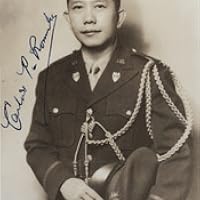
“You might wonder that I who who have served you in the field of diplomacy should set so much store by the power of nationalism. This is because I know from personal experience that in order to become an effective internationalist, one must strive to be a good nationalist. To be a worthy citizen of the world one must first prove himself to be a good Filipino.”
― I Walked With Heroes
― I Walked With Heroes

“This job of international leadership is not the kind of assignment one ever finishes. Old dangers rarely go away completely, and new ones appear as regularly as dawn. Dealing with them effectively has never been a matter of just money and might. Countries and people must join forces, and that doesn’t happen naturally. Though the United States has made many mistakes in its eventful history, it has retained the ability to mobilize others because of its commitment to lead in the direction most want to go—toward liberty, justice, and peace. The issue before us now is whether America can continue to exhibit that brand of leadership under a president who doesn’t appear to attach much weight to either international cooperation or democratic values.
The answer matters because, although nature abhors a vacuum, Fascism welcomes one.”
― Fascism: A Warning
The answer matters because, although nature abhors a vacuum, Fascism welcomes one.”
― Fascism: A Warning
“International Law of the sea evolved over the years thereby concretizing the right of the freedom of navigation –FON; further the right evolved with its operational ramifications that led to the concept of Freedom of Navigation Operations (FONOPs); which operational freedom is based on sovereignty and interdependence of the state to enforce such a right.”
―
―
“In international affairs, true strength is found in the pursuit of peace, not power."
"Diplomacy is the art of finding common ground in the vast diversity of our global landscape."
"Global progress depends on leaders who see beyond borders and build bridges of understanding."
"The world’s greatest challenges are solved not by isolation, but by the unity of nations working together."
"International affairs demand a balance of vision and pragmatism, of ideals and realities."
"In the global arena, dialogue is the most powerful weapon for resolving conflicts and fostering peace."
"True global leadership embraces the diversity of voices, recognizing that every culture adds value to our shared future."
"The key to a stable world lies in our ability to collaborate across borders and find solutions that benefit all."
"To navigate international affairs is to dance in the delicate balance between national interests and global responsibility."
"Sustainable development is a collective commitment that transcends borders, cultures, and politics.”
―
"Diplomacy is the art of finding common ground in the vast diversity of our global landscape."
"Global progress depends on leaders who see beyond borders and build bridges of understanding."
"The world’s greatest challenges are solved not by isolation, but by the unity of nations working together."
"International affairs demand a balance of vision and pragmatism, of ideals and realities."
"In the global arena, dialogue is the most powerful weapon for resolving conflicts and fostering peace."
"True global leadership embraces the diversity of voices, recognizing that every culture adds value to our shared future."
"The key to a stable world lies in our ability to collaborate across borders and find solutions that benefit all."
"To navigate international affairs is to dance in the delicate balance between national interests and global responsibility."
"Sustainable development is a collective commitment that transcends borders, cultures, and politics.”
―
All Quotes
|
My Quotes
|
Add A Quote
Browse By Tag
- Love Quotes 102k
- Life Quotes 80.5k
- Inspirational Quotes 77k
- Humor Quotes 44.5k
- Philosophy Quotes 31.5k
- Inspirational Quotes Quotes 29k
- God Quotes 27k
- Wisdom Quotes 25k
- Truth Quotes 25k
- Romance Quotes 24.5k
- Poetry Quotes 23.5k
- Life Lessons Quotes 23k
- Quotes Quotes 21.5k
- Death Quotes 21k
- Happiness Quotes 19k
- Hope Quotes 19k
- Faith Quotes 18.5k
- Inspiration Quotes 18k
- Spirituality Quotes 16k
- Motivational Quotes 16k
- Relationships Quotes 16k
- Religion Quotes 15.5k
- Life Quotes Quotes 15.5k
- Writing Quotes 15k
- Love Quotes Quotes 15k
- Success Quotes 14k
- Motivation Quotes 14k
- Time Quotes 13k
- Science Quotes 12k
- Motivational Quotes Quotes 12k
