
Find & Share Quotes with Friends
Intertextuality Quotes
Quotes tagged as "intertextuality"
Showing 1-14 of 14

“No poet, no artist of any art, has his complete meaning alone. His significance, his appreciation is the appreciation of his relation to the dead poets and artists. You cannot value him alone; you must set him, for contrast and comparison, among the dead. I mean this as a principle of aesthetic, not merely historical, criticism.”
― The Sacred Wood
― The Sacred Wood

“They’re dead words—a human chain reaching back ten thousand years,” said the corpse. “How did they feel?”
“Genuinely sad, bordering on very funny,” said God.”
― Harrow the Ninth
“Genuinely sad, bordering on very funny,” said God.”
― Harrow the Ninth

“The frontiers of a book are never clear-cut: beyond the title, the first lines, and the last full-stop, beyond its internal configuration and its autonomous form, it is caught up in a system of references to other books, other texts, other sentences: it is a node within a network.”
― The Archaeology of Knowledge and The Discourse on Language
― The Archaeology of Knowledge and The Discourse on Language

“A special kind of relationship happened between an artist and a piece of art, on account of the investment. Sometimes it was an emotional investment. The subject matter meant something to the artist, making every stroke of the brush weightier than it looked. It might be a technical investment. It was a new method, a hard angle, an artistic challenge that meant no success on the canvas could be taken for granted. And sometimes it was simply the sheer investment of time. Art took hours, days, weeks, years, of single-minded focus. This investment meant that everything that touched the art-making experience got absorbed. Music, conversations, or television shows experienced during the making became part of the piece, too. Hours, days, weeks, years later, the memory of one could instantly invoke the memory of the other, because they had been inextricably joined.”
― Mister Impossible
― Mister Impossible

“We're living in a teetering tower of babble. A shaky reality of words. A DNA soup for disaster. The natural world destroyed, we're left with this cluttered world of language.”
―
―

“Anitra! Evas naturlige datter!
Magnetiskt jeg drages; ti jeg er mann
og, som det står hos en aktet forfatter
das ewige weibliche zieht uns an!”
― Peer Gynt
Magnetiskt jeg drages; ti jeg er mann
og, som det står hos en aktet forfatter
das ewige weibliche zieht uns an!”
― Peer Gynt

“A poet without memory, said Marconi, is like a criminal and nearly undone by feelings of decency. A poet without memory is an oxymoron. Because the poet is the memory of the language.”
― Respiración artificial
― Respiración artificial

“Most everything is a knockoff of something else. Once you get the idea, everything you see, read, taste or smell becomes an allusion to it. It's the art of transforming things.”
― Why Bob Dylan Matters
― Why Bob Dylan Matters

“It is a revelation to compare the Don Quixote of Pierre Menard with that of Miguel de Cervantes. Cervantes, for example, wrote the following (Part I, Chapter IX):
...truth, whose mother is history, rival of time, depository of deeds, witness of the past, exemplar and adviser to the present, and the future's counselor.
This catalog of attributes, written in the seventeenth century, and written by the "ingenious layman" Miguel de Cervantes, is mere rhetorical praise of history. Menard, on the other hand, writes:
...truth, whose mother is history, rival of time, depository of deeds, witness of the past, exemplar and adviser to the present, and the future's counselor.
History, the mother of truth! - the idea is staggering. Menard, a contemporary of William James, defines history not as delving into reality but as the very font of reality. Historical truth, for Menard, is not "what happened"; it is what we believe happened. The final phrases - exemplar and adviser to the present, and the future's counselor - are brazenly pragmatic.”
― Pierre Menard, autor del Quijote
...truth, whose mother is history, rival of time, depository of deeds, witness of the past, exemplar and adviser to the present, and the future's counselor.
This catalog of attributes, written in the seventeenth century, and written by the "ingenious layman" Miguel de Cervantes, is mere rhetorical praise of history. Menard, on the other hand, writes:
...truth, whose mother is history, rival of time, depository of deeds, witness of the past, exemplar and adviser to the present, and the future's counselor.
History, the mother of truth! - the idea is staggering. Menard, a contemporary of William James, defines history not as delving into reality but as the very font of reality. Historical truth, for Menard, is not "what happened"; it is what we believe happened. The final phrases - exemplar and adviser to the present, and the future's counselor - are brazenly pragmatic.”
― Pierre Menard, autor del Quijote

“In that moment, I realized how dangerous it was to keep company with the characters from books. They lived books lives of fierce deeds and deep yearning.”
― Ahab's Return: A Haunting Moby-Dick Retelling – Captain Ahab Hunts Ishmael in Gothic 1800s New York
― Ahab's Return: A Haunting Moby-Dick Retelling – Captain Ahab Hunts Ishmael in Gothic 1800s New York
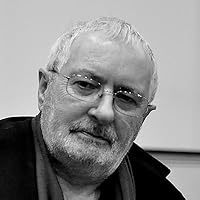
“All literally works [...] are 'rewritten', if only unconsciously, by the societies which read them; indeed there is no reading of a work which is not also a 're-writing'.”
― Literary Theory: An Introduction
― Literary Theory: An Introduction

“Life Looks Lasting by Stewart Stafford
Why should evening's last hues
Get short shrift by rays of morn?
Or contented looks of jaded age
Be void by stung slits, newborn?
The skull's opalescent orbs shut,
A lifetime's sense memories kept,
Amnesia's windfall revisited in spirit,
In corridors of déjà vu, windswept.
Though not the peeled eyes of youth
Nor intoxicated with passionate ire,
Scarcity unveils beauty in mundanity,
Visions consumed by a funeral pyre.
© 2026, Stewart Stafford. All rights reserved.”
―
Why should evening's last hues
Get short shrift by rays of morn?
Or contented looks of jaded age
Be void by stung slits, newborn?
The skull's opalescent orbs shut,
A lifetime's sense memories kept,
Amnesia's windfall revisited in spirit,
In corridors of déjà vu, windswept.
Though not the peeled eyes of youth
Nor intoxicated with passionate ire,
Scarcity unveils beauty in mundanity,
Visions consumed by a funeral pyre.
© 2026, Stewart Stafford. All rights reserved.”
―

“The action of the physical body is the embodiment of what has been formed inside. If the internal speech articulates a reason, the body is expected to move in accordance with that reason, making the body the servant and the internal source the master.”
― The 10th Commandment
― The 10th Commandment
“The more I watch modern cinema the more I wish they were still making midbudget movies. I thought Top Gun: Maverick was great. Is anybody else saying this? It doesn't seem like it. When I was in high school I had Hot Shots! (not Part Deux, just Hot Shots!) on my iPod Touch and I swear to God I can do that whole script off the top of my head. I would watch it--Jesus, Gretel, what is it? Fuck, you scared me. No, I don't want--no! I don't want--no. No, we'll figure it out later. No, we just had Wingstop... Sorry, Karl. Sorry about that. Did you play the new Lego Batman at all?”
― Minima Moralia: Reflections from Damaged Life
― Minima Moralia: Reflections from Damaged Life
All Quotes
|
My Quotes
|
Add A Quote
Browse By Tag
- Love Quotes 102.5k
- Life Quotes 81k
- Inspirational Quotes 77.5k
- Humor Quotes 45.5k
- Philosophy Quotes 32k
- Inspirational Quotes Quotes 28.5k
- God Quotes 27k
- Wisdom Quotes 25k
- Romance Quotes 25k
- Truth Quotes 25k
- Poetry Quotes 24.5k
- Life Lessons Quotes 23k
- Quotes Quotes 21.5k
- Death Quotes 21k
- Happiness Quotes 19k
- Hope Quotes 19k
- Faith Quotes 18.5k
- Inspiration Quotes 18k
- Relationships Quotes 16k
- Spirituality Quotes 16k
- Motivational Quotes 16k
- Religion Quotes 15.5k
- Life Quotes Quotes 15.5k
- Writing Quotes 15k
- Love Quotes Quotes 15k
- Success Quotes 14.5k
- Motivation Quotes 14k
- Time Quotes 13k
- Science Quotes 12.5k
- Motivational Quotes Quotes 12k