
Find & Share Quotes with Friends
James Hogg Quotes
Quotes tagged as "james-hogg"
Showing 1-6 of 6
“Association with Blackwood's came at a price, however. Hogg may have been one of the magazine's most recognisable figures, but he had little control over how he himself was represented on its pages. From the outset, Hogg was viewed by Wilson and Blackwood as an object rather than an architect of Blackwood's aggressive self-fashioning. Thomas Richardson points out that Hogg was never permitted to write review articles - an exclusion surely telling of his standing among the magazine's cognoscenti. William Blackwood, for his part, favoured Hogg's 'more predictable contributions, such as the comic ballad', and neither he nor Wilson considered Hogg to have the comportment or expertise to conduct the signal utterances of the magazine. In general, Hogg's function was to inhabit the role of the rustic genius-poet, the 'Ettrick Shepherd' - the residual embodiment of a specifically Tory fantasy of the Scottish peasant class, and a semi-serious, semi-comedic foil to the magazine's modernity and professionalism.”
― James Hogg: Contributions to English, Irish and American Periodicals
― James Hogg: Contributions to English, Irish and American Periodicals

“Beneath his perception of the instability of the everyday self, Hogg retained a firm confidence in the capacity of the natural man to see what is in fact the case, and to distinguish right from wrong. He did not accept that any single mind or any single system of thought could encompass all the complexities of life, and was content to carry a variety of incompatible parcels in his luggage, and to accept the burden cheerfully.”
― The Great Shadow House: Essays on the Metaphysical Tradition in Scottish Fiction
― The Great Shadow House: Essays on the Metaphysical Tradition in Scottish Fiction
“Of course freedom for Hyde proves another form of bondage for Jekyll, just as in Hogg's book Wringham's 'Election' results not in liberation, as he imagines, but slavery to Gil-martin. For Jekyll as for Wringham there is a continual development and deterioration, so that in the end he finds himself going to sleep as Jekyll and waking as Hyde, with no control over events. He is mortally afraid that 'the balance of my nature might be permanently overthrown, the power of voluntary change be forfeited, and the character of Edward Hyde become irrevocably mine.”
― The Great Shadow House: Essays on the Metaphysical Tradition in Scottish Fiction
― The Great Shadow House: Essays on the Metaphysical Tradition in Scottish Fiction
“In Confessions of a Justified Sinner James Hogg is neither identified with, nor overwhelmed by, the darkness of the universe, nor does he suffer from hatred or despair. He sees the cause of Wringhim's disintegration as an inner weakness which chooses to identify with false doctrine. Since Wringhim lives in illusion, he is easy meat for a master practitioner of it. Hogg himself, on the other hand, is confident of his personal wholeness. He repudiates extreme doctrine from a basis of robust common sense, and his recognition of the power of the diabolical sublime does not endanger his own sense of solid worth. He retains a forthright good-will which shows itself in cheerful endorsement of those characters in the book who accept life and enjoy themselves.”
― The Great Shadow House: Essays on the Metaphysical Tradition in Scottish Fiction
― The Great Shadow House: Essays on the Metaphysical Tradition in Scottish Fiction
“In Confessions of a Justified Sinner James Hogg is neither identified with, nor overwhelmed by, the darkness in the universe, nor does he suffer from hatred or despair. He sees the cause of Wringhim's disintegration as an inner weakness which chooses to identify with false doctrine. Since Wringhim lives in illusion, he is easy meat for a master practitioner of it. Hogg himself, on the other hand, is confident of his personal wholeness. He repudiates extreme doctrine from a basis of robust common sense, and his recognition of the power of the diabolical sublime does not endanger his own sense of solid worth. He retains a forth-right good-will which shows itself in cheerful endorsement of those characters in the book who accept life and enjoy themselves.”
― The Great Shadow House: Essays on the Metaphysical Tradition in Scottish Fiction
― The Great Shadow House: Essays on the Metaphysical Tradition in Scottish Fiction
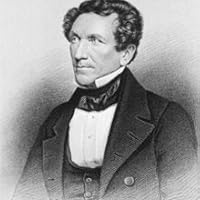
“The intellectual history of James Hogg is certainly one of the most curious that our age has presented; and when what an unlettered peasant was able to achieve by the mere enthusiasm of his genius, we are entitled to marvel certainly - not that his writing should be full of blemishes - but that his mind ever had power to burst through the Cimmerian gloom in which his earlier years seemed to be hopelessly enveloped.
After a boyhood of poverty, half starvation, and labour, the shepherd-poet in embryo found himself at lenth aged fourteen and the possessor of five shillings - with which he bought a fiddle (!!!) over the catgut of which he kept sawing Scottish tunes, for two or three hours every night, after retiring to his roost in the loft of the cowhouse, where the discord could molest nobody save himself - an antitype of Orpheus - and the rats.”
― Sketches of the Poetical Literature of the Past Half-Century
After a boyhood of poverty, half starvation, and labour, the shepherd-poet in embryo found himself at lenth aged fourteen and the possessor of five shillings - with which he bought a fiddle (!!!) over the catgut of which he kept sawing Scottish tunes, for two or three hours every night, after retiring to his roost in the loft of the cowhouse, where the discord could molest nobody save himself - an antitype of Orpheus - and the rats.”
― Sketches of the Poetical Literature of the Past Half-Century
All Quotes
|
My Quotes
|
Add A Quote
Browse By Tag
- Love Quotes 102.5k
- Life Quotes 81k
- Inspirational Quotes 77.5k
- Humor Quotes 45.5k
- Philosophy Quotes 32k
- Inspirational Quotes Quotes 29k
- God Quotes 27k
- Wisdom Quotes 25.5k
- Romance Quotes 25k
- Truth Quotes 25k
- Poetry Quotes 24.5k
- Life Lessons Quotes 23k
- Quotes Quotes 21.5k
- Death Quotes 21k
- Happiness Quotes 19k
- Hope Quotes 19k
- Faith Quotes 18.5k
- Inspiration Quotes 18k
- Relationships Quotes 16k
- Spirituality Quotes 16k
- Motivational Quotes 16k
- Religion Quotes 15.5k
- Life Quotes Quotes 15.5k
- Writing Quotes 15k
- Love Quotes Quotes 15k
- Success Quotes 14.5k
- Motivation Quotes 14k
- Time Quotes 13k
- Science Quotes 12.5k
- Motivational Quotes Quotes 12k