
Find & Share Quotes with Friends
Patristics Quotes
Quotes tagged as "patristics"
Showing 1-12 of 12


“Constantine saw with his own eyes the trophy of a cross of light in the heavens, above the sun, and bearing this inscription: conquer by this. At the sight, he himself was struck with amazement and his whole army also.”
― The Life of the Blessed Emperor Constantine: From 306 to AD 337
― The Life of the Blessed Emperor Constantine: From 306 to AD 337

“No one can have God for his Father, who has not the Church for his mother.”
― The Complete Works of Saint Cyprian of Carthage
― The Complete Works of Saint Cyprian of Carthage
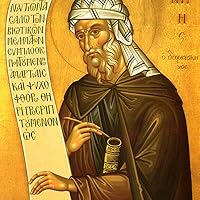
“But this is what leads the heretics astray: that they look upon nature and person as the same thing”
―
―
“To insure the stability of imperial power, it is sufficient for an emperor to serve God with reverence.”
― The Ecclesiastical History of Sozomen: From AD 324 to AD 425
― The Ecclesiastical History of Sozomen: From AD 324 to AD 425

“Death has become like a tyrant who has been completely conquered by the legitimate monarch; bound hand and foot, the passersby sneer at him, hitting him and abusing him, no longer afraid of his cruelty and rage because of the King who has conquered him. So has death been conquered and branded for what it is by the Saviour on the cross. It is bound hand and foot; all who are in Christ trample it as they pass, and as witnesses to Him (King Jesus) deride it, scoffing and saying, “O Death where is thy sting? O grave, where is thy victory?”
― On the Incarnation
― On the Incarnation

“To illustrate the nature of this theandric reciprocity, Thomas invokes, as an example, the physical touch of Jesus’s hand: “he wrought divine things humanly, as when he healed the leper with a touch.” The touch of a human being is not in itself miraculous, and even in Jesus this human action is not humanly healing. The miraculous fact of the healing power of this human touch, rather, as Reginald Garrigou-Lagrange puts it, “proceeds from God as the principal cause and from Christ’s human nature as the instrumental cause.” Jesus works divine things humanly. More ultimately, Jesus wills the divine will of salvation humanly. And so he wills theandrically in the sense that what he wills has an “infinite value” that “derives from the divine suppositum that is the agent which operates”. The deifying effects of the Incarnation are thus contingent on the theandric fact of the interpenetrating unity of divine-human operations.”
―
―
“We will begin then with the creation of the world with God its Maker, for the first fact that you must grasp is this: The renewal of Creation has been wrought by the Self-Same Word who made it in the beginning. There is thus no inconsistency between creation and salvation for the One Father has employed the same Agent for both works affecting the salvation of the world through the same Word who made it in the beginning.”
― On the Incarnation
― On the Incarnation
“Quizás la perfección de la naturaleza humana consista en estar siempre dispuestos a conseguir un mayor bien.”
― Sobre la vida de Moisés
― Sobre la vida de Moisés
“Being (in the sense of "God is Being, from whom all creation takes its being") is an auto-kenetic crystalline active power unfolding within itself unceasingly. The key concept is that of intrinsic cyclic motion, power to act. Existence is a verb, an action, a doing. "Action springs forth" (from "to be") as the "Word leapt.”
― Augustine and Nicene Theology: Essays on Augustine and the Latin Argument for Nicaea
― Augustine and Nicene Theology: Essays on Augustine and the Latin Argument for Nicaea
“The Kingdom of God is not a Talmud, nor is it a mechanical collection of scriptural or patristic quotations outside our being and our lives. The Kingdom of God is within us, like a dynamic leaven which fundamentally changes man's whole life, his spirit and his body. What is required in patristic study, in order to remain faithful to the Fathers' spirit of freedom and worthy of their spiritual nobility and freshness, is to approach their holy texts with the fear in which we approach and venerate their holy relics and holy icons. This liturgical reverence will soon reveal to us that here is another inexpressible grace. The whole atmosphere is different. There are certain vital passages in the patristic texts which, we feel, demand of us, and work within us, an unaccustomed change.
These we must make part of our being and our lives, as truths and as standpoints, to leaven the whole. And at the same time we must put our whole self into studying the Fathers, waiting and marking time. This marriage, this baptism into patristic study brings what we need, which is not an additional load of patristic references and the memorizing of other people's opinions, but the acquisition of a new clear-sighted sense which enables man to see things differently and rightly. If we limit ourselves to learning passages by heart and classifying them mechanically — and teach men likewise — then we fall into a basic error which simply makes us fail to teach and make known the patristic way of life and philosophy.”
― Hymn of Entry: Liturgy and Life in the Orthodox Church
These we must make part of our being and our lives, as truths and as standpoints, to leaven the whole. And at the same time we must put our whole self into studying the Fathers, waiting and marking time. This marriage, this baptism into patristic study brings what we need, which is not an additional load of patristic references and the memorizing of other people's opinions, but the acquisition of a new clear-sighted sense which enables man to see things differently and rightly. If we limit ourselves to learning passages by heart and classifying them mechanically — and teach men likewise — then we fall into a basic error which simply makes us fail to teach and make known the patristic way of life and philosophy.”
― Hymn of Entry: Liturgy and Life in the Orthodox Church
“And the trespass which came by the tree was undone by the tree of obedience, when, hearkening unto God, the Son of man was nailed to the tree; thereby putting away the knowledge of evil and bringing in and establishing the knowledge of good: now evil it is to disobey God, even as hearkening unto God is good.-”
―
―
All Quotes
|
My Quotes
|
Add A Quote
Browse By Tag
- Love Quotes 102.5k
- Life Quotes 81k
- Inspirational Quotes 77.5k
- Humor Quotes 45.5k
- Philosophy Quotes 32k
- Inspirational Quotes Quotes 28.5k
- God Quotes 27k
- Wisdom Quotes 25k
- Romance Quotes 25k
- Truth Quotes 25k
- Poetry Quotes 24.5k
- Life Lessons Quotes 23k
- Quotes Quotes 21.5k
- Death Quotes 21k
- Happiness Quotes 19k
- Hope Quotes 19k
- Faith Quotes 18.5k
- Inspiration Quotes 18k
- Relationships Quotes 16k
- Spirituality Quotes 16k
- Motivational Quotes 16k
- Religion Quotes 15.5k
- Life Quotes Quotes 15.5k
- Writing Quotes 15k
- Love Quotes Quotes 15k
- Success Quotes 14.5k
- Motivation Quotes 14k
- Time Quotes 13k
- Science Quotes 12.5k
- Motivational Quotes Quotes 12k