
Find & Share Quotes with Friends
Rainforest Quotes
Quotes tagged as "rainforest"
Showing 1-29 of 29

“I don't like the rain forest," Ragnor said sadly.
"That's because you are not open to new experiences in the same way I am!"
"No, it is because it is wetter than a boar's armpit and twice as smelly here."
Magnus pushed a dripping frond out of his eyes. "I admit you make an excellent point and also paint a vivid picture with your words.”
― The Bane Chronicles
"That's because you are not open to new experiences in the same way I am!"
"No, it is because it is wetter than a boar's armpit and twice as smelly here."
Magnus pushed a dripping frond out of his eyes. "I admit you make an excellent point and also paint a vivid picture with your words.”
― The Bane Chronicles


“I saw it myself. An endless succession of mongrels and malingerers, the laziest dropouts who fancied themselves explorers. He made his policy clear: he was not responsible for their food, their shelter, their safety, or their health. He didn't waste his time discouraging them because frankly there was no discouragement they could not withstand. All of the energy they could have put into their intelligence they had used to develop their tenacity. But what I quickly learned was that their tenacity was for going, not for staying. Once they were out on the trail they fell like flies. Some took a day, two days, others were gone in a matter of hours, and Dr. Rapp never stopped for them. He remained beautifully consistent: he was to work and he would continue to work. He would not ferry back the weak and the lame. They had chosen to get themselves in and they would simply have to figure the means to get themselves out. People were quick to accept these terms until they themselves were weak. Then they changed their tune entirely, then they said Dr. Rapp was heartless. They couldn't slander him as a scientist but they said no end of scurrilous things about him as a man. He hadn't rescued them! He hadn't been their father and mother! I will tell you, none of that troubled his sleep. If he had made them his responsibility, either by dissuading them from their ambitions or by bailing them out of their folly, the greatest botanist of our time would have been reduced to a babysitter. It would have been an incalculable blow to science, all in the name of saving the stupid.”
― State of Wonder
― State of Wonder

“I just have to make it to the Tuichi' I mumbled to myself, 'I just have to make it to the Tuichi'.
Alone, deep in the jungle, so small and insignificant, pitted against nature, still I sensed someone was watching me. Or watching over me.Someone could see me, someone was providing for me”
― Jungle
Alone, deep in the jungle, so small and insignificant, pitted against nature, still I sensed someone was watching me. Or watching over me.Someone could see me, someone was providing for me”
― Jungle
“REVIEW: Like a master artisan, Weisberger weaves together threads of anthropology, botany, ecology and psychology in an inspiring tapestry of ideas sure to keep discerning readers warm and hopeful in these cold and desolate times.Unlike other texts, which ordinarily prescribe structural (ie. social, political, economic) solutions to the global crisis of environmental destruction, Rainforest Medicine hones in on the root cause of Western schizophrenia: spiritual poverty, and the resultant alienation of the individual from his environment. This incisive perception is married to a message of hope: that the keys to the door leading to promising new human vistas are held in the humblest of hands; those of the spiritual masters of the Amazon and the traditional cultures from which they hail. By illumining the ancient practices of authentic indigenous Amazonian shamanism, Weisberger supplies us with a manual for conservation of both the rainforest and the soul. And frankly, it could not have arrived at a better time.”
― Rainforest Medicine: Preserving Indigenous Science and Biodiversity in the Upper Amazon
― Rainforest Medicine: Preserving Indigenous Science and Biodiversity in the Upper Amazon
“The multiplicity of human identity is not just a spiritual principle, it’s a biological fact—a basic ecological reality. ... only 10% of the cells in your body belong to you. The rest are the cells of bacteria and microorganisms that call your body home, and without these symbionts living on and within your physical self, you would be unable to digest and process the nutrients necessary to keep you alive. Your physical body is teeming with a microscopic diversity of life that rivals a rainforest. The insight of the Gaia Theory—that “the Earth system behaves as a single self-regulating system comprised of physical, chemical, biological and human components”—is as much a statement about our own physical bodies as it is about the planet. If we imagine the Earth as the body of a goddess, we can also imagine our own bodies as a sacred home to an ecologically complex and diverse array of microscopic life." -- Alison Leigh Lilly, "Naming the Water: Human and Deity Identity from an Earth-Centered Perspective”
―
―
“When we came out of the cookhouse, we found the boy's father, the Indian man who had been grazing the horses in the pasture, waiting for us. He wanted someone to tell his troubles to. He looked about guardedly, afraid that the Señora might overhear him.
'Take a look at me' he said. I don't even know how old I am. When I was young, the Señor brought me here. He promised to pay me and give me a plot of my own. 'Look at my clothes' he said, pointing to the patches covering his body. 'I can't remember how many years I've been wearing them. I have no others. I live in a mud hut with my wife and sons. They all work for the Señor like me. They don't go to school. They don't know how to read or write; they don't even speak Spanish. We work for the master, raise his cattle and work his fields. We only get rice and plantains to eat. Nobody takes care of us when we are sick. The women here have their babies in these filthy huts.'
'Why don't you eat meat or at least milk the cows?' I asked.
'We aren't allowed to slaughter a cow. And the milk goes to the calves. We can't even have chicken or pork - only if an animal gets sick and dies. Once I raised a pig in my yard' he went on. 'She had a litter of three. When the Señor came back he told the foreman to shoot them. That's the only time we ever had good meat.'
'I don't mind working for the Señor but I want him to keep his promise. I want a piece of land of my own so I can grow rice and yucca and raise a few chickens and pigs. That's all.' 'Doesn't he pay you anything?' Kevin asked. 'He says he pays us but he uses our money to buy our food. We never get any cash. Kind sirs, maybe you can help me to persuade the master . Just one little plot is all I want. The master has land, much land.'
We were shocked by his tale. Marcus took out a notebook and pen. 'What's his name?'. He wrote down the name. The man didn't know the address. He only knew that the Señor lived in La Paz.
Marcus was infuriated. 'When I find the owner of the ranch, I'll spit right in his eye. What a lousy bastard! I mean, it's really incredible'. 'That's just the way things are,' Karl said. 'It's sad but there's nothing we can do about it.”
― Jungle
'Take a look at me' he said. I don't even know how old I am. When I was young, the Señor brought me here. He promised to pay me and give me a plot of my own. 'Look at my clothes' he said, pointing to the patches covering his body. 'I can't remember how many years I've been wearing them. I have no others. I live in a mud hut with my wife and sons. They all work for the Señor like me. They don't go to school. They don't know how to read or write; they don't even speak Spanish. We work for the master, raise his cattle and work his fields. We only get rice and plantains to eat. Nobody takes care of us when we are sick. The women here have their babies in these filthy huts.'
'Why don't you eat meat or at least milk the cows?' I asked.
'We aren't allowed to slaughter a cow. And the milk goes to the calves. We can't even have chicken or pork - only if an animal gets sick and dies. Once I raised a pig in my yard' he went on. 'She had a litter of three. When the Señor came back he told the foreman to shoot them. That's the only time we ever had good meat.'
'I don't mind working for the Señor but I want him to keep his promise. I want a piece of land of my own so I can grow rice and yucca and raise a few chickens and pigs. That's all.' 'Doesn't he pay you anything?' Kevin asked. 'He says he pays us but he uses our money to buy our food. We never get any cash. Kind sirs, maybe you can help me to persuade the master . Just one little plot is all I want. The master has land, much land.'
We were shocked by his tale. Marcus took out a notebook and pen. 'What's his name?'. He wrote down the name. The man didn't know the address. He only knew that the Señor lived in La Paz.
Marcus was infuriated. 'When I find the owner of the ranch, I'll spit right in his eye. What a lousy bastard! I mean, it's really incredible'. 'That's just the way things are,' Karl said. 'It's sad but there's nothing we can do about it.”
― Jungle

“Deep in the heart of the hot, wet African rainforest, there lives a tribe of peacemakers who share a multiplicity of pleasures and make a very special kind of love. South of the sprawling Congo River, in the midst of war-ravaged territory, some 2,000 miles from the arid Ethiopian desert where the oldest human fossils have been found, lies this lush and steamy jungle paradise, the only natural habitat of the bonobo.”
― The Bonobo Way
― The Bonobo Way
“Like the burning of the ancient library at Alexandria or the supremely ignorant incineration of stacks of invaluable Mayan codices, the loss of knowledge we are experiencing as the last of the traditional elders pass from this physical plane of existence without heirs to their knowledge- as well as the very environment in which sacred plants grow- is a tragedy occurring right now as you read these lines, one that could well be beyond redemption.”
― Rainforest Medicine: Preserving Indigenous Science and Biodiversity in the Upper Amazon
― Rainforest Medicine: Preserving Indigenous Science and Biodiversity in the Upper Amazon
“That evening we sat around the campfire. The clouds that had gathered overhead all day broke up and the moonlight shimmered on the Cocus River. The current glittered a silvery reflection. Nor was the Jungle dark. Hundreds of fireflies danced about - it was a magnificent evening”
― Jungle
― Jungle
“to the Pygmy it is one of the most important differences between the people of the forest and the people of the village that the latter do not know “how to walk”. Walking, to the Pygmy, means being able to run swiftly and silently, without slipping, tripping, or falling. Every day he depends for his food on his ability to “walk,” and more than once his life will be saved by the same ability, when he has to run from a charging buffalo or creep away unnoticed from a sleeping leopard.”
―
―

“A coastal forest can be an awesome place to behold: huge, holy, and eternal feeling [...], once inside, there is no future and no past, only the sodden, twilit now.”
― The Golden Spruce: A True Story of Myth, Madness, and Greed
― The Golden Spruce: A True Story of Myth, Madness, and Greed

“Mother Earth is a living organism, forests are the lungs of the planet, soil is the womb, oceans are blood - climate change is the planet having fever, in response to the human virus.”
― Sonnets From The Mountaintop
― Sonnets From The Mountaintop
“If science is defined or understood as a mode of seeking knowledge, a means of interpreting nature in a way that can be demonstrated to others, then the plant-medicine traditions of the Amazon as they have been practiced constitute an authentic scientific discipline.”
― Rainforest Medicine: Preserving Indigenous Science and Biodiversity in the Upper Amazon
― Rainforest Medicine: Preserving Indigenous Science and Biodiversity in the Upper Amazon
“The rainforest was a huge, living organism, and the narrow path they followed was one of its capillaries. They traveled along it like bacteria or antibodies in the bloodstream.”
― Acts of God While on Vacation
― Acts of God While on Vacation

“Dan explains the trip’s itinerary, which includes trekking through the jungle, boating down the Amazon River, and to my surprise, three Ayahuasca ceremonies.”
― Ayahuasca: An Executive's Enlightenment
― Ayahuasca: An Executive's Enlightenment

“More often than not, the wolves showed themselves in other ways—a track etched in the mud, a few scats here and there, the well-chewed, moss-covered bones of a Sitka blacktailed deer, and, most frequently and possibly most grand of all, a late-evening chorus of howls heard from the deck of our boat at a lonely anchorage. The sound echoed softly off the high granite walls of some slope or side hill, somewhere where the wolves hunted in the vast sea of verdant rain forest.”
― Following the Last Wild Wolves
― Following the Last Wild Wolves
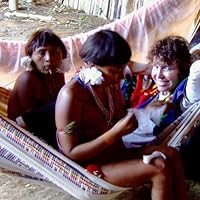
“Book Descriptions:
Amazon Rainforest Magic: The Adventures of Namowë, a Yanomami Boy, Volume 1
The magic of the Amazon rainforest enchanted artist Barbara Crane Navarro as she spent the winter months with the Yanomami communities in Venezuela and Brazil over a period of twelve years and inspired her to write her children's book series. The vividly illustrated stories in this series evoke daily life in the rainforest and the magical quality of the Yanomami's relation to the plants and animals around them. The first book, "Amazon Rainforest Magic: The Adventures of Namowë, a Yanomami Boy", recounts the journey of Namowë, a thirteen year old Yanomami boy living in the rainforest, as he seeks a cure for his baby sister.
Amazon Rainforest Magic: The Adventures of Meromi, a Yanomami Girl, Volume 2
The second volume recounts the surprising voyage of Meromi, a 9 year old Yanomami girl who is swept into an unexpected adventure in the rivers and jungles of the Amazon. With the help of improvised allies, she seeks a way to discourage intruders and make them leave the forest. Aspects of traditional Yanomami life in the Rainforest are woven into the fanciful story. The author’s enchanting illustrations transform readers into fellow travelers on Meromi’s magical quest.”
― Amazon Rainforest Magic: The adventures of Namowë, a Yanomami boy
Amazon Rainforest Magic: The Adventures of Namowë, a Yanomami Boy, Volume 1
The magic of the Amazon rainforest enchanted artist Barbara Crane Navarro as she spent the winter months with the Yanomami communities in Venezuela and Brazil over a period of twelve years and inspired her to write her children's book series. The vividly illustrated stories in this series evoke daily life in the rainforest and the magical quality of the Yanomami's relation to the plants and animals around them. The first book, "Amazon Rainforest Magic: The Adventures of Namowë, a Yanomami Boy", recounts the journey of Namowë, a thirteen year old Yanomami boy living in the rainforest, as he seeks a cure for his baby sister.
Amazon Rainforest Magic: The Adventures of Meromi, a Yanomami Girl, Volume 2
The second volume recounts the surprising voyage of Meromi, a 9 year old Yanomami girl who is swept into an unexpected adventure in the rivers and jungles of the Amazon. With the help of improvised allies, she seeks a way to discourage intruders and make them leave the forest. Aspects of traditional Yanomami life in the Rainforest are woven into the fanciful story. The author’s enchanting illustrations transform readers into fellow travelers on Meromi’s magical quest.”
― Amazon Rainforest Magic: The adventures of Namowë, a Yanomami boy
“The vegetation grew so dense the road looked like a square slice of cake taken out clean with a knife. Although the wet tropics covers less than one percent of Australia, it contains almost half of our bird species, a third of our mammal species, more than half of our butterfly species, and over seven hundred plant species endemic to the area. The rain forest seemed to inhale and exhale in a sweaty tangle of heaving bio matter.”
― Stranger Country
― Stranger Country

“There is a certain familiarity with fast food places around the globe. Fluorescent lighting, dirty tiles, menu displayed behind the counters, cheap plastic seats and tables. But we are hungry and after our rainforest food we want something more familiar.”
― Peruvian Days
― Peruvian Days

“Diamond pythons in the roof, bats nesting in my cupboard, satin bowerbirds at the fruit bowl, green tree frogs in the toilet, goanna chasing me on the verandah. That green on green on green. Ferns mark soggy bits of ground, a crossing in the creek, the cool place I like to sit. When it rains the house fills with huntsmans and mole crickets.”
― Nothing but My Body
― Nothing but My Body

“Three days after their wedding they were standing at the base of Liffey Falls, at the brisk death of winter, watching an airborne river thrash its way earthward. The water tumbled through high ridges, crowded with the princes of the island's wetter wildernesses: blackheart sassafras, dappled leatherwoods, contortions of mossy myrtles. Giant stringybarks rose above them all, their gum-topped crowns fighting for space in the clouds. The forest loomed, wet-dark and thickly green in the morning dew, and through the ancient roots of its trees the Liffey ran and broke and fell to splash the boots of the gazing newlyweds. p.68”
― Limberlost
― Limberlost
“The Amazon, in all its enigmatic grandeur, embodies the paradoxes of existence. It is a place of untamed beauty and unfathomable complexity, where the fragility and resilience of life intertwine.
It is a testament to the boundless wonders of the natural world, a reminder of our interconnectedness with all living beings. Here in the heart of the Amazon, secrets whisper through the rustling leaves, beckoning the curious and the intrepid.”
― Peruvian Days
It is a testament to the boundless wonders of the natural world, a reminder of our interconnectedness with all living beings. Here in the heart of the Amazon, secrets whisper through the rustling leaves, beckoning the curious and the intrepid.”
― Peruvian Days
“Here in the heart of the Amazon, secrets whisper through the rustling leaves, beckoning the curious and the intrepid. It is a realm that defies human comprehension, inviting us to surrender to its mysteries and embrace the profound humbling awe that accompanies our fleeting encounter with this awe-inspiring wilderness.”
― Peruvian Days
― Peruvian Days
“The Amazon, in all its enigmatic grandeur, embodies the paradoxes of existence. It is a place of untamed beauty and unfathomable complexity, where the fragility and resilience of life intertwine.
It is a testament to the boundless wonders of the natural world, a reminder of our interconnectedness with all living beings.”
― Peruvian Days
It is a testament to the boundless wonders of the natural world, a reminder of our interconnectedness with all living beings.”
― Peruvian Days

“After weeks in the forest, the woods embrace us as their own, and the wilderness hums softly, attuned to our souls.”
― Our Nepal, Our Pride
― Our Nepal, Our Pride
“The Human Virus (Climate Summon)
Mother Earth is a living organism,
forests are the lungs of the planet,
soil is the womb, oceans are blood -
climate change is the planet having fever,
in response to the human virus.
Economy rooted in greed is not growth,
religion rooted in dogma is not holy,
innovation rooted in vanity is not science,
abundance without wholeness ruins the society.
Earth doesn't need our consent to wipe us out,
any more than we asked permission from corona virus.
Cosmos carries no fury like a mother done wrong -
Mother brings us into the world, mother can take us out.”
― Sonnets From The Mountaintop
Mother Earth is a living organism,
forests are the lungs of the planet,
soil is the womb, oceans are blood -
climate change is the planet having fever,
in response to the human virus.
Economy rooted in greed is not growth,
religion rooted in dogma is not holy,
innovation rooted in vanity is not science,
abundance without wholeness ruins the society.
Earth doesn't need our consent to wipe us out,
any more than we asked permission from corona virus.
Cosmos carries no fury like a mother done wrong -
Mother brings us into the world, mother can take us out.”
― Sonnets From The Mountaintop

“My passion is connecting people to nature because, as Jane Goodall says, “Only if we understand, can we care. Only if we care, we will help. Only if we help, we shall be saved”.”
―
―
All Quotes
|
My Quotes
|
Add A Quote
Browse By Tag
- Love Quotes 102.5k
- Life Quotes 81k
- Inspirational Quotes 77.5k
- Humor Quotes 45.5k
- Philosophy Quotes 32k
- Inspirational Quotes Quotes 28.5k
- God Quotes 27k
- Wisdom Quotes 25k
- Romance Quotes 25k
- Truth Quotes 25k
- Poetry Quotes 24.5k
- Life Lessons Quotes 23k
- Quotes Quotes 21.5k
- Death Quotes 21k
- Happiness Quotes 19k
- Hope Quotes 19k
- Faith Quotes 18.5k
- Inspiration Quotes 18k
- Relationships Quotes 16k
- Spirituality Quotes 16k
- Motivational Quotes 16k
- Religion Quotes 15.5k
- Life Quotes Quotes 15.5k
- Writing Quotes 15k
- Love Quotes Quotes 15k
- Success Quotes 14.5k
- Motivation Quotes 14k
- Time Quotes 13k
- Science Quotes 12.5k
- Motivational Quotes Quotes 12k