
Find & Share Quotes with Friends
Rootlessness Quotes
Quotes tagged as "rootlessness"
Showing 1-11 of 11

“Rootlessness," I opine, "is the twenty-first century norm."
"You're not wrong and that's why we're in the shit we're in, mate. If you belong nowhere, why give a tinker's toss about anywhere?”
― The Bone Clocks
"You're not wrong and that's why we're in the shit we're in, mate. If you belong nowhere, why give a tinker's toss about anywhere?”
― The Bone Clocks


“How, I wondered, might a person, a people, take root, roots and rootlessness, the preservation of what little remains of the past, such were thoughts that blew through me on any given morning, standing very still in the porch, or in the garden, in my bare feet, feeling suddenly: that sound, that rushing, it is the wind, it is the trees!”
― Study for Obedience
― Study for Obedience
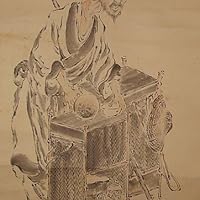
“This rootless shifting east and west
I can't suppress a smile myself
but how else can I make
the whole world my home.
If any of my old friends
come around asking
say I'm down at the river
by the Second Fushimi Bridge.”
― The Old Tea Seller: Life and Zen Poetry in 18th Century Kyoto
I can't suppress a smile myself
but how else can I make
the whole world my home.
If any of my old friends
come around asking
say I'm down at the river
by the Second Fushimi Bridge.”
― The Old Tea Seller: Life and Zen Poetry in 18th Century Kyoto

“What did Kiyoaki mean by his question? If one were forced to hazard a guess, it would be that he was trying to say that he had no interest in anything at all. He thought of himself as a thorn, a small, poisonous thorn jabbed into the workmanlike hand of his family. And this was his fate simply because he had acquired little elegance. A mere fifty years before, the Matsugaes had been a sturdy, upright samurai family, no more, eking out a frugal existence in the provinces. But in a brief span of time, their fortunes had soared. By Kiyoake’s time, the first traces of refinement were threatening to take hold on a family that, unlike the court of nobility, had enjoyed centuries of immunity to the virus of elegance. And Kiyoake, like an ant that senses the approaching flood, was experiencing the first intimations of his family’s rapid collapse.
His elegance was the thorn. And he was well aware that his aversion to coarseness, his delight in refinement, were futile; he was a plant without roots. Without meaning to undermine his family, without wanting to violate its traditions, he was condemned to do so by his very nature. And this poison would stunt his own life as it destroyed his family. The handsome young man felt that this futility typified his existence.
(p13.)”
― Spring Snow
His elegance was the thorn. And he was well aware that his aversion to coarseness, his delight in refinement, were futile; he was a plant without roots. Without meaning to undermine his family, without wanting to violate its traditions, he was condemned to do so by his very nature. And this poison would stunt his own life as it destroyed his family. The handsome young man felt that this futility typified his existence.
(p13.)”
― Spring Snow

“Every experience lately felt like an experiment of the body, of its power and limitations. Such experiments created a desire for something more fulfilling. It was a hunger born of rootlessness but he couldn't see that. He couldn't see that true liberation was a strictly DIY process.”
― Fairytales for Lost Children
― Fairytales for Lost Children

“Modern man is an island, in a historical sense. Every society born of revolution is an island, and it is an island that floats, like a thin film on the surface of history. He is always moving, disconnected from all that came before him, and never holding still long enough to strike the roots necessary to pass something on to those who will come after.”
― The Case Against the Modern World: A Crash Course in Traditionalist Thought
― The Case Against the Modern World: A Crash Course in Traditionalist Thought

“In a barren culture, one or two fragmentary story-themes play, like a broken record, broadcasting the same notes over and over again.”
―
―

“So where are you reall from?" I'm asked now and then, and I can only apologetically offer a list of places I've passed through. In that litany, I cross my fingers and hope that people will understand that I'm a messy agglutinate of all the places I've ever lived in. Like a hologram created by splitting up light beams, a permanent record of all the places I've lived, reflected off me.
And as with all things that are required to fit into the tiniest dimensions for efficient and optimal portability, I require assembly,”
―
And as with all things that are required to fit into the tiniest dimensions for efficient and optimal portability, I require assembly,”
―

“I had no brothers or sisters, so life was not difficult for my mother and me. When I think back, I see her clearly with her thin lips resolutely closed, with something on her face like a mask, I don't know – a thick mask, as though her face were the surface of the sea. Do you understand? It possessed not a single colour but a multitude, appearing and disappearing and intermingling. We had no relatives. She and I acted as relatives to each other. It was as if she were some stranger on the road with whom circumstances had chanced to bring me... I used to have – you may be surprised – a warm feeling of being free, that there was not a human being, by father or mother, to tie me down as a tent peg to particular spot, a particular domain... I was not like other children of my age: I wasn't wasn't affected by anything, I didn't cry when hit, wasn't glad if the teacher praised me in class, didn't suffer from the things the rest did. I was like something rounded, made of rubber: you throw it in the water and it doesn't get wet, you throw it on the ground and it bounces back.”
― Season of Migration to the North
― Season of Migration to the North
All Quotes
|
My Quotes
|
Add A Quote
Browse By Tag
- Love Quotes 102.5k
- Life Quotes 81k
- Inspirational Quotes 77.5k
- Humor Quotes 45.5k
- Philosophy Quotes 32k
- Inspirational Quotes Quotes 29k
- God Quotes 27k
- Wisdom Quotes 25.5k
- Romance Quotes 25k
- Truth Quotes 25k
- Poetry Quotes 24.5k
- Life Lessons Quotes 23k
- Quotes Quotes 21.5k
- Death Quotes 21k
- Happiness Quotes 19k
- Hope Quotes 19k
- Faith Quotes 18.5k
- Inspiration Quotes 18k
- Spirituality Quotes 16k
- Relationships Quotes 16k
- Motivational Quotes 16k
- Religion Quotes 15.5k
- Life Quotes Quotes 15.5k
- Writing Quotes 15k
- Love Quotes Quotes 15k
- Success Quotes 14.5k
- Motivation Quotes 14k
- Time Quotes 13k
- Science Quotes 12.5k
- Motivational Quotes Quotes 12k