
Find & Share Quotes with Friends
Scottish Borders Quotes
Quotes tagged as "scottish-borders"
Showing 1-7 of 7

“A further stroll among the hills brought us to what Scott pronounced the remains of a Roman camp, and as we sat upon a hillock which had once formed part of its ramparts, he pointed out the traces of the lines and bulwarks, and the praetorium, and showed a knowledge of castramentation that would not have disgraced Oldbuck himself. Indeed, various circumstances that I observed about Scott during my visit concurred to persuade me that many of the antiquarian humours of Monkbarns were taken from his own richly compounded character, and that some of the scenes and personages of that admirable novel were furnished by his own neighbourhood.”
― Abbotsford and Newstead Abbey
― Abbotsford and Newstead Abbey
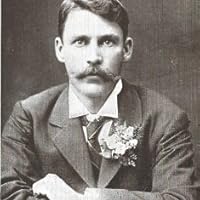
“There’s a spell in this Land of the Marches,
In this Border that gave us our birth,
In this spot where the Heaven’s wide arch is
Spread blue o’er the best of the earth!”
― The Land we Love
In this Border that gave us our birth,
In this spot where the Heaven’s wide arch is
Spread blue o’er the best of the earth!”
― The Land we Love

“...the legion, which as we have noted may already have been depleted by Trajan's troop movements, was moved north-westwards whole or in part from York to a new fortress at Carlisle sometime in the 110s to counter a growing threat from the south-west of Scotland. Then, at a date probably around 120, an uprising began in the Lowlands that gathered momentum and engulfed Trimontium at Newstead and the other forts further south along two corridors, one down Dere Street to the Corbridge area and the other veering south-west towards Carlisle. At some point, probably early in the rebellion, the IXth, accompanied by a large auxilliary force (scholars rarely mention that some auxilliary units from Britain are also unaccounted for after the 120s), emerged to engage a native force of superior numbers.
...it would be good to have more material evidence to confirm the Borderlands as the epicentre of the unpleasantness. Only time and the future assiduous efforts of another legion, this time of metal detectorists, are likely to tell us if the forlorn artefacts strewn across the moorlands of Lowland Scotland represent the last echoes of the IXth Hispana.”
― The Eagle and the Bear: A New History of Roman Scotland
...it would be good to have more material evidence to confirm the Borderlands as the epicentre of the unpleasantness. Only time and the future assiduous efforts of another legion, this time of metal detectorists, are likely to tell us if the forlorn artefacts strewn across the moorlands of Lowland Scotland represent the last echoes of the IXth Hispana.”
― The Eagle and the Bear: A New History of Roman Scotland

“Just between Melrose and Bemersyde is a lovely panorama, taking in an oxbow of the Tweed and a fine aspect of the Eildon Hills, which has become known as 'Scott's View', supposedly because the horses stopped there during the funeral cortege. As we have seen, after his death, Scott is over-written onto the places he described. Scott-land is a palimpsest of Scotland and Scott's works.”
― Scott-land: The Man Who Invented a Nation
― Scott-land: The Man Who Invented a Nation
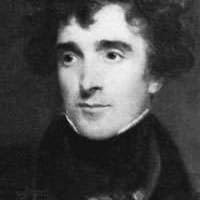
“As we descended the vale of the Gala, he began to gaze about him, and by degrees it was obvious that he was recognising the features of that familiar landscape. Presently he murmered a name or two - 'Gala Water surely - Buckholm - Torwoodlee'. As we rounded the hill at Ladhope, and the outline of the Eildons burst upon him, he became greatly excited, and when turning himself on the couch his eye caught caught at length his own towers, at the distance of a mile, he sprang up with a cry of delight.”
― Memoirs of Sir Walter Scott, Vol. 5 of 5
― Memoirs of Sir Walter Scott, Vol. 5 of 5

“My chief passion in those years was for the Border countryside, and my object in all my prentice writings was to reproduce its delicate charm, to catch the aroma of its gracious landscape and turbulent history and the idiom of its people. When I was absent from it, I was homesick, my memory was full of it, my happiest days were associated with it, and some effluence from its ageless hills and waters laid a spell upon me which has never been broken. I found in its people what I most admired in human nature – realism coloured by poetry, a stalwart independence sweetened by courtesy, a shrewd kindly wisdom. I asked for nothing better than to spend my life by the Tweed.”
― Memory Hold-the-Door: The Autobiography of John Buchan
― Memory Hold-the-Door: The Autobiography of John Buchan

“Outside, its a hard frost but a pale blue sky, an the kail an sprouts in the gairden are bairdit wi white. In the wuids a hoodie-craw's cawin, an the hedges are full o cocky wee robins shoutin the odds. The swing o the axe an the crack o splittin sticks lets distant neibours ken ye're up, ye've got throu anither nicht. Then twistin the Southern Reporter inti spirlies, coverin them wi kindlin an coal, an a match ti the fire: the day begins wi a mug o tea an a slice o toast, nithert in the ingle. Ay, Niel Gow's auld tune 'Whisky at Nicht an Dry in the Mornin' has some truth ti't tae.”
― Ayont the Thistle: A gallimaufry of poetry and prose to mark the centenary (1926 - 2026) of Hugh MacDiarmid's 'A Drunk Man looks at the Thistle'
― Ayont the Thistle: A gallimaufry of poetry and prose to mark the centenary (1926 - 2026) of Hugh MacDiarmid's 'A Drunk Man looks at the Thistle'
All Quotes
|
My Quotes
|
Add A Quote
Browse By Tag
- Love Quotes 102.5k
- Life Quotes 81k
- Inspirational Quotes 77.5k
- Humor Quotes 45.5k
- Philosophy Quotes 32k
- Inspirational Quotes Quotes 28.5k
- God Quotes 27k
- Wisdom Quotes 25k
- Romance Quotes 25k
- Truth Quotes 25k
- Poetry Quotes 24.5k
- Life Lessons Quotes 23k
- Quotes Quotes 21.5k
- Death Quotes 21k
- Happiness Quotes 19k
- Hope Quotes 19k
- Faith Quotes 18.5k
- Inspiration Quotes 18k
- Relationships Quotes 16k
- Spirituality Quotes 16k
- Motivational Quotes 16k
- Religion Quotes 15.5k
- Life Quotes Quotes 15.5k
- Writing Quotes 15k
- Love Quotes Quotes 15k
- Success Quotes 14.5k
- Motivation Quotes 14k
- Time Quotes 13k
- Science Quotes 12.5k
- Motivational Quotes Quotes 12k