
Find & Share Quotes with Friends
Syllogism Quotes
Quotes tagged as "syllogism"
Showing 1-6 of 6

“People have to talk about something just to keep their voice boxes in working order so they'll have good voice boxes in case there's ever anything really meaningful to say.”
― Cat’s Cradle
― Cat’s Cradle


“I shall sit down,' replied the cat, sitting down, 'but I shall enter an objection with regard to your last. My speeches in no way resemble verbal muck, as you have been pleased to put it in the presence of a lady, but rather a sequence of tightly packed syllogisms, the merit of which would be appreciated by such connoisseurs as Sextus Empiricus, Martianus Capella, and, for all I know, Aristotle himself.'
Your king is in check,' said Woland.
Very well, very well,' responded the cat, and he began studying the chessboard through his opera glasses.
And so, donna,' Woland addressed Margarita, 'I present to you my retinue. This one who is playing the fool is the cat Behemoth...”
― The Master and Margarita
Your king is in check,' said Woland.
Very well, very well,' responded the cat, and he began studying the chessboard through his opera glasses.
And so, donna,' Woland addressed Margarita, 'I present to you my retinue. This one who is playing the fool is the cat Behemoth...”
― The Master and Margarita

“Dividing one number by another is mere computation ; knowing what to divide by what is mathematics.”
― How Not to Be Wrong: The Power of Mathematical Thinking
― How Not to Be Wrong: The Power of Mathematical Thinking

“The Greeks think they justly honor players, because they worship the gods who demand plays; the Romans, on the other hand, do not suffer an actor to disgrace by his name his own plebeian tribe, far less the senatorial order. And the whole of this discussion may be summed up in the following syllogism. The Greeks give us the major premise: If such gods are to be worshiped, then certainly such men may be honored. The Romans add the minor: But such men must by no means be honoured. The Christians draw the conclusion: Therefore such gods must by no means be worshiped.”
― City of God
― City of God
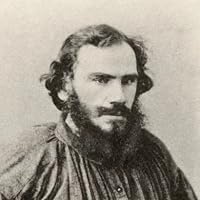
“In the depths of his soul Ivan Ilyich knew that he was dying... he simply did not, he could not possibly understand it. The example of a syllogism he had studied in Kiesewetter's logic - Caius is a man, men are mortal, therefore Caius is mortal-- had seemed to him all his life to be correct only in relation to Caius, but by no means himself. For the man Caius, man in general, it was perfectly correct; but he was not Caius and not man in general, he had always been quite, quite separate from all other human beings...And Caius is indeed mortal, and it's right that he die, but for me, Vanya, Ivan Ilyich, with all my feelings and thoughts-- for me it's another matter. And it cannot be that I should die. It would be too terrible.
So it felt to him.”
―
So it felt to him.”
―
All Quotes
|
My Quotes
|
Add A Quote
Browse By Tag
- Love Quotes 102.5k
- Life Quotes 81k
- Inspirational Quotes 77.5k
- Humor Quotes 45.5k
- Philosophy Quotes 32k
- Inspirational Quotes Quotes 29k
- God Quotes 27k
- Wisdom Quotes 25.5k
- Romance Quotes 25k
- Truth Quotes 25k
- Poetry Quotes 24.5k
- Life Lessons Quotes 23k
- Quotes Quotes 21.5k
- Death Quotes 21k
- Happiness Quotes 19k
- Hope Quotes 19k
- Faith Quotes 18.5k
- Inspiration Quotes 18k
- Spirituality Quotes 16k
- Relationships Quotes 16k
- Motivational Quotes 16k
- Religion Quotes 15.5k
- Life Quotes Quotes 15.5k
- Writing Quotes 15k
- Love Quotes Quotes 15k
- Success Quotes 14.5k
- Motivation Quotes 14k
- Time Quotes 13k
- Science Quotes 12.5k
- Motivational Quotes Quotes 12k