
Find & Share Quotes with Friends
Vajrayana Quotes
Quotes tagged as "vajrayana"
Showing 1-14 of 14

“The aim of far too many teachings these days is to make people "feel good," and even some Buddhist masters are beginning to sound like New Age apostles. Their talks are entirely devoted to validating the manifestation of ego and endorsing the "rightness" of our feelings, neither of which have anything to do with the teachings we find in the pith instructions. So, if you are only concerned about feeling good, you are far better off having a full body massage or listening to some uplifting or life-affirming music than receiving dharma teachings, which were definitely not designed to cheer you up. On the contrary, the dharma was devised specifically to expose your failings and make you feel awful.”
― Not For Happiness: A Guide to the So-Called Preliminary Practices
― Not For Happiness: A Guide to the So-Called Preliminary Practices
“Just calling one's practice "approach and accomplishment" and staying in retreat for years will produce nothing but hardship. Completing hundreds of millions of mantras will not even bring the warmth of the ordinary qualities that mark one's progress on the path! In other words, if the essential points of the path are not taken into account, perseverance will amount to nothing more than chasing a mirage.”
― Deity Mantra and Wisdom: Development Stage Meditation in Tibetan Buddhist Tantra
― Deity Mantra and Wisdom: Development Stage Meditation in Tibetan Buddhist Tantra
“Primordial wisdom [Skt. jñāna; Tib. ཡེ་ཤེས་, yeshé; Wyl. ye shes] has many names, but in truth it refers simply to the inseparability of the ground and fruit, the one and only essence-drop [thig le nyag gcig] of the dharmakaya. If it is assessed from the standpoint of its utterly pure nature, it is the actual dharmakaya, primordial Buddhahood. For, from its own side, it is free from every obscuration. We must understand that we are Buddha from the very beginning. Without this understanding, we will fail to recognize the spontaneously present mandala of the ground, and we will be obliged to assert, in accordance with the vehicle of the paramitas, that Buddhahood has a cause. We will fail to recognize the authentic view of the Secret Mantra.”
― White Lotus: An Explanation of the Seven-line Prayer to Guru Padmasambhava
― White Lotus: An Explanation of the Seven-line Prayer to Guru Padmasambhava
“Students often ask if they should only invoke the guru in the context of a formal daily practice, or if it can be done anywhere. The answer is that it depends on the student. Dharma bums who roam the streets of Kathmandu smoking hashish and sitting in cafés nursing a half-empty cup of cappuccino for most of the day should probably sit formally and recite ten million or one hundred million mantras. Whereas those who have demanding jobs in London, New York or Paris might benefit more from reciting the mantra on their way to work, or as they wait for a bus. The method each student is given will depend entirely on their personal situation and how disciplined they are.”
― Not For Happiness: A Guide to the So-Called Preliminary Practices
― Not For Happiness: A Guide to the So-Called Preliminary Practices
“The special skill of esoteric Buddhism is transmutation by right view and pure perception, using all appropriate means for training. For example, eating food is not itself a Buddhist practice, but if one uses it as a means of training, it becomes a Buddhist training in transforming one's daily life as Buddhist practice.”
― Hidden Teachings of Tibet
― Hidden Teachings of Tibet
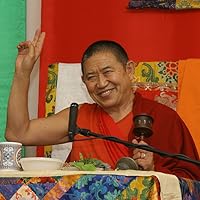
“There are many thoughts that always arise, but thoughts are impermanent; they come and go. The mind from which they arise, however, abides like space; it never comes and goes. It is always there, it has always been there, and it will always be there. It is like space, or a vast ocean, or a mirror. It never goes anywhere, just like space.
Therefore, do not cling to the temporary thoughts. No matter how much you cling to them you cannot actually hold on to them, as they are impermanent by nature. Rather, observe that which never goes away, the clear knowing awareness that recognizes all the thoughts arising. This awareness is the Buddha within you; it is your true nature. Whatever thoughts arise, negative thoughts, sadness, afflictive emotions, do not follow them but continue to observe with mindfulness.
When this mindfulness is sustained, arising thoughts will naturally dissipate without the need to abandon them. This awareness must be upheld, not only in meditation sessions, but also during all your activities. No matter what you experience, happiness or suffering, it does not affect your awareness; it always is as it is. This nature is Buddha nature, and every being has it.”
―
Therefore, do not cling to the temporary thoughts. No matter how much you cling to them you cannot actually hold on to them, as they are impermanent by nature. Rather, observe that which never goes away, the clear knowing awareness that recognizes all the thoughts arising. This awareness is the Buddha within you; it is your true nature. Whatever thoughts arise, negative thoughts, sadness, afflictive emotions, do not follow them but continue to observe with mindfulness.
When this mindfulness is sustained, arising thoughts will naturally dissipate without the need to abandon them. This awareness must be upheld, not only in meditation sessions, but also during all your activities. No matter what you experience, happiness or suffering, it does not affect your awareness; it always is as it is. This nature is Buddha nature, and every being has it.”
―
“Remember, if a teaching is not threatening to the ego, the armored archetype within us, then it’s not doing its job. So if people are fixated on chastity, a display of licentiousness will be useful. If someone thinks licentiousness is the path, then emphasize chastity. Sobriety, drunkenness. Logical thought, crazy thought.”
―
―
“Taming the mind is the process of refining away mental afflictions until we aren't ruled by our circumstances and the negative thoughts and emotions they elicit.”
―
―
“There is no way to attain enlightenment on one's own. Such a thing has never happened in infinite aeons. Shravakas and pratyekabuddhas who appear when a buddha is not manifest in this world can realize the twelve branches of interdependent origination and attain arhatship. They aren't, however, able to attain complete enlightenment and cannot benefit beings in a vast way; they can only liberate themselves from the sufferings of cyclic existence, and their realization is far from complete enlightenment.
In the Sutrayana, one studies and analyzes the teachings and texts, but no matter how extensive the teachings are, they are all based on the essential nature. The Buddha provided many different levels of teaching, which can be categorized into provisional and definitive meaning. These teachings can be studied, analyzed, and examined, but they're not so easy to understand. For instance, when great scholars, such as khenpos, give detailed Sutrayana teachings, the students listen, reflect on, and analyze the teachings and debate on them. They rely on the texts that they have been taught.”
― An Ocean of Blessings: Heart Teachings of Drubwang Penor Rinpoche
In the Sutrayana, one studies and analyzes the teachings and texts, but no matter how extensive the teachings are, they are all based on the essential nature. The Buddha provided many different levels of teaching, which can be categorized into provisional and definitive meaning. These teachings can be studied, analyzed, and examined, but they're not so easy to understand. For instance, when great scholars, such as khenpos, give detailed Sutrayana teachings, the students listen, reflect on, and analyze the teachings and debate on them. They rely on the texts that they have been taught.”
― An Ocean of Blessings: Heart Teachings of Drubwang Penor Rinpoche

“As a transmuted energy, anger is mirror-wisdom – undistracted, undistorted clarity. But in order for us to find this clarity, to polish this mirror, we need to cut through the insidious process of justification. Justification is the authority we invoke to license our anger. Because of this it is important not to allow space for the distorted indulgence of justification. This can be very difficult
because the process of justification is a strong part of our education and a salient feature of the world’s cultural heritage. The nuclear balance of terror was part of that process. Totalitarian political movements (either extreme left or extreme right) are a manifestation of that process; and, unfortunately, it has also become part of the very ideologies that have arisen to benefit humanity. How often have we heard people saying: “Of course I’m angry! Wouldn’t anyone be angry?” And, of course, this is a purely rhetorical question. The concept that we have every right to feel anything that we feel needs to be called seriously into question. At best we can say that we simply feel what we feel.
It is a delicate balance: to acknowledge emotional needs, on the one hand, and to have a sense of these needs being conceptually generated on the other. This balancing act requires the experience of emptiness, because without it, we either indulge ourselves or brutalise ourselves. The experience of emptiness, in this sense, helps us to view our emotions with a degree of humour – with more sanity and true perspective. With this sense of space we can find ourselves adopting a very powerful stance – the stance of a practitioner. Then it is no longer possible to say: “You have made me angry!” All we can say is: “I have made myself angry in reaction to what I have perceived you to have done to me”. In this way we make ourselves completely responsible for what we feel. That is really wonderful, because from this perspective we stop laying this responsibility on other people. Taking responsibility for whatever we may happen to be feeling is what enables us to kill justification.
Dechen, Khandro; Chogyam, Ngakpa (2014-01-14). Spectrum of Ecstasy: Embracing the Five Wisdom Emotions of Vajrayana Buddhism (p. 143). Shambhala Publications. Kindle Edition.”
―
because the process of justification is a strong part of our education and a salient feature of the world’s cultural heritage. The nuclear balance of terror was part of that process. Totalitarian political movements (either extreme left or extreme right) are a manifestation of that process; and, unfortunately, it has also become part of the very ideologies that have arisen to benefit humanity. How often have we heard people saying: “Of course I’m angry! Wouldn’t anyone be angry?” And, of course, this is a purely rhetorical question. The concept that we have every right to feel anything that we feel needs to be called seriously into question. At best we can say that we simply feel what we feel.
It is a delicate balance: to acknowledge emotional needs, on the one hand, and to have a sense of these needs being conceptually generated on the other. This balancing act requires the experience of emptiness, because without it, we either indulge ourselves or brutalise ourselves. The experience of emptiness, in this sense, helps us to view our emotions with a degree of humour – with more sanity and true perspective. With this sense of space we can find ourselves adopting a very powerful stance – the stance of a practitioner. Then it is no longer possible to say: “You have made me angry!” All we can say is: “I have made myself angry in reaction to what I have perceived you to have done to me”. In this way we make ourselves completely responsible for what we feel. That is really wonderful, because from this perspective we stop laying this responsibility on other people. Taking responsibility for whatever we may happen to be feeling is what enables us to kill justification.
Dechen, Khandro; Chogyam, Ngakpa (2014-01-14). Spectrum of Ecstasy: Embracing the Five Wisdom Emotions of Vajrayana Buddhism (p. 143). Shambhala Publications. Kindle Edition.”
―
“Through Bodhichitta you will realize that there is no self. Self-grasping will be destroyed, for when you think of others you do not think about yourself. Ultimately 'self' and 'other' are but thoughts. When we understand that we are not separate from others, we begin to fathom the preciousness of compassion, of Bodhichitta.”
―
―
“Ten ma (bsTan Ma [བསྟན་མ་]). Twelve local female spirits of Tibet who have taken the vow from Guru Padmasambhava to protect the Dharma and its followers: the Four Ten mas of the Dud mo [bDud Mo] type: 1) Tshe ring ma (Tshe Ring Ma [ཚེ་རིང་མ་] or Kun Grags Ma [ཀུན་གྲགས་མ་]), 2) Dor je Ya ma kyong (rDo rje gYa Ma sKyong [རྡོ་རྗེ་གཡ་མ་སྐྱོང་]), 3) Kun zang mo (Kun bZang Mo [ཀུན་བཟང་མོ་] and 4) Geg gyi tso (bGegs Kyi gTso [བགེགས་ཀྱི་གཙོ་]; The Four Ten mas of the Nod jin mo (S. Yakṣasi, T. gNod sByin Mo [གནོད་སྦྱིན་མོ་]) type: 1) Chen chig ma (sPyan gChig Ma [སྤྱན་གཅིག་མ་]), 2) Kha ding Lu mo gyal (mKha' lDing Klu Mo rGyal [མཁའ་ལྡིང་ཀླུ་མོ་རྒྱལ་]), 3) Dor je Khyung tsun ma (rDo rje Khyung bTsun Ma [རྡོ་རྗེ་ཁྱུང་བཙུན་མ་]), and 4) Trag mo gyal (Drag Mo rGyal [དྲག་མོ་རྒྱལ་]); The Four Men Mo (sMan Mo [སྨེན་མོ་]): 1) Pod kham kyong (Bod Khams sKyong [བོད་ཁམས་སྐྱོང་]), 2) Men chig ma (sMan gChig Ma [སྨན་གཅིག་མ་]), 3) Yar mo sil (gYar Mo bSil [གཡར་མོ་བསིལ་]), and 4) Dor je Zu le men (rDo rje Zu Le sMan [རྡོ་རྗེ་གཟུགས་ལེགས་སྨན་]).”
― Hidden Teachings of Tibet
― Hidden Teachings of Tibet
“It’s not a question of deeper. It’s a question of opening wide, completely open. It’s not going in, in, but it’s expanding out, because you don’t have to try to make sure there is a little atom bomb inside you. But you can trust there is energy everywhere, and you have to open to it. Therefore it comes back to you at the same time.”
―
―
“It's good to be aware of all the (buddha) family patterns and to remember that our energy is just energy, and that every form of energy has the potential to be transformed into wisdom.
One of the most wonderful things about Vajrayana is that the stronger our afflictions are, the stronger the encumbered patterns, the stronger the wisdom will be.
So it's actually considered to be really good for a Vajrayana practitioner to be very passionate or very angry or very lazy, or whatever the dominant obstructing emotion might be, because an equal intensity of that energy will be transformed into wisdom.”
― Wisdom Rising: Journey into the Mandala of the Empowered Feminine
One of the most wonderful things about Vajrayana is that the stronger our afflictions are, the stronger the encumbered patterns, the stronger the wisdom will be.
So it's actually considered to be really good for a Vajrayana practitioner to be very passionate or very angry or very lazy, or whatever the dominant obstructing emotion might be, because an equal intensity of that energy will be transformed into wisdom.”
― Wisdom Rising: Journey into the Mandala of the Empowered Feminine
All Quotes
|
My Quotes
|
Add A Quote
Browse By Tag
- Love Quotes 102.5k
- Life Quotes 81k
- Inspirational Quotes 77.5k
- Humor Quotes 45.5k
- Philosophy Quotes 32k
- Inspirational Quotes Quotes 29k
- God Quotes 27k
- Wisdom Quotes 25.5k
- Romance Quotes 25k
- Truth Quotes 25k
- Poetry Quotes 24.5k
- Life Lessons Quotes 23k
- Quotes Quotes 21.5k
- Death Quotes 21k
- Happiness Quotes 19k
- Hope Quotes 19k
- Faith Quotes 18.5k
- Inspiration Quotes 18k
- Relationships Quotes 16k
- Spirituality Quotes 16k
- Motivational Quotes 16k
- Religion Quotes 15.5k
- Life Quotes Quotes 15.5k
- Writing Quotes 15k
- Love Quotes Quotes 15k
- Success Quotes 14.5k
- Motivation Quotes 14k
- Time Quotes 13k
- Science Quotes 12.5k
- Motivational Quotes Quotes 12k