
7 books
—
1 voter
Discover new books on Goodreads
Meet your next favorite book
Absurdism Books
Showing 1-50 of 1,909
The Stranger (Paperback)
by (shelved 397 times as absurdism)
avg rating 4.03 — 1,555,654 ratings — published 1942
The Metamorphosis (Mass Market Paperback)
by (shelved 158 times as absurdism)
avg rating 3.91 — 1,586,217 ratings — published 1915
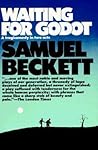
Waiting for Godot (Paperback)
by (shelved 133 times as absurdism)
avg rating 3.84 — 230,270 ratings — published 1952
The Myth of Sisyphus (Paperback)
by (shelved 118 times as absurdism)
avg rating 4.15 — 112,335 ratings — published 1942
The Plague (Paperback)
by (shelved 102 times as absurdism)
avg rating 4.02 — 337,810 ratings — published 1947
The Trial (Paperback)
by (shelved 87 times as absurdism)
avg rating 3.93 — 428,950 ratings — published 1925
The Fall (Paperback)
by (shelved 69 times as absurdism)
avg rating 4.02 — 148,703 ratings — published 1956
The Myth of Sisyphus, and Other Essays (Paperback)
by (shelved 61 times as absurdism)
avg rating 4.21 — 67,392 ratings — published 1942
Slaughterhouse-Five (Paperback)
by (shelved 40 times as absurdism)
avg rating 4.10 — 1,537,588 ratings — published 1969
Rosencrantz and Guildenstern Are Dead (Paperback)
by (shelved 37 times as absurdism)
avg rating 4.04 — 94,635 ratings — published 1967
The Castle (Paperback)
by (shelved 36 times as absurdism)
avg rating 3.90 — 81,389 ratings — published 1926
Catch-22 (Paperback)
by (shelved 33 times as absurdism)
avg rating 3.99 — 908,765 ratings — published 1961
The Rebel: An Essay on Man in Revolt (Paperback)
by (shelved 30 times as absurdism)
avg rating 4.13 — 20,118 ratings — published 1951
Endgame (Paperback)
by (shelved 27 times as absurdism)
avg rating 3.79 — 25,435 ratings — published 1957
The Hitchhiker's Guide to the Galaxy (The Hitchhiker's Guide to the Galaxy, #1)
by (shelved 27 times as absurdism)
avg rating 4.22 — 2,089,518 ratings — published 1979
Cat’s Cradle (Paperback)
by (shelved 22 times as absurdism)
avg rating 4.15 — 451,922 ratings — published 1963
The Craziest Book Ever Written (Kindle Edition)
by (shelved 20 times as absurdism)
avg rating 3.52 — 153 ratings — published
Nausea (Hardcover)
by (shelved 20 times as absurdism)
avg rating 3.93 — 148,879 ratings — published 1938
The Third Policeman (Paperback)
by (shelved 19 times as absurdism)
avg rating 3.96 — 24,501 ratings — published 1967
The Master and Margarita (Paperback)
by (shelved 19 times as absurdism)
avg rating 4.27 — 457,553 ratings — published 1967
A Happy Death (Paperback)
by (shelved 18 times as absurdism)
avg rating 3.80 — 28,236 ratings — published 1971
Exile and the Kingdom (Paperback)
by (shelved 17 times as absurdism)
avg rating 3.82 — 16,907 ratings — published 1957
Rhinocéros (Paperback)
by (shelved 16 times as absurdism)
avg rating 3.83 — 21,363 ratings — published 1959
No Longer Human (Paperback)
by (shelved 14 times as absurdism)
avg rating 3.92 — 296,332 ratings — published 1948
Candide (Paperback)
by (shelved 12 times as absurdism)
avg rating 3.76 — 315,690 ratings — published 1759
The Color of Magic (Discworld, #1; Rincewind, #1)
by (shelved 12 times as absurdism)
avg rating 3.99 — 435,920 ratings — published 1983
La Cantatrice chauve (Mass Market Paperback)
by (shelved 12 times as absurdism)
avg rating 3.75 — 7,799 ratings — published 1950
Caligula (Mass Market Paperback)
by (shelved 12 times as absurdism)
avg rating 4.09 — 18,738 ratings — published 1944
Alice’s Adventures in Wonderland / Through the Looking-Glass (Paperback)
by (shelved 12 times as absurdism)
avg rating 4.06 — 627,106 ratings — published 1871
The Woman in the Dunes (Paperback)
by (shelved 11 times as absurdism)
avg rating 3.88 — 42,983 ratings — published 1962
The Metamorphosis (Graphic Novel Adaptation)
by (shelved 10 times as absurdism)
avg rating 3.80 — 5,231 ratings — published 2004
In the Penal Colony (Paperback)
by (shelved 10 times as absurdism)
avg rating 3.92 — 36,017 ratings — published 1918
Kafka on the Shore (Paperback)
by (shelved 9 times as absurdism)
avg rating 4.11 — 582,900 ratings — published 2002
Notes from Underground (Paperback)
by (shelved 9 times as absurdism)
avg rating 4.16 — 267,403 ratings — published 1864
A Hunger Artist (Short Prose of Franz Kafka)
by (shelved 9 times as absurdism)
avg rating 4.08 — 25,170 ratings — published 1924
Fear and Loathing in Las Vegas: A Savage Journey to the Heart of the American Dream (Paperback)
by (shelved 9 times as absurdism)
avg rating 4.06 — 390,937 ratings — published 1971
Naked Lunch: The Restored Text (Paperback)
by (shelved 9 times as absurdism)
avg rating 3.46 — 101,319 ratings — published 1959
The Crying of Lot 49 (Paperback)
by (shelved 8 times as absurdism)
avg rating 3.69 — 102,972 ratings — published 1965
Crime and Punishment (Paperback)
by (shelved 8 times as absurdism)
avg rating 4.29 — 1,176,457 ratings — published 1866
Mort (Discworld, #4; Death, #1)
by (shelved 8 times as absurdism)
avg rating 4.24 — 282,699 ratings — published 1987
Invitation to a Beheading (Paperback)
by (shelved 8 times as absurdism)
avg rating 3.91 — 21,276 ratings — published 1938
Fight Club (Paperback)
by (shelved 8 times as absurdism)
avg rating 4.18 — 668,163 ratings — published 1996
Six Characters in Search of an Author (Paperback)
by (shelved 8 times as absurdism)
avg rating 3.83 — 23,614 ratings — published 1921
Breakfast of Champions (Paperback)
by (shelved 8 times as absurdism)
avg rating 4.06 — 287,642 ratings — published 1973
The Complete Stories (Paperback)
by (shelved 8 times as absurdism)
avg rating 4.33 — 29,140 ratings — published 1915
Dead Souls (Paperback)
by (shelved 8 times as absurdism)
avg rating 3.97 — 101,568 ratings — published 1842
Amerika (Paperback)
by (shelved 8 times as absurdism)
avg rating 3.73 — 36,325 ratings — published 1927
Murphy (Paperback)
by (shelved 8 times as absurdism)
avg rating 3.80 — 6,748 ratings — published 1938
“I am interested only in "nonsense"; only in that which makes no practical sense. I am interested in life only in its absurd manifestations.”
―
―
“The Coach’s head was oblong with tiny slits that served as eyes, which drifted in tides slowly inward, as though the face itself were the sea or, in fact, a soup of macromolecules through which objects might drift, leaving in their wake, ripples of nothingness. The eyes—they floated adrift like land masses before locking in symmetrically at seemingly prescribed positions off-center, while managing to be so closely drawn into the very middle of the face section that it might have seemed unnecessary for there to have been two eyes when, quite likely, one would easily have sufficed. These aimless, floating eyes were not the Coach’s only distinctive feature—for, in fact, connected to the interior of each eyelid by a web-like layer of rubbery pink tissue was a kind of snout which, unlike the eyes, remained fixed in its position among the tides of the face, arcing narrowly inward at the edges of its sharp extremities into a serrated beak-like projection that hooked downward at its tip, in a fashion similar to that of a falcon’s beak. This snout—or beak, rather—was, in fact, so long and came to such a fine point that as the eyes swirled through the soup of macromolecules that comprised the man’s face, it almost appeared—due to the seeming thinness of the pink tissue—that the eyes functioned as kinds of optical tether balls that moved synchronously across the face like mirror images of one another.
'I wore my lizard mask as I entered the tram, last evening, and people found me fearless,' the Coach remarked, enunciating each word carefully through the hollow clack-clacking sound of his beak, as its edges clapped together. 'I might have exchanged it for that of an ox and then thought better. A lizard goes best with scales, don’t you think?' Bunnu nodded as he quietly wondered how the Coach could manage to fit that phallic monstrosity of a beak into any kind of mask, unless, in fact, this disguise of which he spoke, had been specially designed for his face and divided into sections in such a way that they could be readily attached to different areas—as though one were assembling a new face—in overlapping layers, so as to veil, or perhaps even amplify certain distinguishable features. All the same, in doing so, one could only imagine this lizard mask to be enormous to the extent that it would be disproportionate with the rest of the Coach’s body. But then, there were ways to mask space, as well—to bend light, perhaps, to create the illusion that something was perceptibly larger or smaller, wider or narrower, rounder or more linear than it was in actuality. That is to say, any form of prosthesis designed for the purposes of affecting remedial space might, for example, have had the capability of creating the appearance of a gap of void in occupied space. An ornament hangs from the chin, let’s say, as an accessory meant to contour smoothly inward what might otherwise appear to be hanging jowls. This surely wouldn’t be the exact use that the Coach would have for such a device—as he had no jowls to speak of—though he could certainly see the benefit of the accessory’s ingenuity. This being said, the lizard mask might have appeared natural rather than disproportionate given the right set of circumstances. Whatever the case, there was no way of even knowing if the Coach wasn’t, in fact, already wearing a mask, at this very moment, rendering Bunnu’s initial appraisal of his character—as determined by a rudimentary physiognomic analysis of his features—a matter now subject to doubt. And thus, any conjecture that could be made with respect to the dimensions or components of a lizard mask—not to speak of the motives of its wearer—seemed not only impractical, but also irrelevant at this point in time.”
― Don't Forget to Breathe