
The Filipino Group discussion

This topic is about
The Great Ideas of Philosophy
note: This topic has been closed to new comments.
Buddy Reads
>
The Great Ideas of Philosophy by Daniel Robinson | Chapter 11: Hippocrates and the Science of Life

 This is what Ycel posted as overview on the audiobook, by the way :)
Scope: (view spoiler)
The Actual Chapters: (view spoiler)
About the speaker / author:
(view spoiler)
Just a couple of simple rules:1. Do try to stay on topic as much as possible.
2. Don't feed the trolls. (view spoiler)
3. Respect other people's opinions.
4. Do keep an open mind because all our earlier preconceptions about ideas, biases, prejudices, political leanings, religious beliefs, etc. will be challenged. So be prepared to have our beliefs and ideas tested. (view spoiler)
5. Don't forget that we're here to learn and have fun!
-Ycel & DC
 Yay! I'm excited with this. Though madugo siya. And medyo slow learner ako kapag audio book. But still, I want to participate :D
 If you want to see our erudite (and should I say avuncular) professor in action, you may check him out here.
Lecture One: From the Upanishads to Homer
If you want to see our erudite (and should I say avuncular) professor in action, you may check him out here.
Lecture One: From the Upanishads to HomerThe introductory lecture alone is so laden with great ideas that I was literally having a field day the first time I came across this material. I am not exactly a fan of the Upanishads and the Brahma variety, it does not appeal to me the way the Homeric epics do. If you have not read the Iliad, I bet your curiosity is piqued :) (do get the Robert Fitzgerald version for maximum enjoyment).(view spoiler)

I have been a fan of mythology ever since I read it in high school, and I’ve always wondered then why the gods behaved like humans (extramarital affairs, family feud, inciting conflict among the mortals). I was completely thrown off when my English teacher said(view spoiler). Yet it did not stop me from reading mythology, even the latest reincarnation of the gods in the hands of Rick Riordan because it’s true, we see ourselves in these epics. To think how a dude from pre-philosophical era was able to weave an attempt to explain why things work the way they do, 750 years before Christ was born, was truly remarkable (no matter how flawed).
What I like best about Lecture One is the way Prof. Robinson simplified the three core problems of philosophy (view spoiler): the problem of knowledge, the problem of conduct, and the problem of governance. I met a very learned guy two years ago who said that all great universities classify their course offerings under 3 headings to answer 3 great questions:
(1) (view spoiler)
(2) (view spoiler) and
(3) (view spoiler).
In a way, Prof. Robinson’s structure is quite helpful in helping one understand question #1 (to some extent, if one is disciplined enough to pursue it) and a great deal of question #2. And my hope is that by pursuing the ideas presented here, I would be able to face question #3 with courage truly worthy of a Greek hero. Because in the end, isn’t question #3 the most important question of all?
Which makes me think that I shouldn't ignore the Brahma variety after all.
 01. From the Upanishads to Homer
I will take on the role of the working student (because I will most likely listen to most of the lectures while at work). And as a working student, I hereby present you with my haphazardly taken notes.
(view spoiler)
First of all: I like hearing Daniel Robinson talk. He seems like he's just brimming with all these ideas he's so eager to share with all of us :) And it seems that he talks with great knowledge and authority too, something like a sage old uncle.(He DOES look like one in the video link you noted, Ycel! Though I hope he wasn't standing the whole time o_O But the vid's nice! It's got pics :D)
As for the actual listening, I think it's a great start off to the entire series. I like that he begins with the myth of Theseus and the Minotaur, and then he starts connecting the signficance of the metaphor, and then of the connection of the myth to philosophy. It's sort of like breaking you into the entire realm at your fingertips :D
I have to confess, by the way, that I haven't heard of the Upanishads before this lecture ^^; I only took the guess that they're related to the Hindu religion (especially due to Robinson's note of the Brahman, Atman and all that). There's an entire realm of philosophical thought under that wide umbrella, apparently - more than the "wise men" notion of Robinson. Very deep stuff, the Upanishads. Here's the Wikipedia link -> http://en.wikipedia.org/wiki/Upanishads
A note on Homer: the last time I've read of him was in high school! I better get to reading him again. And maybe sneak some movies on the Trojan Horse? :D
Ycel wrote: " I was completely thrown off when my English teacher said..."(view spoiler)
Ycel wrote: "... the problem of knowledge, the problem of conduct, and the problem of governance. I met a very learned guy two years ago who said that all great universities classify their course offerings under 3 headings to answer 3 great questions... "
(view spoiler)
Ycel wrote: "And my hope is that by pursuing the ideas presented here, I would be able to face question #3 with courage truly worthy of a Greek hero. Because in the end, isn’t question #3 the most important question of all?"
(view spoiler)
Ycel wrote: "Which makes me think that I shouldn't ignore the Brahma variety after all. "
(view spoiler)
Angus wrote: "It came first to me as ironic because nothing is concretely answered in myths. They have, in my case, provided more questions than they ought to, which is really the point of it. "
(view spoiler)
Angus wrote: "Is it? But why do a lot of people seem to suppress it? Is it because they are more prepared, therefore courageous than the people seeking knowledge, or they prefer ignorance because they are more afraid? If it's the latter, all people must be afraid."
(view spoiler)
Angus wrote: "*There's no way of telling how things are going to come out. - Yes, and that is why I believe luck is a major factor in determining one's fate. "
(view spoiler)
Oh, and here are some questions to consider, according to the guide notes:1. Summarize the implications that follow when the soul of the cosmos is assumed to be within the person, in contrast to the sharp Homeric division between the human and the divine.
2. The Upanishads feature a search for wisdom; Homer’s epics, for heroic achievement. Describe how both may be regarded as “perfectionist” in their aims but in quite different ways.
DC:Wait, did you mean question #3 of the universities, or #3 of Robinson?
I am quite interested in the question “where are we going?” although I would put more emphasis on the journey, not the destination :)
But at the end of it, I don't like the idea of a heartless, lawless, stateless character. I guess at one point or another we'd have to choose what to think, how to act, and how we respond to other people. I think to act otherwise would be bordering on anti-socialism?
Did you mean being anti-social?
I think Homer was referring to someone who will not submit to the rule of law and the common punishment during that time was ostracism.
ANGUS:Any recommendations aside from Edith Hamilton's? How about The Greek Myths?
Wow! I like!
*Quest for knowledge is natural undertaking. - Is it? But why do a lot of people seem to suppress it? Is it because they are more prepared, therefore courageous than the people seeking knowledge, or they prefer ignorance because they are more afraid? If it's the latter, all people must be afraid.
"ALL men by nature desire to know,” said Aristotle. That is why we have our senses, which are our primary mode of acquiring knowledge. To not use them and therefore not to acquire knowledge is unnatural. A child is naturally curious, and by God, they want to know things. But surrounded by lazy adults, a child’s natural curiosity dies, and grows to be like the lazy adults who project themselves on the child. Nature and nurture go hand in hand. It is quite unbelievable for me to think that people are afraid of knowledge. We only fear what we do not know. If it is the work that they need to put in that they fear, then they’re just plain lazy in my eyes.
*That's not our fate, our place is in Earth, it's a place of war, love, failed aspirations, heroic gestures. - I just love it. I am not a super fast typist so this is paraphrased.
He has a lot more of these in store :)
Ycel wrote: "I am quite interested in the question “where are we going?” although I would put more emphasis on the journey, not the destination :)"(view spoiler)
Ycel wrote: "Did you mean being anti-social?
I think Homer was referring to someone who will not submit to the rule of law and the common punishment during that time was ostracism."
(view spoiler)
Ycel wrote: "A child is naturally curious, and by God, they want to know things. But surrounded by lazy adults, a child’s natural curiosity dies, and grows to be like the lazy adults who project themselves on the child."
>>> So Little Prince :) <3
 will read homer and Upanishads.
Ycel and DC: I concur that social and cultural factors are important in nurturing one's quest for knowledge. Your examples on laziness and political suppression demonstrate a person's rather stunted sense of curiosity.
will read homer and Upanishads.
Ycel and DC: I concur that social and cultural factors are important in nurturing one's quest for knowledge. Your examples on laziness and political suppression demonstrate a person's rather stunted sense of curiosity.BTW, I am exclusively listening to the audio books. I haven't read the PDF thing yet, and I am not sure if I could.
Angus: The PDF is just a guide and summarizes the important points of the lecture. You won't miss much if you don't read it. We will just post the guide questions here.
02.What is It and Did the Greeks Invent It?I'm posting my working student notes now. Don't feel pressured, guys. Besides, my thoughts aren't neatly processed. :D
(view spoiler)
*Ignoring Angus' Lecture Two notes for now. Teehee.*1. Summarize the implications that follow when the soul of the cosmos is assumed to be within the person, in contrast to the sharp Homeric division between the human and the divine.
(view spoiler)
2. The Upanishads feature a search for wisdom; Homer’s epics, for heroic achievement. Describe how both may be regarded as “perfectionist” in their aims but in quite different ways.
(view spoiler)
 Billy wrote: "will read homer and Upanishads."
Oh, hey Billy! Welcome! We'll be looking forward to your thoughts :D
I’m guessing the questions are more for opinions, so I won’t go back to my notes to answer them :D
1. Summarize the implications that follow when the soul of the cosmos is assumed to be within the person, in contrast to the sharp Homeric division between the human and the divine.
(view spoiler)
2. The Upanishads feature a search for wisdom; Homer’s epics, for heroic achievement. Describe how both may be regarded as “perfectionist” in their aims but in quite different ways.
(view spoiler)
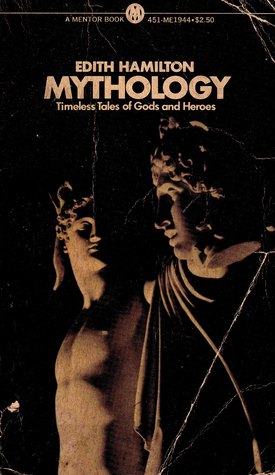
BILLY: Hullo there. I haven't read the Upanishads but heard about them in Asian History waaaaay back in college. Edith Hamilton's Mythology (view spoiler) will give you a good overview on The Iliad.
 DC wrote: "I heard a story once about two people. One of them was a scholar who locked himself up in a high, high, HIGH tower so that he could see the whole world..."
Is that where they got the ivory tower metaphor? *Curious*
Angus: GO ANGUS GO!!! Hahaha! (view spoiler)Angus wrote: "I think the former assumption has strong ties with the school of romanticism..."
(view spoiler)
Angus wrote: " Oh, I didn't think of heroic achievement as perfectionist although in a different perspective, it is perfectionist because the hero will continue to struggle despite of the challenges that will be thrown at him, despite the fact that he may fall down."
(view spoiler)
Ycel wrote: "... so when our corporeal body disintegrates and returneth to dust we shall become the earth, the sea, the air or even a black hole or a quasar (once our star explodes and all of us get mixed up with other galaxies). "
(view spoiler)
Ycel wrote: "I am reminded of Ayn Rand’s Objectivist philosophy – that we have only ourselves to rely on, and we have only one life (this life) and nothing beyond to live. "
(view spoiler)
Ycel wrote: "As the Upanishad believes that Atman (Individual Self) and Brahman (the infinite Spirit Source) are One and the same..."
(view spoiler)
Ycel wrote: "DC wrote: "I heard a story once about two people. One of them was a scholar who locked himself up in a high, high, HIGH tower so that he could see the whole world..."Is that where they got the ivo..."
>>> Considering the very early release of the Songs of Solomon, I'd guess it's the other way around xD (view spoiler)
But the whole Ivory Tower thing... (view spoiler)
 Ycel wrote: "ANGUS:
Any recommendations aside from Edith Hamilton's? How about The Greek Myths?
Wow! I like!
*Quest for knowledge is natural undertaking. - Is it? But why do a lot of people seem to suppress it..."
"ALL men by nature desire to know,” said Aristotle. as quoted by Ycel. It is natural for men to ask, to be curious and to make sense of his environment. If we will continue with Aristotle's argument of this it is because in nature we are all ontologically good therefore we humans are inclined to what is good. And acquiring knowledge is also ontologically good. More detailed explanation of this can be found on The One and Many by Norris Clarke. :)
sa sinabi na to ni DC "In comparison, having the “soul of the cosmos” thought kind of equates you to somehow being a god, right? So you have a kind of offhand divinity, a sort of oneness with what's happening to the world. You would know about EVERYTHING, all-knowledgeable and all that."pretty sums up what i'm about to say sa Guide question na un. sa Indian Philo mejo ganito ung approach. the idea of oneness for me is already dismissed pag naiisip ko yung mga rebuttals sa premises neto. Though I personally believe that of course every creature finds its way to be in harmony with one another. Oneness at harmony can be two seperate things.
Hi, Sarah! Thanks for the heads up on Norris Clarke :) The titles are very interesting.
DC wrote: "From the 19th century it has been used to designate a world or atmosphere where intellectuals engage in pursuits that are disconnected from the practical concerns of everyday life."Oh, right.I usually see it in reference to tenured Ivy League professors :)
*Signing off to catch sleep...and think about Angus' notes* :)
Oh no wait, nahihiya na tuloy akong magpost, hahaha. I feel like I haven't really thought about my thoughts. I just type whatever it is that I have in mind. But I'm glad too that I do that because I see the flaws of my thought processes (although I still insist that no manner of thinking is the best one) and I love picking up brilliant ideas from your learned opinions. :)Bukas na ulit ako magrereact. Magfafangirl moment muna ako. #JamesMcAvoy
 Hi Ycel, DC and Angus: I'm super loving your posts, keep it coming :)
Just a few observations and random reflections for CHAPTER 1: From the Upanishads to Homer:
I haven't read the Upanishads but I've come across some of their teachings in some of my readings over the years and one thing that struck me about these Indian texts is that they are all saying that the very goal of ALL spiritual striving is the union and absorption with the Cosmic Source of all there is, and that each life humans have was an attempt to escape the endless cycle of birth and rebirth, and that this world we're living in was Maya, an illusion, and integral to this escape was to pierce through this illusion of division and duality. The ancient Indian sage, if I am to hazard a guess, felt himself more at home with the spirit and yearned to be liberated from bondage and thus attain Moksha; he considered this material incarnation a heavy burden and full of suffering.
We find a radical shift in the Greek mythological worldview articulated by Homer. In contrast with the ancient Indians, The world was finally felt to be a proper place for the striving of man. In Robinson's words: there is something terribly immediate and awesomely human and ideal in the Homeric epics. Men didnt seek to escape this life through absorption with the infinite, the afterlife was pictured as something not very alluring, Hades was a darkness populated by shades and souls whose brilliance can never rival the light of being alive. Life was not an illusion to be disregarded, but was home for man's struggles. The earth itself was perceived to be vibrantly alive, teeming with elementals and every tree and river populated by spirits and the Olympian gods themselves intervene quite regularly with the affairs of men. The Greeks felt a natural affinity towards the material world. It was in this milieu that the task of the Greeks to awaken the individual was finally enacted in the birth of philosophy.
Now I wonder whether the difference between the worldview of the Upanishad and the Homeric epics was only a matter of varying priorities or just a difference in setting. What if the essential difference lies somewhere deeper? I think it is not so farfetched to consider that the inner constitution of the ancient Indians were as different from the ancient Greeks as we are different from the people of Homer's time. It's possible that those who wrote the Upanishads beheld a qualitatively different world than the Greeks did, thus their relation and their engagement with the world was also quite different. It is here that I find the concept of Chronolgical Snobbery, which I learned from CS Lewis, quite helpful. As per Wikipedia: Chronological snobbery, a term coined by friends C. S. Lewis and Owen Barfield, is a logical argument (and usually when thus termed, considered an outright fallacy) describing the erroneous argument that the thinking, art, or science of an earlier time is inherently inferior to that of the present, simply by virtue of its temporal priority. As Barfield explains it, it is the belief that "intellectually, humanity languished for countless generations in the most childish errors on all sorts of crucial subjects, until it was redeemed by some simple scientific dictum of the last century." We are guilty of this if we think that the ancients were simply wrong in their mythical conceptions of the world. Implicit in this is the assumption that the ancients think and perceive the world as we moderns do, that they became aware with a blank slate and with a shortage of ideas, that they were ignorant of so many things and were so fearful of the chaos and the unknown that they populated the world with their imaginings and fears. This prejudice is also reflected when in the telling of the history of philosophical ideas, it just becomes a neat story of linear progression, that as we go nearer and nearer our time, the philosophical ideas are becoming more and more truthful and correct. I'm not sure if I'm entirely convinced of the veracity of this claim, and if this is how D.Robinson will proceed with his lectures.
Marilynne Robinson, author of Gilead, in her essay, Reclaiming a Sense of the Sacred, powerfully describes this typical modern consideration of the past (lengthy quote ahead):
(view spoiler)
Like Ycel, I am really interested in the nature, meaning and origin of myths. Are they just projections of early man to a world he barely understands, or are the mythical stories passed down to us mere inklings of a participatory consciousness that is still united with the world's primordial strength, an awareness that is so alien to us wide awake moderns that we can barely understand their nature and meaning? I think a close approximation of the mythical consciousness in us moderns is when we dream: where we are so caught up with the narrative of the soul, where we are surrounded by vibrant images and unknown powers, where the distinction between what is inside us and outside us is still confused, when and our sense of self is not that focused and defined. Which is why from the dream like quality of myths, the birth of philosophy in Greece is like the awakening of the individual from sleep. If before truths came from the outside in the form of revelations from the spiritual world or the mouth of its priests and sages, truth-seeking is now slowly becoming the property of every man through the free inner activity of his thinking. And as man was becoming more and more concerned and interested in the material world and the earth that he inhabits, when he began to think rationally in abstract concepts and felt subjectivity contracted in himself, the more the gods of the myths and the vibrancy of the world recede and vanish. I think this partly explains why in our current scientific worldview, the basic existentialist angst of modern man is meaninglessness and alienation, since the world appears as such: cold, random and lacking any true meaning. Thus the story of the great ideas of philosophy, in my opinion, is really incomplete without taking into account the evolution of consciousness underpinning each and every idea in every age.
Welcome, Sarah, JL, to the discussion! Thanks for your thoughts. (Will react later :D)I hope it's all right if we move on to the next chapter today, just so we can keep the discussion moving forward :D Don't, however, hesitate to add in your opinions and whatnot to the discussion, even if it's in reference to Chapter 1.
Next chapter:
Chapter 2: Philosophy-What is It and Did the Greeks Invent It?
I woke up to two great things today: the Ender's Game first official trailer is finally out, and JL's post completely blew me away! Wooooooooooooot!!! *digesting more thoughts*
Sagutin ko lang ‘to before I run to a series of meetings today. I will check in again tonight to comment on JL’s fantabulous post.DC wrote: “But it begs the question: How are we formed? Through space dust, essentially?”
Are you familiar with the “Higgs boson” particle theory? You might have encountered it if you read Angels and Demons. Made huge headlines last year. I especially liked Randy David’s take on the matter .
 The discussion here is so hardcore, I don't even know where to start.
*Takes a welcome break*
The discussion here is so hardcore, I don't even know where to start.
*Takes a welcome break*Hullo, Bennard. Just hop in! Don't be intimidated by JL. LOL!
Seriously, the reason why I shared these materials is to be able to discuss the ideas. So I am looking forward to seeing other people's understanding and so far it's been very instructive. So fear not and let's learn together :)
And if you haven't taken any Philo course this is a great intro!
SARAH: May I know if you're a Philosophy major? The last person I heard to say "ontological", aside from Prof. Robinson, is a friend who has a degree in Philosophy. *Curious*
Welcome, Bennard! Huwag matakot! Hahaha! (view spoiler)Sarah wrote: "Though I personally believe that of course every creature finds its way to be in harmony with one another. Oneness at harmony can be two seperate things. "
(view spoiler)
Ycel wrote: "Are you familiar with the “Higgs boson” particle theory? You might have encountered it if you read Angels and Demons. Made huge headlines last year. I especially liked Randy David’s take on the matter .
(view spoiler)
And now... "That time I trolled JL".
JL, might I begin by saying: (view spoiler)
JL wrote: "... that this world we're living in was Maya"
(view spoiler)
JL wrote: (view spoiler)
(view spoiler)
JL wrote: "Like Ycel, I am really interested in the nature, meaning and origin of myths. Are they just projections of early man to a world he barely understands, or are the mythical stories passed down to us mere inklings of a participatory consciousness that is still united with the world's primordial strength, an awareness that is so alien to us wide awake moderns that we can barely understand their nature and meaning? "
(view spoiler)
JL wrote: "Which is why from the dream like quality of myths, the birth of philosophy in Greece is like the awakening of the individual from sleep."
(view spoiler)
JL wrote: "And as man was becoming more and more concerned and interested in the material world and the earth that he inhabits, when he began to think rationally in abstract concepts and felt subjectivity contracted in himself, the more the gods of the myths and the vibrancy of the world recede and vanish."
(view spoiler)
Ycel Guilty. Philo major nga ako. Last school year lang. :)
DC
Pagpasensyahan niyo na hindi kasi ako matype na tao. Mas maayos ko to mcconvey pag sinasabi ko kesa tntype ko. hahaha. :))) I'll try my best to explain my point. :)
About Oneness, imagine this scenario: "There is a vast sea and there is nothing but water wherever you look. In the context of Oneness we are all droplets. Our souls are the droplets that sooner or later we will be in the sea. We are not different from the sea in the first place, tayo ung dagat. Hindi tayo part nung dagat. TAYO ung dagat. Tayong lahat.
Sa harmony naman, this is the very evident observation on evolution (not the evolution of man perse, but evolution in general) Universe as a system composed of many parts. all creatures work together and simultaneously to produce a result. parang ganito eh. bago natin masabi na tubig eto h2o eto hindi sya kuha ka ng hydrogen atom tapos oxygen then boom tubig hindi siya random. it should be in harmony. this is what they called Irreducible Complexity.
JL
one explanation na naencounter ko sa usaping mythology. they said it is the manifestation of man's longing to God. We knew and it is innate in us to find him. thus, kahit ung mga taong kweba create their own idols na dndrawing nila sa caves. (of course this has a very biased presupposition) hahaha
sana hindi magulo ung pagkakaexplain ko. :)))
Hi guys! I just wanted to post the guide questions for Chapter 2 :)Questions to Consider:
1. Explain how the conception of the Olympian gods liberates Greek thought.
2. Describe factors usually offered to account for the Greek philosophical achievement that were not present in earlier and highly developed civilizations.
3. How does Isocrates intend Hellene to be understood, and does this sense of the term retain its meaning today?
I just wanted to tie these 3 observations before we move on to Chapter 2:Sarah wrote: “one explanation na naencounter ko sa usaping mythology. they said it is the manifestation of man's longing to God. We knew and it is innate in us to find him. thus, kahit ung mga taong kweba create their own idols na dndrawing nila sa caves. (of course this has a very biased presupposition)”
JL wrote: “Are they just projections of early man to a world he barely understands, or are the mythical stories passed down to us mere inklings of a participatory consciousness that is still united with the world's primordial strength, an awareness that is so alien to us wide awake moderns that we can barely understand their nature and meaning?”
Angus wrote: “*On religion - Isn't religion also another form of philosophy? Religion provides us with answers on the three central questions, but I think the difference it has with philosophy is that it restricts people from questioning the answers provided. The strings of reason are cut from the people because if you do so much as tug it a tiny bit, one is excommunicated and considered a heretic.”
(view spoiler)
JL wrote: “Homer believed that the best possible existence for humans was to never be born at all, or die soon after birth, because the greatness of life could never balance the price of death." What an utterly hopeless, dreadful prospect for the ancients indeed. This puts into perspective the great perseverance of the early Christians and the disciples to spread Christianity and its message of hope and redemption.
Ycel Hindi ako si Shiela.. :l :))))
This topic has been frozen by the moderator. No new comments can be posted.

The Filipino Group
Books mentioned in this topic
The Book of Virtues (other topics)The Great Ideas of Philosophy (other topics)
The Fifth Discipline: The Art & Practice of The Learning Organization (other topics)
Simulacra and Simulation (other topics)
Being and Time (other topics)
More...

***We are currently on CHAPTER 11: Hippocrates and the Science of Life****
(Here are the guide questions and link to the audio file for Chap 11.)
We officially started our trek in the myriads of philosophical thought on May 6, 2013. It's quite a long book, and one quite something to chew on, so we don't have an official pacing for the meantime. Do check in from time to time, though, as we may be discussing a topic you may be interested in :)
We've got the files uploaded for everyone's reference, and you may check them out here (do let us know if it's not working for you) -> https://drive.google.com/folderview?i...
(In case you were wondering, it's actually a package of some 50 audio-chapters, plus an ebook guide.)
*You don't need to be dedicated all the way (that is, from Book 1 to Book 50) for the discussion :) You may just check in with us from time to time; we'll be discussing a plethora of topics after all :D
*Each audio file is standalone, so you don't need to check out each and every chapter to join the discussion. If the current topic interests you, go ahead and check out the audio file of the chapter for discussion! No need to check out all the earlier ones :)
*To start off, do try and listen to at least the first 2-3 books, to get a feel of them.
*For the pacing (c/o Ycel): Each track is a ~60-minute lecture. We can do one track each day, or slice and dice the topic as long as we want and move on. (view spoiler)[Let's see how it goes for the Antiquity philosophers. The lectures follow the progression of the history of ideas, so it gets complex later on. (hide spoiler)] The aim is not to rush through the course, but to discuss it as thoroughly as we want :)
*The ebook is somewhat like a guide, not necessarily a transcript. It has the major points of the audio-chapters :)