
Great African Reads discussion

This topic is about
Africa
Archived |BigR2014-Africa Bio
>
Part 1: The Founding Factors (January 1-February 2)
date newest »
newest »
 In Wikipedia, Barberton, Mpumalanga, is where the first life form is discovered and Kaapvaal Craton where the original earth's crust is evident--"Some of the oldest exposed rocks on Earth (greater than 3.6 Ga) are located in the Barberton greenstone belt of the Swaziland–Barberton areas and these contain some of the oldest traces of life on earth."
 Asma wrote: "In Wikipedia, Barberton, Mpumalanga, is where the first life form is discovered and Kaapvaal Craton where the original earth's crust is evident--"Some of the oldest exposed rocks on Earth (greater ..."
This kind of stuff is mind-blowing to me...
 I've hiked in the Barberton area. It's very scenic, waterfalls and deep ravines with a fairly warm climate. It's located next to the main road between Pretoria and Maputo in Mozambique. Gold is still mined there today. According to legend, the area is also supposed to be one of the possible locations for a fortune of gold coins that belonged to Pres Kruger of the Zuid Afrikaansche Republiek (it was part of the ZAR treasury). The coins were supposedly hidden in caves during the Anglo Boer War in 1899 - 1902 and never recovered.
Carolien wrote: "I've hiked in the Barberton area. It's very scenic, waterfalls and deep ravines with a fairly warm climate. It's located next to the main road between Pretoria and Maputo in Mozambique. Gold is sti..."
I've hiked in the Barberton area. It's very scenic, waterfalls and deep ravines with a fairly warm climate. It's located next to the main road between Pretoria and Maputo in Mozambique. Gold is still mined there today. According to legend, the area is also supposed to be one of the possible locations for a fortune of gold coins that belonged to Pres Kruger of the Zuid Afrikaansche Republiek (it was part of the ZAR treasury). The coins were supposedly hidden in caves during the Anglo Boer War in 1899 - 1902 and never recovered.
Carolien wrote: "I've hiked in the Barberton area. It's very scenic, waterfalls and deep ravines with a fairly warm climate. It's located next to the main road between Pretoria and Maputo in Mozambique. Gold is sti..."Wow, Carolien...thanks for sharing some personal experience with the area. It seems like it would be quite breathtaking (at least from some of the pictures I looked at online).
A fortune of gold coins, eh? hmmm... ;)
Mpumalanga is generally beautiful. There is the escarpment with very steep cliffs and then what is called the "Lowveld" which is the area up to the Mozambique border. It is sub tropical and include a lot of game parks including the Kruger National Park. I'm waiting for my copy of the book to be delivered (hopefully next week). I'm in the incredibly privileged position that I can probably see quite a bit of the very early history in "real life". The Origins Centre at Wits University which has one of our big fossil collections is 30 min from my house. I drive past it on my way to work most days. I can also get to Maropeng near the Sterkwater caves within an hour or so. The real Mrs Ples is currently on display...
Carolien wrote: "Mpumalanga is generally beautiful. There is the escarpment with very steep cliffs and then what is called the "Lowveld" which is the area up to the Mozambique border. It is sub tropical and include..."wow, that is amazing! Please share how living in such close proximity affects your reading, or how reading affects how you see these things!
I will. As soon as I start reading I will also try to post some links to resources which may be of interest to people.
Carolien wrote: "I will. As soon as I start reading I will also try to post some links to resources which may be of interest to people."That would be great!
 Read the first couple pages last night - fascinating but will absolutely be a slow read for me. So much to digest!
Excellent choice for a Big Read; interesting facts; and leisurely pace. Two interconnected vocabulary words I'm learning are craton and continent; basically, the earth's crust central to an extended landmass.
sometimes i think slowing down and taking a long time to read something is really good. i have also only read a few pages so far. i'm still trying to find my reading groove in the new year. :/
Read the first couple pages last night - fascinating but will absolutely be a slow read for me. So much to digest!
Excellent choice for a Big Read; interesting facts; and leisurely pace. Two interconnected vocabulary words I'm learning are craton and continent; basically, the earth's crust central to an extended landmass.
sometimes i think slowing down and taking a long time to read something is really good. i have also only read a few pages so far. i'm still trying to find my reading groove in the new year. :/craton...that is new for me, too, Asma!
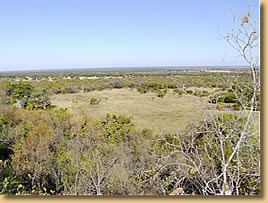
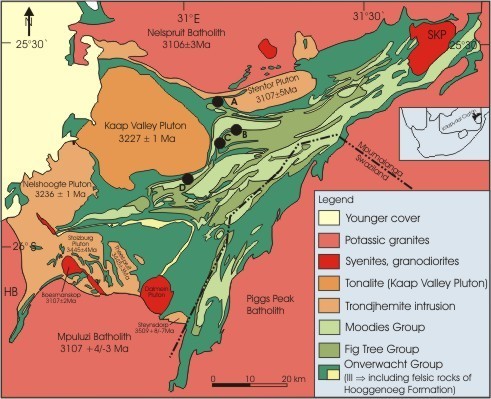
I just finished the first chapter and thought I would look for some images.Cape Fold Belt Mountains


Kaapvaal craton

Magliesberg


Hartbeespoort

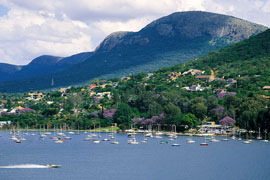


Springbok Flats and Springbok

Late 19th century Barberton gold (Rimers Creek)
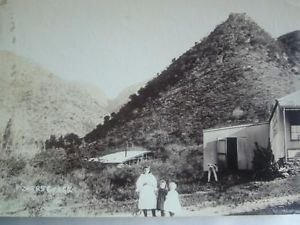
Fig Tree Group
(still looking for some things)
 Toward the end of chapter 1, Reader mentions the hartebeest and the springbok. I was not familiar with either of these until I had traveled in South Africa a few years ago. The hartebeest is a big meaty antelope with interesting horns. Seen from the front, the way the horns curve is like the bottom half of a cartoon heart. The springbok is a sprightly little antelope, more deerlike (at least to my American eyes), similar to impala.
 Hartebeest: http://www.awf.org/wildlife-conservat...
Springbok: http://www.bbc.co.uk/nature/life/Spri...
I just read chapter 1. Fascinating! I love thinking about the formation of the earth, the magma and new continents taking shape, gold and diamonds being created. Craton is definitely a new word for me.
I had to look up "craton" too! Feeling a bit better about it now that I know I wasn't the only one that hadn't stumbled on that word before. :-) I actually work with several geologists - I feel that I will have many questions for them come Monday.It is easy to say something is big, but when Reader listed all the countries that would fit in Africa and referred to the map, it really put the size of the continent into prespective for me.
 I just got my book in the mail and I'm looking forward to getting started!
 I'm enjoying the book so far. As I read it, I hear the author's voice in my head enthusiastically, almost endearingly, narrating it like a nature documentary. I can picture Reader in the Sahara saying "Millions of years ago...just think about it!" By going into so much detail about the geological and ecological history of the continent (cratons and all), I feel that the author is attempting to destabilize what the reader thinks they know about Africa. Now my curiosity is piqued as to what he will tell me next. I hope his nuanced treatment of the continent's natural history will extend to the peoples of Africa later in the book.
I'm glad you guys are enjoying it! I'm enjoying it, too, and i hope i continue to enjoy it since it's a year-long commitment! lol.
I'm enjoying the book so far. As I read it, I hear the author's voice in my head enthusiastically, almost endearingly, narrating it like a nature documentary. I can picture Reader in the Sahara saying "Millions of years ago...just think about it!" By going into so much detail about the geological and ecological history of the continent (cratons and all), I feel that the author is attempting to destabilize what the reader thinks they know about Africa. Now my curiosity is piqued as to what he will tell me next. I hope his nuanced treatment of the continent's natural history will extend to the peoples of Africa later in the book.
I'm glad you guys are enjoying it! I'm enjoying it, too, and i hope i continue to enjoy it since it's a year-long commitment! lol.Becki, your comment about how you hope his nuanced treatment will extend to the peoples of Africa later on reminds me that i wanted to say how i appreciate how he brings us back to the present periodically when he describes how, for example, who has benefited (in the modern era) from the geography and geology/how the apartheid system depended on mineral wealth to enrich itself and to subjugate non-white people in the area.
About the geography-social interconnection, there is the choice of where people would prefer to live. Chapter 1 notes the example of Magaliesberg and Hartbeespoort (two maps in message 13: by Marieke). The cooler southern elevations and the vicinity of water are generally to be preferred. The differences in temperature and humidity are an effect of geological conditions.
There's also a longer term result of those geological conditions - the location of minerals that will eventually be mined. In this case, it eventually resulted in the Johannesburg area becoming the largest urban conurbation in the world not located near navigable water (including Pretoria it has a population of just over 10 million these days as a region). I think it still has the biggest "dry" port in the world - City Deep container terminal where shipping containers are handled without a ship in sight - road and rail transport. It is in fact the biggest "harbour" in Africa.
The fascinating geological processes on earth which produce enormous quantities of exploitable minerals and evolve oxygen-giving, photo-synthesizing plants make me think how important to human and animal life is the protective ozone layer.
My copy finally arrived and I've read the first section and found it fascinating on so many levels. Some general comments: I found his description on why tropical forests are so efficient, but leave the soil stripped of nutrients very interesting. I've always heard that when slash and burn agriculture is applied in tropical forests, the soils are not very fertile. Now I finally understand why.
The section on how the earth tilts on its axis and therefore its orientation to the sun changes and that aligns with these weather patterns stretching over thousands of years is also very interesting. It's not actually the natural phenomenon, but the process that they use to determine it via the fossilised plankton that I find interesting.
His description of Pretoria's east-west topography is spot on. However, since the book was written the northern side of the Magaliesberg has seen an explosion of development and suburbia now stretches for about 20km north towards the Springbok Vlakte. The result is some epic traffic jams since there are only a limited number of gaps in the mountain where cars can get to the south. A friend of mine lives on the northern side and works in the Union Buildings (near the president's house that he describes). A trip of less than 10 miles (about 12-14km) can take her up to 90 minutes if there is an accident (or currently road works) in the nearest mountain gap.
The fossils that Kitching discovered near the Lesotho border is currently on display here: http://www.origins.org.za/whats-on/te... (I'll try to get there next weekend)
I'm going to reread the early part on how the exact formation of the Springbok Vlakte since I want to understand that better.
One last comment for today relates to the Hartbeespoort Dam which is still a major water source in the area. It is therefore ironic that 3 people were killed this week in protests at a town near the dam since the residents haven't had water for a month due to broken pumps not being fixed. The municipalities in the area are notorious for their service delivery failures especially related to water. Residents have previously resorted to court orders to get sewage plants fixed to prevent spillage into the Hartbeespoort Dam. http://www.dailymaverick.co.za/articl...
I'm not sure I needed to start quite so far back in time, but I appreciated the photos you posted.All I kept thinking was that I wish I had a book of African creation myths to read during the first chapter.
I also appreciated the connection between built-in natural resources and the future reason for battles for control of the land.
 Thanks a lot - these illustrations are what I did miss in the first chapter, Marieke you should have been an editor on this book...
 Marieke wrote: "I just finished the first chapter and thought I would look for some images.
Cape Fold Belt Mountains
Kaapvaal craton
Magliesberg
Hartbeespoort
Springbok Flats and Springbok
Late 19th century..."
It was new for me, the importance of the climatic (long term) fluctuations and the "orbital hypothesis". These variations in the climate also raised some questions about how we should consider the current human-induced climates changes. No doubt these changes are unprecedentedly fast. However, are the anticipated changes large in an orbital cycle context? May our effort to limit climate changes, in fact, hamper the continued evolution? I don't have the answers. I know how to make cost-benefit on climate change mitigation and adaptation initiatives (what I teach students) but interesting to make a step back and consider the issue of climate changes in an earth history perspective...
 Melanie wrote: "Read the first couple pages last night - fascinating but will absolutely be a slow read for me. So much to digest!"
I'm with you, Melanie! I've started but feel like I'm crawling through every page, I have to re-read paragraphs here and there.
Marieke wrote: "I just finished the first chapter and thought I would look for some images.Cape Fold Belt Mountains..."
Wow, Marieke, you are so jiggy with this tech stuff now!! Go you! :D
Thanks heaps for the images, what an awesome idea, makes everything much more visual.
Jens, that is a big question! i have been pondering it, but i don't feel capable of offering any kind of musing, but i am going to be keeping it in mind, for sure.I'm glad you guys like the pictures. I will try to keep doing it and you are all welcome to share images you find. Books like these...i need internets at my side! lol
Jenny, what a great idea about African creation myths. I do have a book of African folktales but i don't remember if any are creation myths.
Carolien, thanks so much for that post above. I need to reread some passages and revisit your links. It's so great to have someone who actually lives in the area to share thoughts! i hope we have more such members as the book takes us around the continent through the year! :)
I'm eager to start the next section. I really enjoyed the part about the rainforests -- I had read a bit about rainforest ecology before because I'm very concerned about rainforest destruction by the palm oil industry in Indonesia and Malaysia ... I knew about how the soil in a rainforest has essentially no nutrients in it. What was new to me was the long-term history of change; Reader made it seem that rainforests have been disappearing forever!
It doesn't alleviate my concern, of course -- not a lot of chance that NEW rainforests are going to appear as long as humans are around.
Mindy wrote: "I'm eager to start the next section. I really enjoyed the part about the rainforests -- I had read a bit about rainforest ecology before because I'm very concerned about rainforest destruction by t..."Mindy, i meant to set up the next thread today in case some early-birds are excited to start chatting (and i plan to start reading the next section this weekend) but i will do it tomorrow.
sometimes the many millions of years and everything that happens really makes my brain hurt. :)
 Reading the first chapter was quite a fascinationg experience. Geology and earth history tend to be very abstract matters and how Reader consistently develops the relevance of geologic facts for (recent/human) history, and today's social structures and economy is fascinating.
Apart from the beatuy of land formations it sets the scene well for the things to come, like the above mentioned mineral richness due to age of the land, which at the same time makes it hard to cultivate that soil.
Thank you to Maireke and all for the illustrations and the additional input!
And yes... Craton, quite a term....!
 Thank you, Marieke, for those wonderful illustrations, especially the beautiful photographs of the Cape Fold Belt Mountains Magliesberg and the Kaapvaal craton. I've just started the book and I'm enjoying it, but I've had to spend a fair bit of time on-line to fill in some of the gaps. He really could have used more figures.
Carolien wrote: "I found his description on why tropical forests are so efficient, but leave the soil stripped of nutrients very interesting. I've always heard that when slash and burn agriculture is applied in tropical forests, the soils are not very fertile. Now I finally understand why.
Thank you, Marieke, for those wonderful illustrations, especially the beautiful photographs of the Cape Fold Belt Mountains Magliesberg and the Kaapvaal craton. I've just started the book and I'm enjoying it, but I've had to spend a fair bit of time on-line to fill in some of the gaps. He really could have used more figures.
Carolien wrote: "I found his description on why tropical forests are so efficient, but leave the soil stripped of nutrients very interesting. I've always heard that when slash and burn agriculture is applied in tropical forests, the soils are not very fertile. Now I finally understand why.The section on how the earth tilts on its axis and therefore its orientation to the sun changes and that aligns with these weather patterns stretching over thousands of years is also very interesting. It's not actually the natural phenomenon, but the process that they use to determine it via the fossilised plankton that I find interesting.
His description of Pretoria's east-west topography is spot on."
Those bits fascinated me as well and I'm loving your on-the-ground perspectives. The traffic jams can't be much fun, but at least you can meditate on their ancient geological origins while stuck :)
Hana wrote: "I've just started the book and I'm enjoying it, but I've had to spend a fair bit of time on-line to fill in some of the gaps. He really could have used more figures."it would be great if there was an online appendix for the book or something. you are definitely not alone in looking stuff up!
I love the sweeping themes and I actually enjoy books that prompt me to do more research, but you are right about the need for more info. I have to keep reminding myself that the book was written in 1997, so a lot of the informational gold seams we're mining post-date his book.
Hana wrote: "Carolien wrote: "I found his description on why tropical forests are so efficient, but leave the soil stripped of nutrients very interesting. I've always heard that when slash and burn agriculture ..."Audio books are very popular! One of the interesting bits of local culture is that peak hour starts about an hour earlier in Pretoria than in Johannesburg as people try to avoid either the traffic through the mountain or drive to Johannesburg for work. It is possible to get badly stuck in traffic at 6am in Pretoria.
HA! Sounds as bad as New York City-that's about when the rush hour starts in my old hometown. And geography is at the root of it there as well!
Chromite seams (formed as igneous intrusions that harden and create layers). 
These are in the mysterious Bushveld Complex (part of this whole stabilized craton that makes up the Transvaal. The Bushveld Complex contains over half of the world's platinum, chromium and vanadium reserves.
http://blogs.agu.org/georneys/2013/05...
Carolien, do you know Vredeforte? That's apparently where a ten kilometer wide asteroid crash-landed creating a huge crater and vast amounts of dust and fragments that buried and protected from erosion one of the richest gold seams in the area. Amazing!
I'm just finishing up East of the Sun: The Epic Conquest and Tragic History of Siberia before I head back to Africa with all of you, but I had to tell you that I've met our old friends the ancient cratons right in the middle of Siberia! Turns out that Kaapvaal Craton and Siberia's Yakutia Craton are geologically related. http://it.geol.science.cmu.ac.th/gs/c...
I love when reading connects like that!


^^According to Reader in the caption under an image of Barberton Mountain Land in South Africa, this region contains the earliest-known clear evidence of Earth's geological history. The image I posted is not the same as the one in the book, it's just one I found online.