
Divine Comedy + Decameron discussion

This topic is about
The Decameron
Boccaccio's Decameron
>
9/15-9/21: Eighth Day, Stories 6-10 & Conclusion
date newest »
newest »
message 1:
by
Kris
(new)
-
added it
Apr 14, 2014 09:32AM
 Mod
Mod
reply
|
flag
 Mod
Mod
Calandrino is a character from Giovanni Boccaccio's the Decameron, in which he appears in four stories. In these tales he is the victim of the pranks of Bruno and Buffalmacco. He becomes a recurring character in Renaissance literature, especially in Italy.
Calandrino was a historical person, an Italian Renaissance painter named Nozzo di Perino who lived in the fourteenth century. Whether he really was the simpleton portrayed by Boccaccio in his work is unknown, but common belief is that he was a bit gullible. It is unclear whether this belief arose because of the popularity of the Decameron, or whether it was already popular belief when Boccaccio wrote the tales.
In each of the tales in which Calandrino is a character (VIII, 3; VIII, 6; IX, 3; IX, 5), he is portrayed as a simpleton who believes in the folk magic of the time period. In the first tale (VIII, 3), the three painters hunt for heliotropes, and Calandrino believes that by finding one he is rendered invisible. Bruno and Buffalmacco, his friends and fellow painters, pretend they don't see him and kick rocks at him all the way back to Florence, where he arrives bruised.
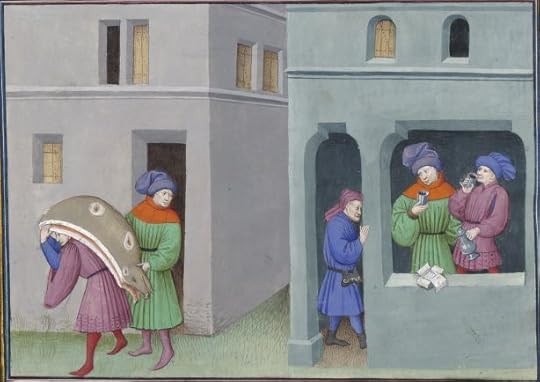
In the second tale (VIII, 6) Bruno and Buffalmacco subject him to a medieval version of a polygraph test. According to common belief at the time, a person who is lying wouldn't be able to swallow the prepared bread and cheese when under examination. However, Bruno and Buffalmacco sour the cheese with dog ginger, a very bitter herb which Calandrino then spits out. This convinces his friends that he is lying about a pig of his being stolen (which in reality they had taken).
 Reem I will catch up with you! Says she who went off on an Odyssey in the middle of day 6. Yes I will. ;)
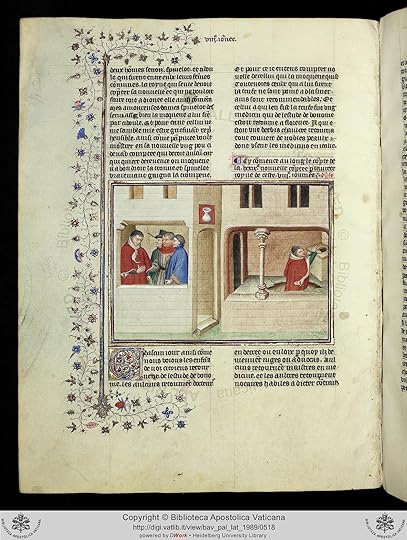
Illustrations - Day VIII Story 6
Reem I will catch up with you! Says she who went off on an Odyssey in the middle of day 6. Yes I will. ;)
Illustrations - Day VIII Story 6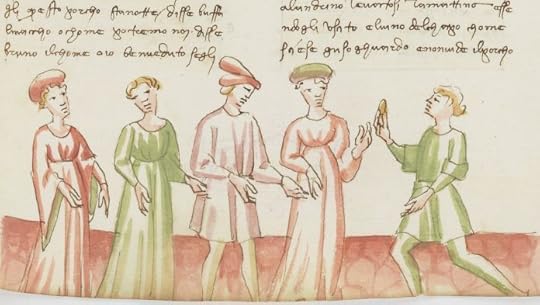
Source: gallica.bnf.fr
Bruno d'Olivieri distribuant les noix de vérité
Source: gallica.bnf.fr
(view spoiler)
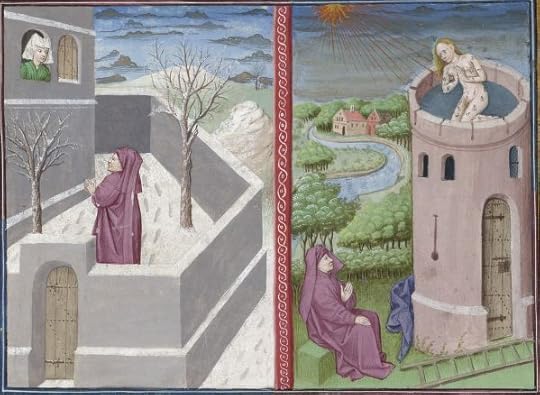
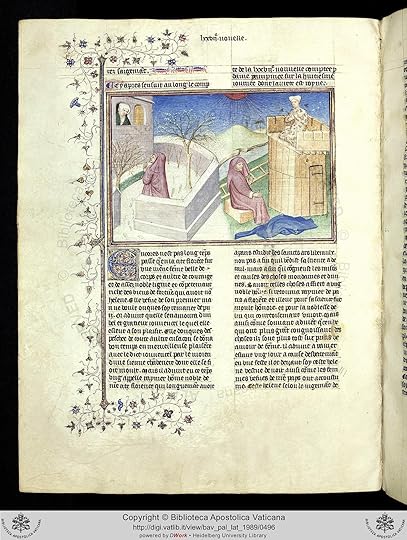
 Illustrations - Day VIII Story 7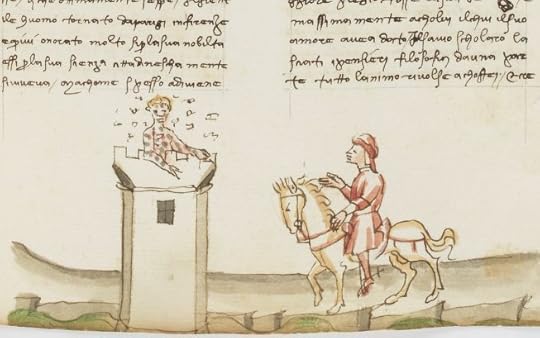
Source: gallica.bnf.fr
Vengeance de Rinieri
Source: gallica.bnf.fr
(view spoiler)
 Illustrations - Day VIII Story 8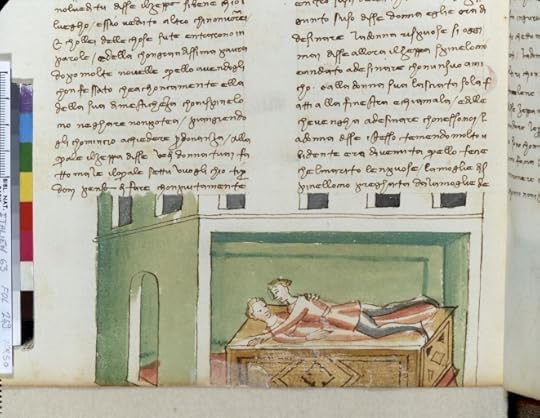
http://gallica.bnf.fr/ark:/12148/btv1...
Zeppa di Mino & la femme de Spinelloccio
Source: gallica.bnf.fr
(view spoiler)
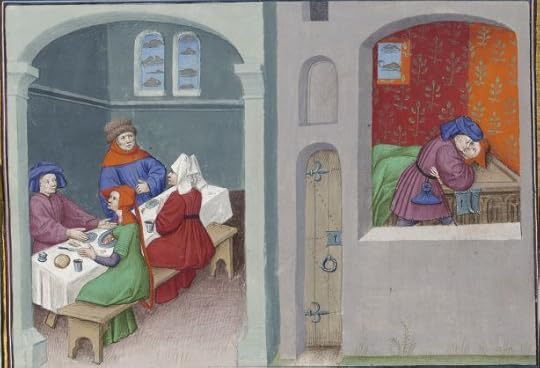
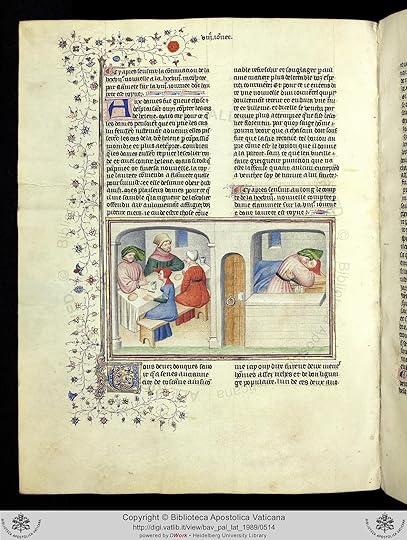 Illustrations - Day VIII Story 9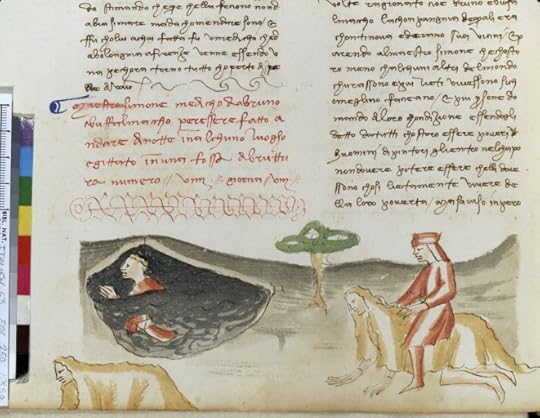
http://gallica.bnf.fr/ark:/12148/btv1...
Simone da Villa sur la fausse bête. Simone da Villa dans la fosse
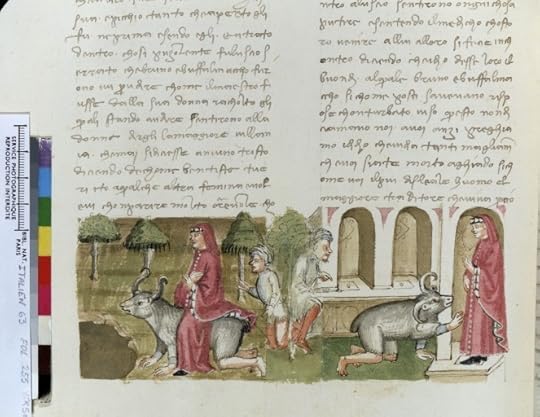
http://gallica.bnf.fr/ark:/12148/btv1...
Simone da Villa au cimetière. Simone da Villa sur la fausse bête
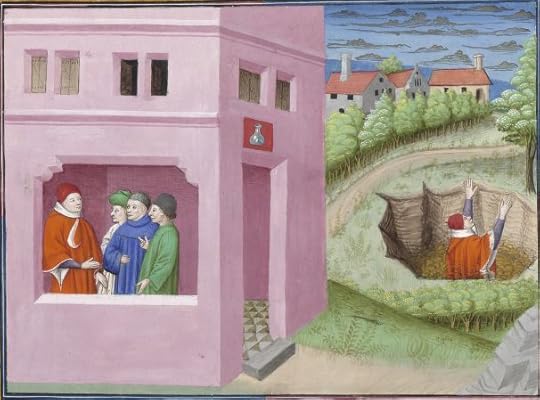
Source: gallica.bnf.fr
(view spoiler)
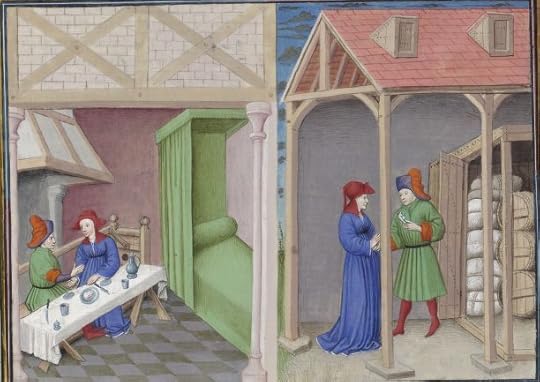
 Illustrations - Day VIII Story 10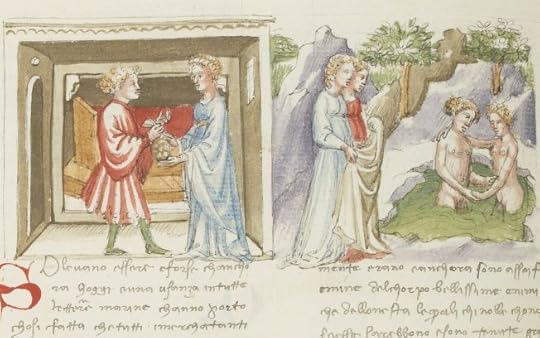
Source: gallica.bnf.fr
Salabaetto et Jancofiore se baignant. Salabaetto prêtant Jancofiore
Source: gallica.bnf.fr
(view spoiler)
 I'll have to come back to fix these! :<
 Fix what? They look great! Thanks!
Mod
Fix what? They look great! Thanks!
Mod
No worries Book Portrait. I still need to finish this week's tales. Thanks for the pics!
Mod
Dioneo tells that this story is found in Alphonsus's Disciplina Clericalis and the Gesta Romanorum, both of which are written in Latin.
Gesta Romanorum is a Latin collection of anecdotes and tales that was probably compiled about the end of the 13th century or the beginning of the 14th. It still possesses a two-fold literary interest, first as one of the most popular books
of the time, and secondly as the source, directly or indirectly, of later literature, in Geoffrey Chaucer, John Gower, Giovanni Boccaccio, Thomas Hoccleve, William Shakespeare, and others.
Early English versions of the Gesta Romanorum
http://quod.lib.umich.edu/cgi/t/text/...
View online any edition of The Disciplina clericalis of Petrus Alfonsi : translated and edited by Eberhard Hermes / translated into English [from the German and the Latin] by P. R. Quarrie
http://trove.nla.gov.au/work/8093406?...
Linda wrote: "Fix what? They look great! Thanks!"Gallica was giving me trouble! But now it's fixed. *flexes muscles*
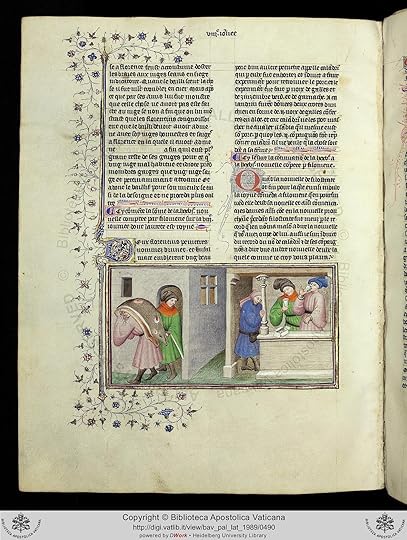
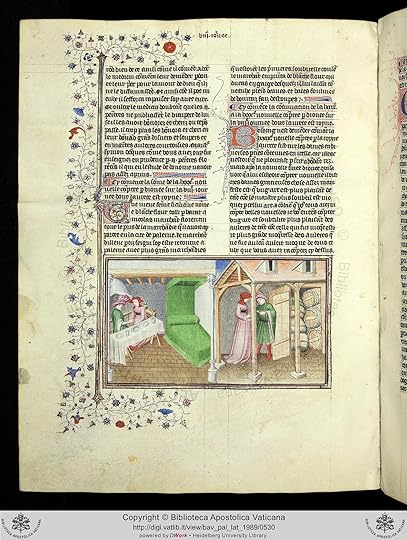
As bonus here are the illustrations from another XV-century manuscript from the BnF (ms français 239):
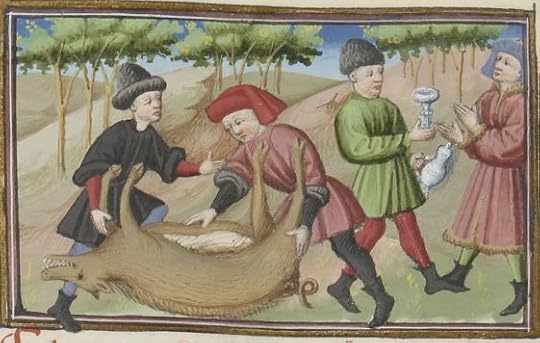
Source: gallica.bnf.fr
Story 6
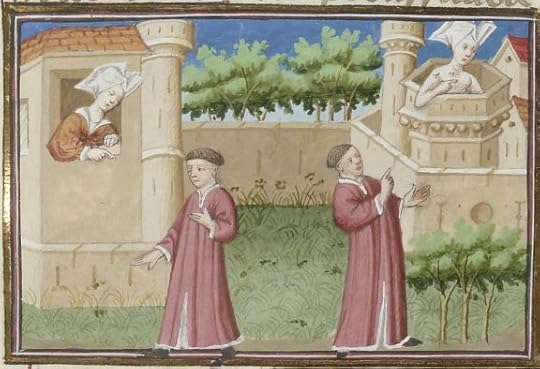
Source: gallica.bnf.fr
Story 7
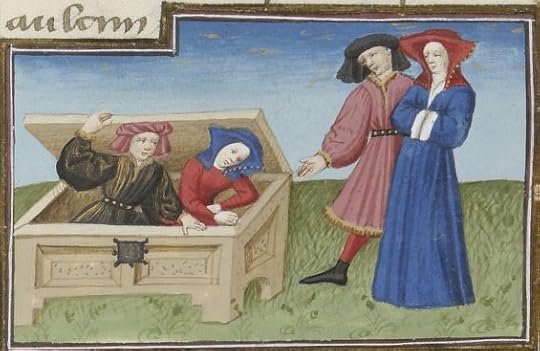
Source: gallica.bnf.fr
Story 8 (?)
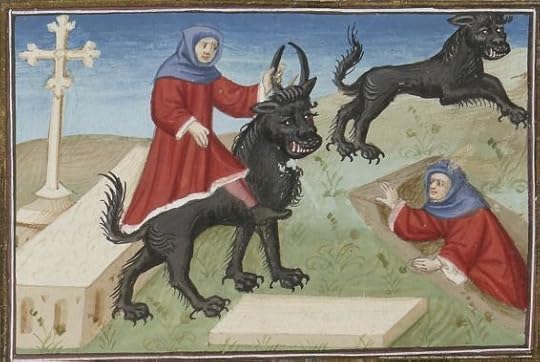
Source: gallica.bnf.fr
Story 9
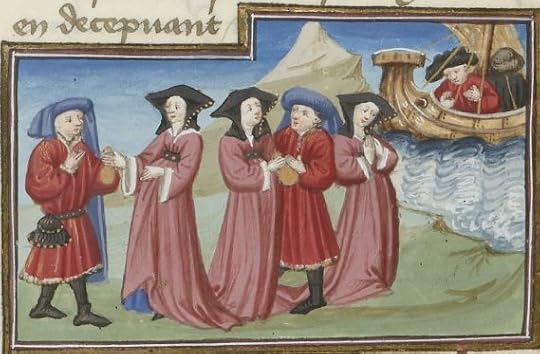
Source: gallica.bnf.fr
Story 10 (I think! I don't have the book at hand to double check but I'll let you know if I was wrong...)
Still catching up. In this series story 7 stood out for the uncompromising need for vengeance of the protagonist. "Hell hath no fury like a man scorned"! A very effective narration technique and a more contemporary feel to the story. Terrifying and compelling.
Book Portrait wrote: "Still catching up. In this series story 7 stood out for the uncompromising need for vengeance of the protagonist. "Hell hath no fury like a man scorned"! A very effective narration technique and a ..."And the Gallica prints most def make her look "scabby"...that one was a bit scary...the epitome of vindictiveness or vendetta.
Linda wrote: "And the Gallica prints most def make her look "scabby"...that one was a bit scary...the epitome of vindictiveness or vendetta."I like how the illustrations use the symmetry between the two protagonists' positions...
And the little things around her....are those the flies, or to indicate the smell she's giving off!? :)

