
Bright Young Things discussion
Group Reads Archive
>
June 2016- As I Walked Out One Midsummer Morning by Laurie Lee

 I'm only on p. 33 but I sure hope it picks up. I think I read the book after this one years ago and don't remember getting thrilled by it either.
 So far it is reminding me of The People of the Abyss and Down and Out in Paris and London, except that Orwell and London could have bailed on the situation and it doesn't seem as though Lee has many options.
 Jan C wrote: "I'm only on p. 33 but I sure hope it picks up. I think I read the book after this one years ago and don't remember getting thrilled by it either."
I am sorry to learn that you are not enjoying it Jan. It is certainly not thrilling. Its charms are more understated.
Your comment reminds me of your response to A Month in the Country, a book with a similar sensibility.
I can confidently assert that, as it hasn't grabbed you by page 33, it's not for you. Abandon it, and take the opportunity to get back to one of the other 1333 books you are currently reading.
In contrast to your reaction, I thoroughly enjoyed (re)reading As I Walked Out One Midsummer Morning. It was great to be back with Laurie Lee, akin to slipping into a warm bath after a winter's walk.
Did you get as far as Laurie Lee's first sight of London?...
"A few mornings later, coming out of a wood near Beaconsfield, I suddenly saw London at last - a long smoky skyline hazed by the morning sun and filling the whole of the eastern horizon. Dry, rusty-red, it lay like a huge flat crust, like ash from some spent volcano, simmering gently in the summer morning and emitting a faint, metallic roar."
Just one of numerous examples of Laurie Lee's poetic sensibilities, each page stunningly renders beautiful details of his day-to-day life: the landscape, the people he encounters, the smells, the food, the adventures, his feelings... If ever a book was written to give you wanderlust it is this one. That he is describing a lost world, on the cusp of modernity, makes it even more magical.
Laurie Lee's autobiographical trilogy are marvellous books...
- Cider With Rosie (1959) (published in the U.S. as The Edge of Day (1960))
- As I Walked Out One Midsummer Morning (1969)
- A Moment of War (1991)
...and those that fall in love with them will want to enjoy their charms time and again.
 I'm about a third of the way through and loving it - so sensuously described with all its colours, textures, smells, tastes! I really enjoyed all the section in London and now also his description of his walk through Spain in the shimmering heat.
And, as you say, Nigeyb, the glimpses of a lost world really add to it all. I'm reading a Penguin which has line drawings, but I'm wondering if anyone has an edition with photos? It would be great to see the scenes that Lee describes.
I read the version with the line drawings too, but I did find some photos online.For example, when he meets Mary & Roy Campbell in Toledo in 1935...
http://spartacus-educational.com/SPle...
^ from this page...
http://spartacus-educational.com/SPle...
Roy Campbell looked nothing like how I imagined when I read Laurie's description of their time together.
 The library copy I read had paintings and drawings.
You might be able to find photographs of most of the places he mentions in archives.
eg Segovia http://pictures.abebooks.com/SHAPERO/..., my favourite Spanish city.
Review: https://www.goodreads.com/review/show...
Thanks very much for those links, Nigeyb and Val. The Spartacus article is also interesting, with a lot of biographical background. I was interested to see this comment:Laurie Lee's biographer, Valerie Grove, has pointed out in The Well-Loved Stranger (1999) that while the poet often said he loved women, "he never paid tribute to them as mentors; only as cosseting, embracing, accommodating creatures. He liked women, but in their place.''
This is one thing I've been finding a bit off-putting, the way he sometimes describes attractive girls almost as if they were animals - I know he was very young, and he does describe everything in sensuous detail, not just women... but still...
He was young at the time, but not by the time he got around to writing it all up. His biographer's comment is a valid one.
Yes, I agree - he could have given an indication of how he felt when he was young while still giving a more mature perspective, as he does over some other subjects.
I agree with both of you but, even in 1969 when this book was published, gender roles were far more defined, and his casual sexism, whilst not excusable, is perhaps understandable, especially given his generation (born in 1914).
It's hard to believe that the book was written so many years after the event, as with A Time of Gifts by Patrick Leigh Fermor. The detail is so amazingly vivid, but I suppose to an extent both authors were re-creating, almost writing fiction as they pick from their memories - Hemingway also does this in A Moveable Feast.
I'm sure that's right Judy. I was going to ask the question, how reliable is Laurie as a narrator?
My estimate on reliability: Compared to London and Orwell not very, compared to Leigh Fermor perhaps slightly better (because slightly less pissed). Comparisons with Hemingway are more difficult, because they are more with Lee's third memoir. I think I would go with Orwell again for reliability, but Hemingway got a very good novel out of his time in Spain.
Still he is honoured in Almunecar which suggests some in Spain are convinced...http://www.almunecartoday.com/plaque-...
Is reliability a criterion? He spent more time there than anywhere else in Spain, he wrote about it with mainly fond memories, he identified with the people there, he made friends and, last but not least, he is famous and his name, if not his books, is known to many of the English tourists the town might want to attract.
He has arrived in Spain, been attacked by wolves/wild dogs. But it all sounds so blasé. I have lately been dipping back into the Fermor book. Not blasé. Enjoys his time.But I may put it aside for a time (wish I'd remembered how much I disliked that other book of Lee's) and move on to Manhattan Transfer. Hope I like that better.
It sounds like this would have been a much better book had he not been so old when he wrote it.
Nigeyb wrote: "Jan C wrote: "I'm only on p. 33 but I sure hope it picks up. I think I read the book after this one years ago and don't remember getting thrilled by it either."I am sorry to learn that you are no..."
A Month in the Country though did eventually pick up, I don't have the same hopes for this. Although I will keep the book and perhaps get back to it another day. And maybe your discussion will be enough to get me to pick it up again.
 I just finished The Illustrated Cider with Rosie, Laurie Lee's memoir about his childhood, and found it charming. Thanks to Nigeyb for suggesting this book in another thread. I'll be starting As I Walked Out One Midsummer Morning tonight.
So glad you enjoyed Cider. I look forward to your reaction to Midsummer.
In the part where Lee's in London, he meets up with another young poet, Philip O'Connor - I've been looking him up and he sounds like a very interesting, colourful character.
I just finished The Illustrated Cider with Rosie, Laurie Lee's memoir about his childhood, and found it charming. Thanks to Nigeyb for suggesting this book in another thread. I'll be starting As I Walked Out One Midsummer Morning tonight.
So glad you enjoyed Cider. I look forward to your reaction to Midsummer.
In the part where Lee's in London, he meets up with another young poet, Philip O'Connor - I've been looking him up and he sounds like a very interesting, colourful character. He was also another long-distance walker - according to his obituary in the Independent, he tramped across England and Ireland in his late teens and wrote a book about it in the 1960s (so sounds as if he was yet another one who wrote about his walk decades later).
This was published as a Penguin Special, Britain in the Sixties: Vagrancy, but presumably was really about the 30s, or maybe compared the two eras? Anyway, there doesn't seem to be a Goodreads link for it although there are some second-hand copies on Amazon.
This is a link to his obituary:
http://www.independent.co.uk/news/obi...
Very interesting. Thanks Judy.Here is the cover to Britain in the Sixties: Vagrancy...
http://pictures.abebooks.com/LELIVRE/...
Thanks, Nigeyb. That's a great cover. I've also just read his New York Times obit, which makes it sound as if that book is more of a study of vagrancy than an account of his own walks. This is quite an entertaining obituary!http://www.nytimes.com/1998/06/04/art...
^ I love that NY Times obit.This bit in particular struck me...
Leaving school at 17, Mr. O'Connor plunged into the bohemian life in the artistic quarter of London known as Fitzrovia, declaiming doggerel at bars frequented by Dylan Thomas and others, giving impassioned, if not always comprehensible, speeches at Hyde Park Corner, tramping across England and Ireland and receiving treatment at a mental hospital for schizophrenia, a possibly erroneous diagnosis of a condition later aggravated by chronic alcoholism.
Along the way he took up with a woman who earned her living taking baths with older men, then improved his lot by marrying a wealthy woman who financed a high-living fling that ended when her money and her sanity ran out. (After she tried to kill him, she was confined to a mental hospital and Mr. O'Connor went on to charm other women.)
Mr. O'Connor, who began his literary career turning out surrealistic poetry, also took to buttonholing literary lions, not always to their delight.
He once sent a note up to Aldous Huxley's hotel suite demanding five pounds and on another occasion jumped out from behind a door and shouted ''Boo!'' at T. S. Eliot.
One literary figure who did not shrink from such antics was Stephen Spender, who wrote an admiring introduction to ''Memoirs of a Public Baby'' and another when the book was reissued by Norton in 1989.
The book, hailed for its uncompromising honesty, was greeted in England with almost unremitting acclaim, which included an entire BBC broadcast devoted to its merits and lavish praise from Cyril Connolly and Philip Toynbee.
PS: I've added Britain in the Sixties: Vagrancy onto GoodReads, in the unlikely event anyone decides to read it
Well done, Nigeyb. I'm highly tempted by it.
^ That's wonderful news Judy. Please do report back should you decide to take the plunge. There's a bit more on the provenance of "Vagrancy" here....https://books.google.co.uk/books?id=D...
...which is from a very intriguing book called "Quentin And Philip" & which is a double biography of Philip O'Connor and....Quentin Crisp!
This remarkable double biography celebrates the interlocking lives of two of the greatest eccentrics of the 20th century: the brilliant and bizarre Quentin Crisp and the outlandish Philip O'Connor, whose careers first became entwined in Fitzrovia during the Second World War. This is first authoritative account of the personalities behind their artful facades, told by novelist Andrew Barrow, whose life was profoundly affected by both men.
'It is not often that one comes across a truly original book, but here is one' Independent
'O'Connor was a histronic Withnail to Crisp's Ziggy Stardust...In Barrow's deft and cleverly constructed text, the two dance in and out of each other's lives and his own imagination' Guardian
'Beautifully tuned writing - a work of love' Daily Telegraph
'An affectionate and scrupulous portrait of the kind of lives which will never be seen again' Daily Mail
^ Now that's a book that tempts me
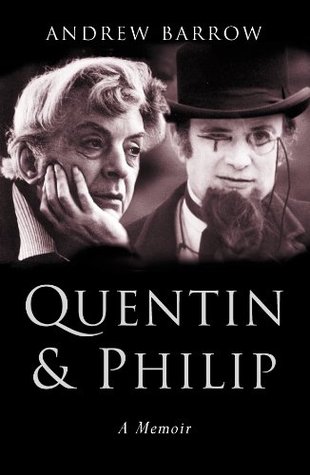 Wow, that sounds like an interesting book, Nigeyb - and O'Connor looks spectacularly eccentric in the cover photo.
 Don't think I'd ever heard of him before coming across the mention of him in Lee's book!
I loved the beautiful lyrical quality of Lee's writing. When he wrote about walking in the intense heat of the summer in Spain, I felt like I was with him ready to collapse without water.Music is such a universal language. When he first arrived in Spain, he was unable to speak the language. Playing the violin not only brought in money in tips, but also served as a vehicle to meet people.
He must have been a very gregarious, likable young man because strangers were very generous and kind to him, even though they were impoverished and it was during the years of economic depression. Even the older professional tramp who did a yearly circuit around England spent time teaching him the tricks of survival on the road.
This was a darker book than Cider With Rosie with the start of the Spanish Civil War at the end. After he met so many people barely surviving as fishermen, farmers, and laborers, one can see why he had so much sympathy for the Republican cause.
My review:
https://www.goodreads.com/review/show...
^ Yes I agree with all of that Connie, especially the part about his social skills. He really must have been a very charming young person. Your review is fab too.By the by, my copy of "Quentin And Philip" - the double biography of Philip O'Connor and Quentin Crisp (see above) - has arrived. I am not sure when I'll get to it though
The biography of O'Connor and Crisp sounds entertaining, Nigeyb.
The episode of the BBC series Travellers' Century about Laurie Lee and As I Walked Out One Midsummer Morning is available on YouTube. I enjoyed watching the episode about Patrick Leigh-Fermor from the same series, so will hope to see this soon.https://www.youtube.com/watch?v=PfM0T...
 Thanks for this link to Travellers' Century, Judy. I've started listening to it and it is quite interesting. I'll also watch the one about Patrick Leigh-Fermor.
 Reading As I Walked Out, I often was reminded of A Time of Gifts. While Fermor seemed often to meet well-to-do people, Lee mostly encountered those who were struggling. Both were wonderfully descriptive of their travels.
Here are some more comments about Laurie Lee's book:
https://www.goodreads.com/review/show...
So glad to have found both these writers who were completely unknown to me before BYT introduced them to me.
I enjoyed your review, Barbara. I've now written mine up too:https://www.goodreads.com/review/show...
Lee reminded me of Leigh-Fermor too, but I agree with you that the spheres they move in tend to be quite different.
Wonderful reviews, Barbara and Judy. I'll have to add the Leigh-Fermor book on to my TBR list.
Thanks Barbara. Thanks Judy. I enjoyed both of those reviews.Thanks also to Judy for the Travellers' Century link. I loved the Patrick Leigh Fermor episode and so eagerly anticipate this one.
I agree that Patrick Leigh Fermor's teenage travels were very different however, he and Laurie Lee share one thing in common, both journeys resulted in superb, timeless travel writing.
I'm hoping to watch the Travellers' Century programme in the next fews days. Anyone else seen it?This is the info on iPlayer... Explorer, writer and broadcaster Benedict Allen retraces part of author Laurie Lee's journey across Spain in 1935, which became the basis for his celebrated travelogue As I Walked Out One Midsummer Morning.
Lee thought of himself first and foremost as a poet, and the book reveals a poet's sensibility in its meticulous, distilled observations of the country and people he quickly came to love.
Allen tries to find out whether Lee's evocative prose actually works as travel writing and Lee is revealed as an enigmatic, mercurial figure in the tradition of the wandering minstrel or troubadour, with a huge array of talents and an astonishing facility to charm.
Who else is reading, or going to read, this marvellous book?
By the by, one of the comments under Travellers' Century states...
The man was just wonderful - in the deepest sense of the word. He may have had his weaknesses but his lyrical prose was certainly striking. So evocative and colourful and so everlasting so as to conjure up a past almost forgotten yet unforgettable through his written words. Amazing. Respect.
Yes indeed.
One other thing, having loved Patrick Leigh Fermor and Laurie Lee's books on travel I wondered about the third subject of the Travellers' Century...
Eric Newby
According to the iPlayer blurb....
Eric Newby
Travellers' Century
Episode 1 of 3
Benedict Allen follows the travels of quintessential British amateur traveller Eric Newby. Born in suburban Hammersmith between the wars, Newby was dismissed by his public school as 'not clever', and his life became a catalogue of challenges. As a teenager, he went to sea to serve as a deck hand, sailing around Cape Horn. During the WW2 he joined the Special Boat Squadron, and was captured by the enemy. After escaping from an Italian POW camp, he met his future wife Wanda.
Newby itched to discover the world and, in the mid-1950s, abandoned an unhappy career in the rag trade to head off with diplomat Hugh Carless into remotest Afghanistan and climb Mir Samir. The journey was immortalised in A Short Walk in the Hindu Kush.
Fifty years on, Benedict Allen finds this lost corner of Afghanistan little changed - and comes away full of admiration for the author. Newby failed to reach the summit, but for all his sardonic understatement and self-deprecation, he was just a hair's breadth away. And all with the aid of a map drawn on the back of an envelope.
Perhaps we should investigate him and his work?
http://www.independent.co.uk/news/obi...
His wife Wanda was his muse and constant companion...
https://www.theguardian.com/books/201...
From what I can glean most of his travelling was done after WW2 so probably not appropriate for a group read. Sadly.
Nigeyb wrote: "From what I can glean most of Eric Newby's travelling was done after WW2 so probably not appropriate for a group read. Sadly. "Although, The Last Grain Race might work...
In 1938 an eighteen-year-old Eric Newby signed on for the round trip from Europe to Australia in the last commercial sailing fleet to make that formidable journey. The four-masted barque Moshulu ended up as a dockside restaurant in Philadelphia; the young apprentice went on to become one of the greatest travel writers of this century.
The Last Grain Race is Eric Newby's spell-binding account of his time spent on the Moshulu's last voyage in the Australian grain trade.
As always, Eric Newby's sharp eye for detail captures the hardships, danger, squabbles, companionship and sheer joy of shipboard life - bedbugs, ferocious storms, eccentric Finnish crew and all. By pure chance, Eric witnessed the passing of the era of sail, and his tale is all the more significant for being the last of its kind.
How does that sound?
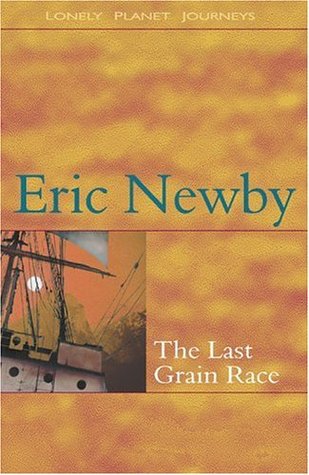 That sounds great, Nigeyb. He also wrote a famous memoir of the Second World War, Love And War In The Apennines, which sounds good too.
As a fugitive from a POW camp in Northern Italy in 1943, Eric Newby spent three months hiding out in the forests and mountains south of the river Po. This story recounts his experiences and the invaluable aid given by the local people, especially the woman who became his life-long love.
Both of those books sound enticing. I enjoy travel writing so would love to read some of the other travel writers Nigeyb has been mentioning as group reads.
Thanks for the comments about Eric Newby. Never heard of him before, but will check out the Travellers' Century recording. I enjoyed the ones about Fermor and Lee. My library has several Newby books, including Love and War (but not The Last Grain Race). Will get around to one or more of them eventually.
I also still want to read Morton's In Search of London which I bought a while ago when it was nominated. Too many great books out there!!
Eric Newby is a fairly well known travel writer in the UK, but as Nigey pointed out, most of his travels were a bit later than our timeframe.
Thanks all for your repliesVal wrote: "Eric Newby is a fairly well known travel writer in the UK, but as Nigey pointed out, most of his travels were a bit later than our timeframe."
Yes indeed, but at least we can still consider...
Love and War in the Apennines
and
The Last Grain Race
Both look like very promising books, and are in the BYT group era
Barbara wrote: "My library has several Newby books, including Love and War (but not The Last Grain Race)."My library has both...
Love and War in the Apennines
and
The Last Grain Race
It's a sign I tell ye!
Barbara wrote: "I also still want to read Morton's In Search of London which I bought a while ago when it was nominated."
Me too Barbara - on the shelf and waiting for the right moment.
I've now watched the Travellers' Century programme about Laurie Lee and it is excellent. There's a lot of footage included from a programme he made with the BBC in the 1960s where he retraced part of his journey in Spain, and so quite a bit of the narration is in his own voice. It also includes information about his life in Gloucestershire, with contributions from his family and friends. In the modern sections, I would have liked some interviews with Spanish people living in the areas he travelled through, instead of samey footage of people walking around, but that's my only criticism.
I'm s out halfway through Judy - and loving it. I agree with everything you say
 Nigeyb- how have I missed this whole thread ? I am so excited ! I had the chance to get into Laura Lee today while my Daddy was in chemo! I read when I can ! My Daddy laughs at me often as his little girl still carrying books instead of baby dolls in her hands !
 This whole page is full of treasures to read next ! I am going to go ahead and purchase some of these in case we get to read these later . I know I can see that special too . Love and War sounds wonderful ! It sounds like the book I am in the mood for right now . I really do love to read about the authors and then read their books . It is a good way to learn .
Judy - I thank you for your suggestions too!
I will add my first impressions when I am about half through later tonight . Ok Jennifer ?
Thank you all for being so patient with me !
Dawn
I look forward to your reaction Dawn. I loved this book - the whole trilogy are amongst my favourite books.

Bright Young Things
Books mentioned in this topic
As I Walked Out One Midsummer Morning (other topics)As I Walked Out One Midsummer Morning (other topics)
Love and War in the Apennines (other topics)
The Last Grain Race (other topics)
The Last Grain Race (other topics)
More...
Authors mentioned in this topic
Eric Newby (other topics)Eric Newby (other topics)
Patrick Leigh Fermor (other topics)
Patrick Leigh Fermor (other topics)
Roy Campbell (other topics)
More...

Enjoy!