
Art Lovers discussion
The Vanishing Velázquez
>
Velázquez 01: Ch 1-3
date newest »
newest »
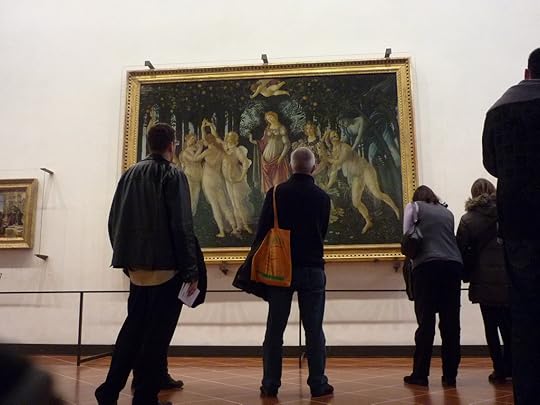
 I really enjoy Cumming's style in this book. She writes eloquently and with a great sense of passion and mystery about art and people. One thing that struck me from the very get go in chapter 1 was the concept of the size of paintings. Most of the time we are exposed to paintings (and art in general) through text books or media on the internet/magazines, and rarely appreciate the actual size of a work. This really hit the mark in my own life years ago when I walked into a room in the Uffizi gallery in Florence and encountered Botticelli's "La Primavera". It covered an enormous wall from floor to ceiling. I was awestruck never having realized the enormity (6′ 8″ x 10′ 4″) of the painting.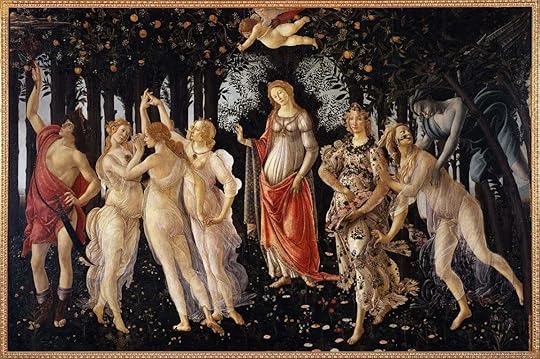
In location at the Uffizi:
It seems like "Las Meninas" falls into this realm as well with a size of 318 cm × 276 cm (125.2 in × 108.7 in). It must be very impressive in a personal encounter.
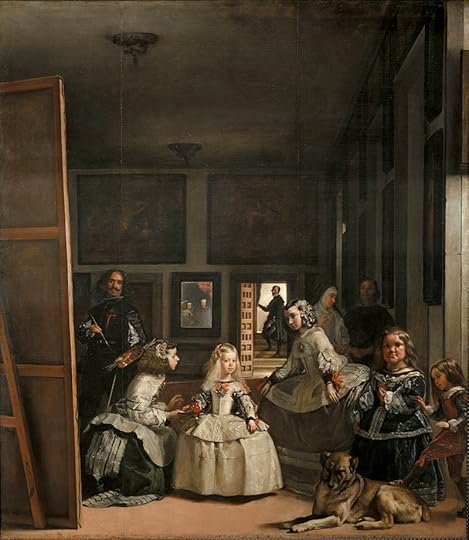
Cumming also points to another interesting aspect: location. We are all so used to seeing art in museums (which makes my inner eye tire very quickly by the way) and completely out of context. The topic of museums is an enormous one and quite interesting for that matter. The Botticelli piece I referred to earlier was viewed in a private quarter close to a bedroom. A very different way to encounter the art. In terms of our book I was not aware of that Las Meninas actually was viewed in the very same room it was painted. It must have been eerie in terms of the illusions and aspects of space within that room.
What is your view of the aspects of size and location when it comes to art history? How we lose perspective by not encountering the art as the artist had originally intended?
 You asked about size and location...This has nothing to do with the book but this was my first impression of The Mona Lisa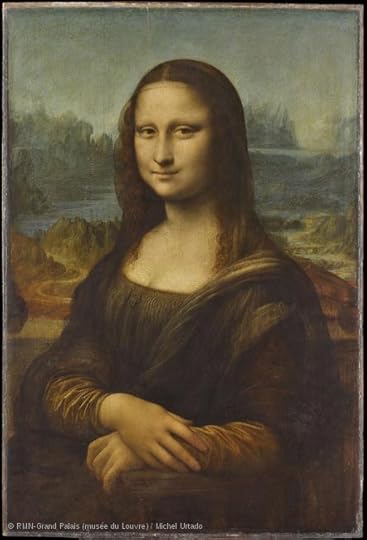
Everyone knows this one.
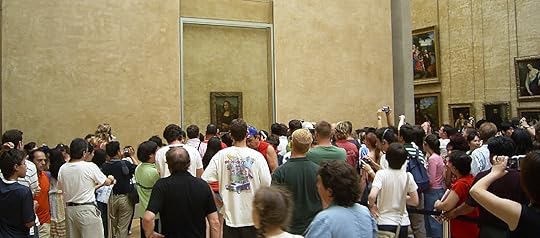
When I saw it in La Louvre it was so much smaller than I ever expected! (H:2 ft 6 in x L:1 ft 9 in H: 77 cm; L: 53 cm )
And with the huge crowd there was no way to ponder or actually think about anything let alone what da Vinci was thinking or trying to portray. And the shatter-proof glass made a glare from the many cameras. It was a disappointment altogether. I'd rather see it on the internet.
Has anyone else had this impression of The Mona Lisa?
Ah, of course, the smaller paintings.... To emphasize your point Heather - here are some other shots of Mona Lisa from the Louvre:
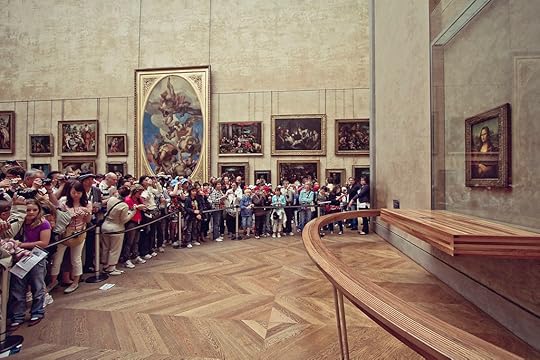
from the crowd's perspective:
 And here is a shot from the Prado gallery to get a sense of Las Meninas, i.e. the painting's size and current location:
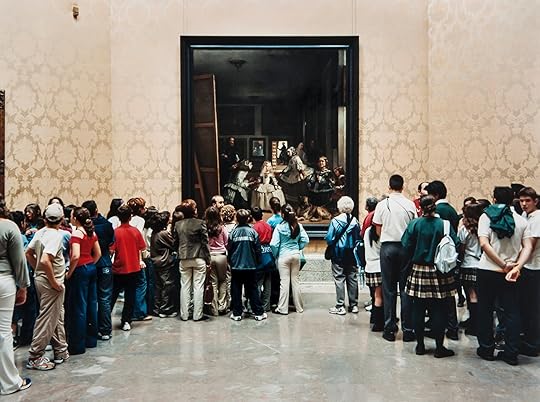 Haaze wrote: "And here is a shot from the Prado gallery to get a sense of Las Meninas, i.e. the painting's size and current location:
wow! That painting is much larger than I thought. Upon first glance, not looking at the line of people, I felt like I was looking in a mirror the way it is displayed, the frame, and specifically the way he paints, I don't know how to say it, out of the frame? It leaves the 'rest of the full picture' to one's imagination. I can only see one little part of the huge room. I never noticed that before until you posted this comparison size, Haaze. Thank you.
Well, I was inspired by you bringing up Mona Lisa earlier. I, too, never really think about the actual size of paintings, but they are critical to how one perceives them. Ideally one is exposed to the "real thing" but in lack thereof these pictures will suffice. In that sense 'Las Meninas' must have been breathtaking being originally displayed in the same room in which it was painted, don't you think? It has the qualities of illusion floating over it..... almost in the realm of Escher?
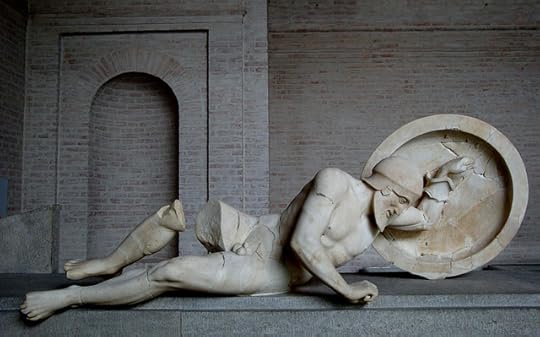
As we are in the realm of physical and historical aspects revolving around the paintings it is worthwhile to pursue the topic of how paintings travel through time. Cumming mentioned that Velázquez' paintings stayed in Madrid for a very long time. The only way to get exposed to Velázquez's art was to actually travel to Spain and see them in Madrid. The ripples of techniques and artists must have been extremely slow during these centuries. Especially for a man like Velázquez being virtually insular on the Spanish peninsula. The paintings traveled across Europe partially linked to French soldiers moving them (as bounty?) etc. Each painting seems to have its own unique story to tell in terms of its making, and its journey between places to ultimately end up in somebody's collection or museum. Or, of course, to wither and get destroyed due to lack of care or misfortune. It reminds me of the Greek plays and their journey through time. It is fascinating to know more about the history of paintings (works) and their journeys. Intentions of the artist will vary. Religious art is often seen out of context (e.g. triptychs or statues) - even in the actual location the perceptions will be variable depending on one's faith and ability to interpret symbols in the art. It is complicated. Seeing art close up is often key and enchanting. It reminds me to spend more time at museums. I wish I lived in Europe closer to some of the major collections. Once I went to the Glyptothek in Munich, Germany, and was awed by the Greek art in its collection. I will never forget seeing these statues in real life. However, they were all removed from their original context, culture, faith and time. Probably painted originally, but now white, stark and partially broken and fragmented.
 http://www.antike-am-koenigsplatz.mwn...
Size and location definitely matters....
It makes me wonder about Velázquez's intentions. Portraits as a way of making money? Art for art's sake? Visions?
 Haaze said: "It has the qualities of illusion floating over it..... almost in the realm of Escher? "
Well, I agree with almost all of this post (message 7) but I don't really understand how you compare Velazquez, or specifically this painting, with Escher?
Haaze wrote: "It is fascinating to know more about the history of paintings (works) and their journeys." (message 8)That it is. I feel that the 'journeys' of the works themselves give them a trail of history also. I'm especially interested in who first possessed the work, where it went from there, how (or if) it got to the museum and in a whole different part of the world!
Heather wrote: "Haaze said: "It has the qualities of illusion floating over it..... almost in the realm of Escher? "Well, I agree with almost all of this post (message 7) but I don't really understand how you co..."
I was thinking about creating an illusion of rooms, mirrors in the paintings original placement. I was pondering how it came across in that specific room?
Heather wrote:"That it is. I feel that the 'journeys' of the works themselves give them a trail of history also. I'm especially interested in who first possessed the work, where it went from there, how (or if) it got to the museum and in a whole different part of the world! "I just remembered a film that traced the "history" of a violin traveling through the centuries: "The Red Violin". Have you by any chance seen it? It would be neat to build a film about a painting following a similar trajectory.
https://en.wikipedia.org/wiki/The_Red...
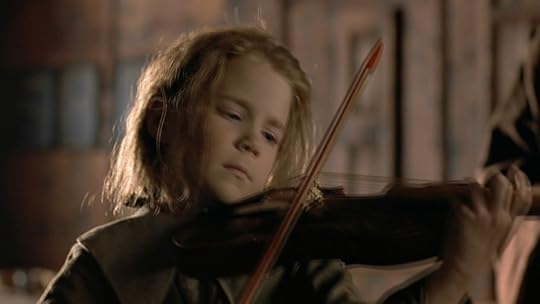 Haaze wrote: "Intentions of the artist will vary. Religious art is often seen out of context (e.g. triptychs or statues) - even in the actual location the perceptions will be variable depending on one's faith an..."
My very first thought upon reading the first line of this message, Haaze, was The Ecstasy of St. Theresa by Bernini
This work has had many a debate as to how it makes one feel upon first looking at it, whether in a textbook, internet, or in person. The look on her face, the way her body seems to go limp, the ability to almost even hear her 'moan'.
"Teresa describes an angel carrying a fire-tipped spear with which he pierces her heart repeatedly, an act that sends her into a state of spiritual rapture. “The pain,” she writes, “was so severe that it made me utter several moans. The sweetness caused by this intense pain is so extreme that one cannot possibly wish it to cease, nor is one’s soul then content with anything but God.”
And speaking of actual context, the place or way we view the work doesn't actually take in the whole concept of what the artist is trying to portray unless we are actually present. This explains it perfectly of Bernini's sculpture.
A complete understanding of the aesthetic impact and spiritual significance of the Ecstasy can only be gained in the context of the larger space of the chapel. The work is, in fact, not an independent piece, but the crucial center of a more complex composition that brings together not only sculpture, but also painting and architecture—all designed by Bernini. The dark, patterned marble columns and convex niche in which the Ecstasy is framed, for example, enhance the brightness and dynamism of the scene, while giving the sense that the wall has opened up to reveal St. Teresa’s vision. We are, in a way, looking at a vision of a vision, one that Bernini has created for the faithful who worship at the altar...
http://www.learner.org/courses/global...
Looking at St. Theresa herself, especially in the here and now of today's world, what is your first impression?
Heather said: "Well, I agree with almost all of this post (message 7) but I don't really understand how you compare Velazquez, or specifically this painting, with Escher?"Haaze said: "I was thinking about creating an illusion of rooms, mirrors in the paintings original placement. I was pondering how it came across in that specific room?"
Alright, I understand where you are coming from in the 'mirror' context. That is how I viewed it at first, I felt like I was looking in a mirror and there is a mirror in the painting, then you added the context of the painting in the room.
I also just thought of the mirrors standing opposite one another, like in a fun-house or something, and one can see forever. That's interesting...not that it has anything to do with art.
Heather wrote: "Looking at St. Theresa herself, especially in the here and now of today's world, what is your first impression?."Ahhhh, I cannot even answer that question right now. The statue is breathtaking and I'm filled with awe looking at it. It is incredibly beautiful and I lack words to describe it or how I feel about it. I cannot even imagine the feelings one would trigger by seeing it in person.
I really like how Cummings brings in John Snare as a way to explore Velázquez's art and times. The idea of using the pursuit of an obscure painting (suspecting that it is more) at an auction as a device is brilliant. It gives the reader a chance to bond with Snare's pursuit. Again I just kept thinking about how art travel through time and space, through fame and obscurity. Auctions, yard sales, estate sales etc are always an avenue where the hidden can pop up to the surface. I like John Snare's fascination with the portrait as he sits and stares at it for hours as he realizes its connection to Velázquez. Great story! I wonder what art pieces from the past that remains to be discovered.....
I can't think of when you said it, Haaze, when you shared your appreciation for Cumming's literary style. I want to second that opinion. I'm a little bit behind, but I do want to post a couple of descriptive sentences that kind of express this point, in my opinion. "Velazquez is sometimes said to be the most distant of artists, remote and inscrutable as a star in outer darkness. His life is unknowable, his mind unfathomable, his genius for creating illusions of living people almost beyond comprehension, as if he were not quite a real human being himself" Chapter 3 pg 23
Well said.
Cumming is very poetic in her phrasing. It is linguistically attractive to me although I doubt if the statement is valid. It is a fantasy of perception. Velazquez being unknowable? Illusions of living people behind comprehension? Cumming is writing poetry here and not art history. Regardless, it is really enjoyable to read. I feel as if I am lost in a dream of the Spanish baroque!!!!! :P
And another vivid description by Laura Cummings of his self-portrait painted into Las Meninas. This made me even more excited (and hopeful) to see this painting in person. I don't seem to observe little points such as these. And it seems that by viewing a painting in a book or online, one wouldn't notice or be able to distinguish these details."It is beyond belief that people should say, as they frequently do, that the painter gives nothing away in this self-portrait. Look at the little dots of pigment on his palette: they echo the chain of faces in the room, as well as the colors needed to make the painting, repeating the central compositional truth that the artist is responsible for everything you see. Look at the way Velazquez paints his tapering fingers as if they were brushes. Look at the actuall brush; that it is no more than a darting streak of white, the one mark that is illegible at any distance and yet so sharply itself, feels like the subtlest of quips. The whole painting has been set in motion by its delicate tip--which effectively vanishes. No other artist before or since has made the paradox of painting so manifest, the strange idea that three dimensions can be persuasively portrayed on a flat sheet of cloth with paint colors and a brush; or, in this case, that fixed pictures can represent the mobile, ever-changing world around us to such a pitch and yet themselves dissolve into flux" Chapter 3 pg 24-25
Haaze wrote: "Cumming is very poetic in her phrasing. It is linguistically attractive to me although I doubt if the statement is valid. It is a fantasy of perception. Velazquez being unknowable? Illusions of liv..."Well, it was my perception that when she said he is "unknowable", she is reflecting on the fact that we have little historical background of his life.
And, yes, it is very poetic.
 At the end of Chapter 3 Cumming writes about "The Waterseller of Seville". It was one of Velazquez's earlier paintings. He bought it back when it came on the market and kept it for the rest of his life. She describes the waterseller as "so stoic, so dignified, deeply respected by the painter as well as the boy". I found it to be an especially touching painting. Even though the artist went on to paint the portraits of royalty, this painting reflecting his roots of painting ordinary people was very important to him.
Connie wrote: "At the end of Chapter 3 Cumming writes about "The Waterseller of Seville". It was one of Velazquez's earlier paintings. He bought it back when it came on the market and kept it for the rest of his ..."
At the end of Chapter 3 Cumming writes about "The Waterseller of Seville". It was one of Velazquez's earlier paintings. He bought it back when it came on the market and kept it for the rest of his life. She describes the waterseller as "so stoic, so dignified, deeply respected by the painter as well as the boy". I found it to be an especially touching painting. Even though the artist went on to paint the portraits of royalty, this painting reflecting his roots of painting ordinary people was very important to him.
Connie wrote: "At the end of Chapter 3 Cumming writes about "The Waterseller of Seville". It was one of Velazquez's earlier paintings. He bought it back when it came on the market and kept it for the rest of his ..."Connie, thank you for bringing that up and your additional information as to what you learned in your reading about The Vanishing Velázquez: A 19th Century Bookseller’s Obsession with a Lost Masterpiece by Laura Cummings. I began reading the book at the beginning of our discussion and remember faintly the discussion of the painting The Waterseller of Seville.
Thank you for keeping us updated on some of the writings especially for those of us who haven't gotten so far into our reading.
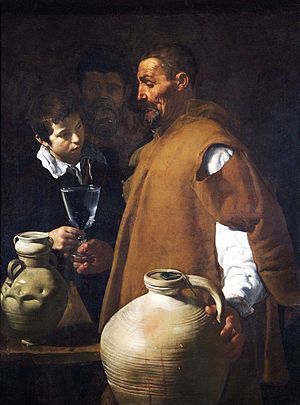
The Watterseller of Seville
Thank you for posting the image of the painting, Heather. I saw on Wikipedia that there are three versions of this painting. This is my favorite of the three with a beautiful use of light.https://en.wikipedia.org/wiki/The_Wat...


Chapters 1-3