
Reading the 20th Century discussion
Favourite Authors
>
Dennis Wheatley
date newest »
newest »
 Mod
Mod
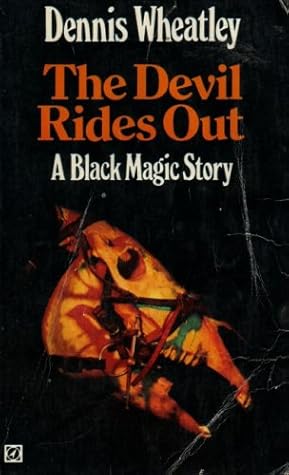
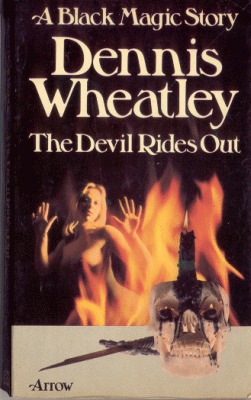
A few years back I was gratified to read a four star review of The Devil Rides Out from our very own CQM - a man of taste and discernment.
CQM, as we all know, is always to be trusted in matters literary.
As CQM observes: "Thrills aplenty if you can quiet that part of your mind that pipes up with comments such as "what a lot of nonsense" or "tosh, utter tosh!". And for my part I've never had any trouble quieting my mind!"
Click here to read CQM’s review of The Devil Rides Out
 Mod
Mod
https://www.youtube.com/watch?v=qeXEj...
He wrote over 70 books and sold over 50 million copies of them; he served his country with distinction in both wars; he sold fine wines to the crowned heads of Europe; but he counted a conman and a murderer among his closest friends and was a keen student of the occult and the black arts.
Dennis Wheatley was labelled the prince of thriller writers by the critics, but less than 30 years after he died, he is largely neglected. In this programme, friends including the actor Christopher Lee and experts including Wheatley's biographer Phil Baker, summon him back to this world and reconsider him as the inheritor of the mantle left by Alexandre Dumas and Rider Haggard - which he himself passed on to the likes of Ian Fleming, George MacDonald Fraser and even Clive Barker.
 I got all excited a while back when I found out that Dennis Wheatley's family home was within walking distance of my own slightly less grand abode but the excitement didn't last long. It had burned to the ground a year or so earlier. Shame it was a lovely looking place and I do enjoy a famous persons former home.
http://www.denniswheatley.info/museum...
 Mod
Mod
Mod
Mod
Great website though - thanks
 Dennis Wheatley was a favourite of mine - and of my husband - many years ago. But they did not stand up to rereading in more recent times.
 The first book of his that I read was The Haunting of Toby Jugg I was so taken by it and told a lot of people, then found out that someone I knew was related to him and always got a copy of his new releases. I borrowed quite a few and was very careful with them as obviously they were wanted. I would imagine they are worth quite a lot now.
Mod
Mod
The first book of his that I read was The Haunting of Toby Jugg I was so taken by it and told a lot of people, then found out that someone I knew was related to him and always got a copy of his new releases. I borrowed quite a few and was very careful with them as obviously they were wanted. I would imagine they are worth quite a lot now.
Mod
Mod
Susan wrote: "I've just been looking at Dennis Wheatley bibliographies and they are are all different. The Devil Rides Out is book 2 in one series and book 6 in another..."
As I mention above, I have been meaning to reread The Devil Rides Out for many moons having loved it as a young teenager in the early 1970s
I don't remember much about it except that it was very exciting and worked fine as a stand alone novel. I also recall that out of all the Wheatleys that I read as a kid it was the one I enjoyed the most.
 I've always been put off by his politics and his bizarre beliefs. But I saw a BBC 4 documentary about him that was fascinating, I didn't realise that he sold massively for years, a sort of latter-day Stephen King. I think I read that a lot of his books are edited now to remove the worst of the racist references and the other aspects? But never sure if that's the right way to deal with someone like that. It gives a false sense of what the books were about and what they represent.
Mod
I'd agree with you on the editing but from what I've read about him he was pretty out there!
I was a huge fan when I was young, but tried to re-read one of them (possibly The Haunting of Toby Jugg) more recently and found it indigestible. For style, rather than content.
I've always been put off by his politics and his bizarre beliefs. But I saw a BBC 4 documentary about him that was fascinating, I didn't realise that he sold massively for years, a sort of latter-day Stephen King. I think I read that a lot of his books are edited now to remove the worst of the racist references and the other aspects? But never sure if that's the right way to deal with someone like that. It gives a false sense of what the books were about and what they represent.
Mod
I'd agree with you on the editing but from what I've read about him he was pretty out there!
I was a huge fan when I was young, but tried to re-read one of them (possibly The Haunting of Toby Jugg) more recently and found it indigestible. For style, rather than content.I think The Golden Spaniard was the only book I remember reading that gave the Fascist side of the Spanish Civil War any time at all. Although quite possibly Biggles in Spain did too, at least according to some of the reviews.
Mod
As CQM observes: "Thrills aplenty if you can quiet that part of your mind that pipes up with comments such as "what a lot of nonsense" or "tosh, utter tosh!". And for my part I've never had any trouble quieting my mind!"
Click here to read CQM’s review of The Devil Rides Out
 Nigeyb wrote: "I'll report back once I've revisited The Devil Rides Out. As a 13 year old I thought it was the pincacle of adventure writing however I certainly wouldn't rely on my teenage reading t..."
Something weird about the teenage mind, could/would read pretty much anything...and sometimes going back to things work and sometimes memories work best if they stay that way. It's hard to predict. I still enjoyed John Wyndham when I re-read him.
Mod
Nigeyb wrote: "Yes. Me too. Wyndham actually seemed better than I had remembered"I listened to Samuel West reading The Day of the Triffids, and although some of the attitudes grated more than they would have done when I was younger, I think I appreciated the characterisation more.
Mod
I'm poised to press play on the audiobook version of The Devil Rides Out (1934)
I mention above how, as a 13 year old, I thought it was the pincacle of adventure writing.
I'll report back
Mod
Mod
Amazing to think that, when I was a youngster in the early 70s, bookshops had rows of Dennis Wheatley books. I doubt many bookshops stock him now.
Despite the clunky and cliche ridden writing, the lazy racial stereotypes, the everyday sexism, and a massive side order of hokum, I am really enjoying it. It's a cross between a Boys Own adventure yarn, a classic 70s Hammer Horror film, and an episode of Scooby Doo.
It turns out that Dennis Wheatley was knowledgeable about the occult and even used this during WW2 when he worked for British Intelligence...
https://espionagehistoryarchive.com/2...
The main occultist is a none too subtle version of Aleister Crowley who, the link above mentions, was someone Dennis Wheatley met on several occasions and got to know well. Indeed it was apparently Wheatley, Maxwell Knight and Ian Fleming who came up with the ruse to co-opt Aleister Crowley to help convince Nazi Rudolph Hess to parachute into Scotland.
Hammer Films did actually adapt The Devil Rides Out in the 1970s however I don't recall ever having seen it despite being quite the Hammer fan, especially in my younger days.
Looking forward to seeing how this plays out. I suspect good will triumph over evil, but you never know.
 I've seen the film several times (but not recently), and remember parts of it - the appearance of the Goat (of Mendes? Menzies? Ming Campbell?).
 One does have to put one's sensibilities on one side reading stuff from between the Wars, or just after. I doubt if it even registered when I read them as a teenager (50s/60s)
Mod
If you're willing to suspend disbelief and indulge a lot of mystical nonsense then The Devil Rides Out still stands up as a thrilling adventure yarn.
4/5
https://www.goodreads.com/review/show...
4/5

Reading the 20th Century
Books mentioned in this topic
The Devil Rides Out (other topics)The Devil Rides Out (other topics)
The Devil Rides Out (other topics)
The Day of the Triffids (other topics)
The Devil Rides Out (other topics)
More...
Authors mentioned in this topic
Dennis Wheatley (other topics)Dennis Wheatley (other topics)
Phil Baker (other topics)

http://www.denniswheatley.info/dennis...
Dennis Wheatley was born in London in January 1897, the son and grandson of Mayfair wine merchants. From 1908 - 1912 he was a cadet on HMS Worcester, then spent a year in Germany learning about wine making. In September 1914, at the age of seventeen, he received his commission and later fought at Cambrai, St. Quentin and Passchendaele.
Gassed, he was subsequently invalided from the army and entered the family wine business, and following the death of his father in 1926, became its sole owner. During this period he began to write short stories, a number of which were later published or expanded into full-length novels. Following the failure of his first marriage, in 1931 he married Joan Younger.
Wheatley's business was badly affected by the slump of the early thirties and by 1932 he was forced to sell up and came close to bankruptcy. As a diversion from his financial worries and with the encouragement of his wife, Wheatley set about writing a full-length murder mystery that he called ‘Three Inquisitive People’. His agent's reader considered the book to be weak, commenting:
“This story shows considerable promise but does not conform to the accepted formula for murder stories. We do not see enough of the murderer, and the construction is poor in that the heroine is not brought in early enough and plays no essential part, and that after the point at which the book should normally be concluded there is a long epilogue tacked on which is unduly loaded with bathos.”
However, this book introduced the characters of the Duc de Richleau and his friends who were to become Wheatley's most popular inventions. Whilst ‘Three Inquisitive People’ was in the hands of his agent he set about writing a second book featuring the same characters, ‘The Forbidden Territory’, which was immediately snapped up by Hutchinson. This adventure story won immediate acclaim from both the press and public alike. It was reprinted seven times in as many weeks, was translated into many languages and the film rights were bought by Alfred Hitchcock.
This book was followed by a string of thrillers that, throughout the 1930s, propelled Wheatley into the category of best selling author. As an avid reader himself, and fanatical collector of modern first editions, he was familiar with the work of authors such as H. Rider Haggard, Conan Doyle, William Hope Hodgson, John Buchan and his particular favourite Alexandre Dumas, and was influenced in varying degrees by each. His work in the thirties seemed to be perfectly in tune with the spirit of the age, enforcing the virtues of imperialism in which he totally believed, and countering the rising threat of communism.
In 1939 he became the editor of the ‘Personality Pages’ of the Sunday Graphic and a volunteer speaker on behalf of the war effort. In the early days of the war, despite his best efforts, Wheatley was unable to find suitable war-work and so continued to write his novels, being one of the first writers to use the real life events of the day as the backdrop to his stories.
Then in May 1940, following a chance conversation between his wife and her passenger while she was a driver for MI5, Wheatley was commissioned to write a series of papers on various strategic aspects of the War. These ‘War Papers’ were read by the King and the highest levels of the General Staff, and as a result in December 1941 he was re-commissioned, becoming the only civilian to be directly recruited onto the Joint Planning Staff. With the final rank of Wing Commander, for the rest of the War Wheatley worked in Churchill's basement fortress as one of the country’s small handful of ‘Deception Planners’ who were charged with developing ways to deceive the enemy of the Allies real strategic intentions. Their top secret operations, which included the plans to deceive the enemy about the true site of the Normandy landings, were highly successful and saved countless lives.
After the war he moved to Grove Place in Lymington and continued his writing. Throughout most of his career, Wheatley produced two novels a year although this later dropped to one, usually having a summer release.
As well as producing adventure stories, Wheatley also turned his hand to biography producing two in the 1930s, ‘Old Rowley’ (1933) and ‘Red Eagle’ (1937). The four crime dossiers he produced with Joe Links in the 30s were an enjoyable and profitable diversion for him. Reproduced as ‘facsimiles’ in the late 1970s, the originals should be sought out by collectors as many of the physical clues are reduced to photographs in the reprints.
With the popularity of paperback editions of his works, his sales rocketed. In the UK alone he sold over 1,000,000 copies of his books a year during the 1960s. Also in the 1960s, two of his most popular titles, ‘The Devil Rides Out’ and ‘Uncharted Seas’ (renamed ‘The Lost Continent’) were filmed by Hammer and negotiations took place to turn some of his books into a TV series.
By the 1970s Wheatley completed the series of Roger Brook novels and set about writing his projected five-volume autobiography. This was later reduced to four volumes with two of them being much condensed.
He died of liver failure on 10 November 1977 at the age of eighty leaving behind him a massive body of work. He was cremated at Putney Vale and his ashes were buried at Brookwood Cemetery, Surrey, under a tree near the entrance.
For a more comprehensive account of Dennis Wheatley's life, read Phil Baker's definitive biography The Devil Is a Gentleman: The Life and Times of Dennis Wheatley....
The Devil Is a Gentleman: The Life and Times of Dennis Wheatley by Phil Baker
It sounds great...
"It is not only the Hammer films based on Dennis Wheatley's novels that are full-blooded, sensational entertainment, so was Wheatley's life, brilliantly evoked by Phil Baker. This gripping biography draws out all the comedy from Wheatley's history, from his childhood in a family of wine merchants who were dedicated to social climbing (the scrambling for status never left Wheatley either, even in his 70's he was proudly joining gentlemen's clubs such as White's) to his experiences in World War One. Wheatley's main ambition as a soldier was to join a socially acceptable regiment, but the Westminster Dragoons wouldn't have him because he couldn't ride (he claimed that he could but his first time on a horse rather exposed this lie), he was too short for the Artist's Rifles and so he ended up in the Artillery. He spent most of the War attending training camps and hunting for casual sex (and writing his first, unpublished, novel), before being sent to the Western Front in 1917. A business disaster, along with the Depression, led him to turn his attention to writing novels as a means of escaping penury (an unconventional idea for becoming rich) and after selling 50 million books he succeeded.
Wheatley lived on a grand scale, rather like a real-life bon vivant James Bond, of fine dining, expensive wines and even more expensive cigars.
Few people are aware that Dennis Wheatley, in his day one of the biggest selling novelists in the world, spent the Second World War as a member of Winston Churchill's Joint Planning Staff. Wheatley's job was to confuse the enemy by writing 'plausible, official documents' and to feed them to the Nazis. Here is that little known and intriguing story, drawn on previously unpublished restricted papers - and with a foreword by one of today's best-selling authors.
Phil Baker captures Wheatley's personality, as well as the lurid extremes of his novels (their occult settings, the constant promise of orgies and threats to virgins). For such a detailed book The Devil is a Gentleman is astonishingly readable, as page-turning as Wheatley's own novels.
James Doyle in Book Munch