
Art Lovers discussion
Art and Science
>
Kinetic Art
date newest »
newest »
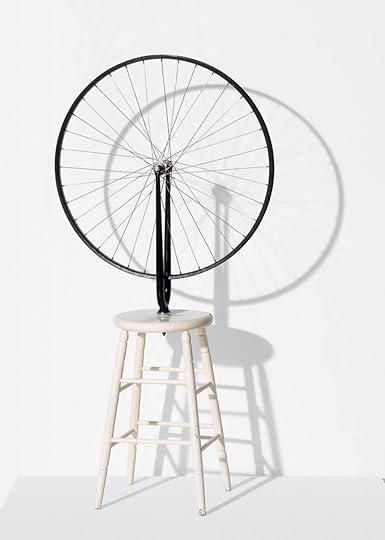
 Many consider Duchamp’s Bicycle Wheel the first piece of kinetic sculpture due to its spinning wheel.
 Alexandre Calder began making his mobiles in the 1930s. His work first used motorized or hand-cranked mechanisms, but then evolved to rely only on air for movement.
 Kinetic art isn’t just about works in motion, it also includes art that portrays perceived motion or “Op Art.”
Swiss artist Jean Tinguely (1925 – 1991) was a pioneer in the field—known for creating sculptural machines.
(video about Tinguely's sculptural machines, turn the volume down, it's kind of loud and obnoxious!)
https://www.youtube.com/watch?time_co...
Kinetic sculpture enjoys continued success, frequently used in large-scale public installations.
Now, artists are often commissioned by corporations looking to enhance their headquarters.

https://www.youtube.com/watch?time_co...
Kinetic Rain
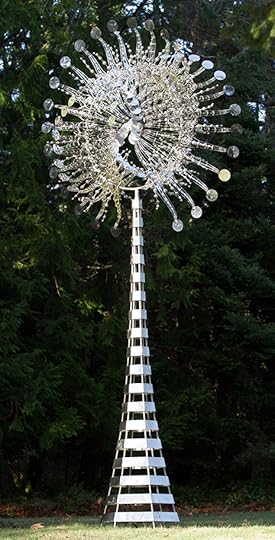
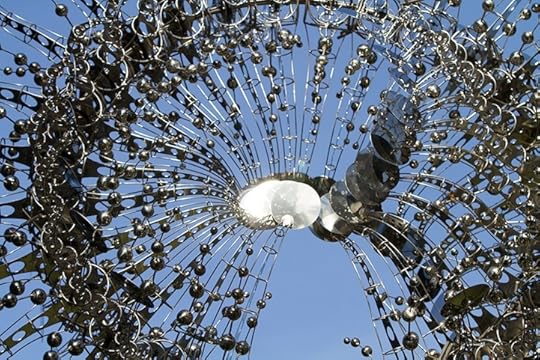
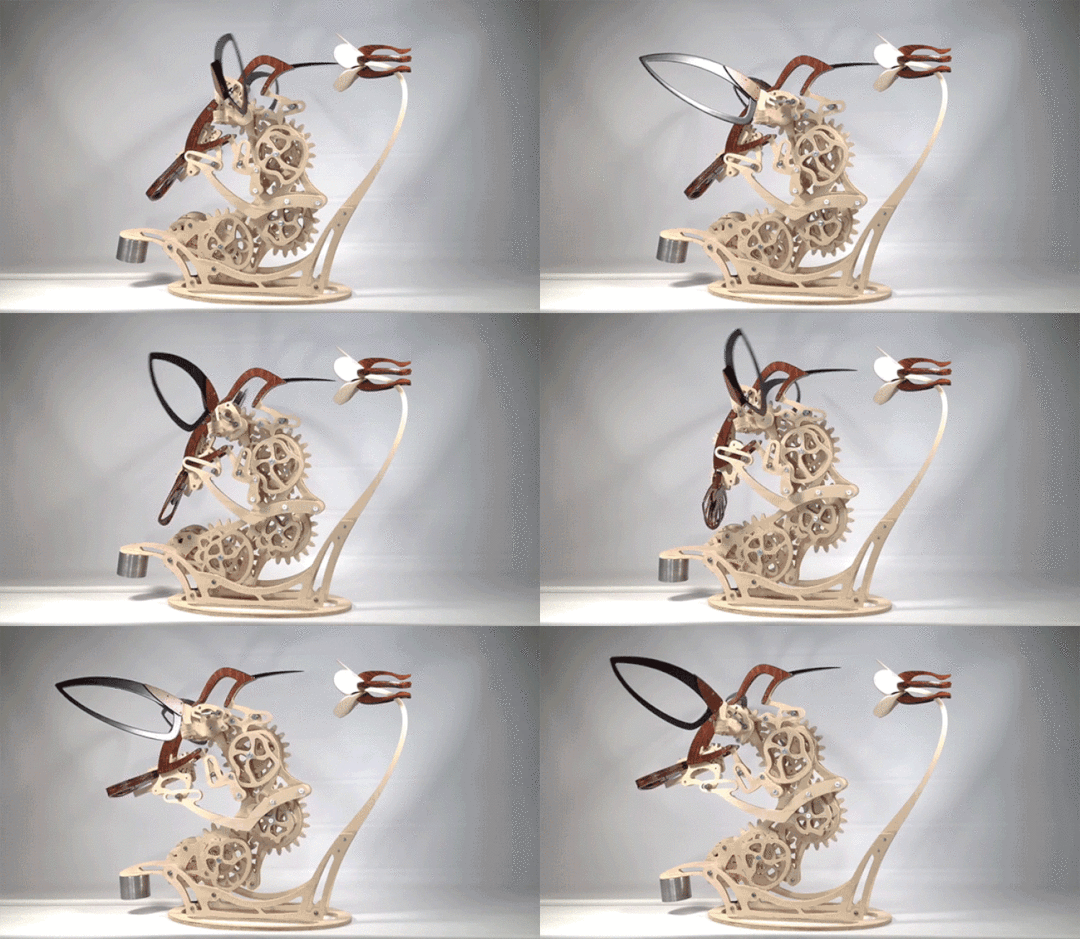
Some artists use natural elements—like wind—to propel motion in the sculptures…
 While other artists use mechanical parts or computer programs to force movement.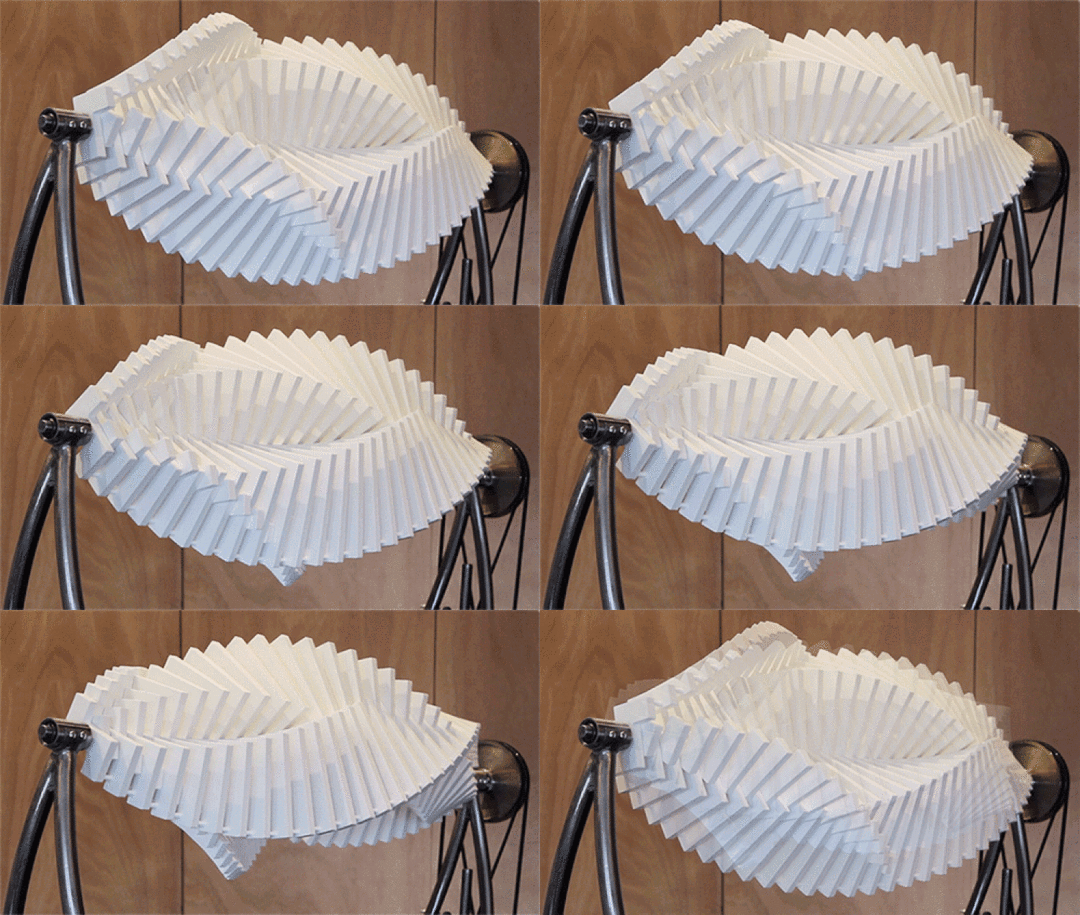


 As kinetic sculpture continues to evolve, artists are always innovating what the artform means. This LED chandelier in St. Petersburg is meant to mimic a jellyfish.
Chandelier Atlantic Star
Building’s Wind-Driven Kinetic FacadeBy Eugene Kim
https://mymodernmet.com/charles-sower...
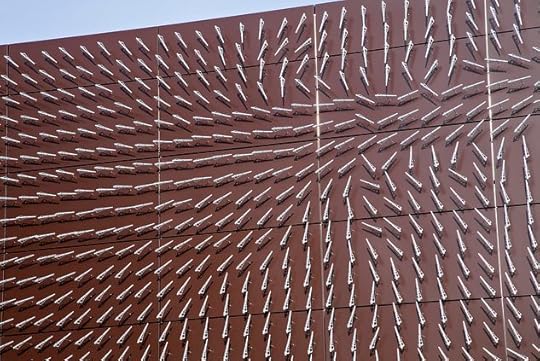
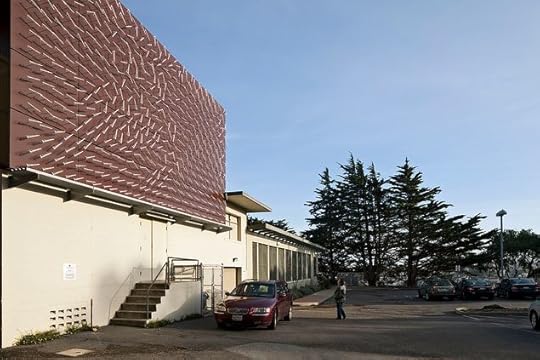
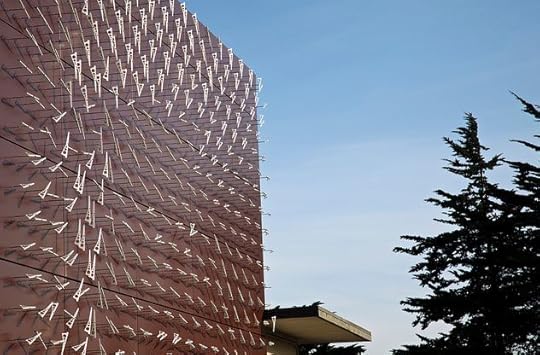
Wind is an invisible element. By creating a wind-driven kinetic facade on the the blank wall of the Randal Museum in San Francisco, Charles Sowers Studios sought to give it shape and form.
Windswept is a scientific observational instrument that consists of 612 freely-rotating directional arrows. Each arrow acts as a discrete data point, visually revealing the complex and ever-changing ways the wind interacts with the building and its surrounding environment.
The design studio spent over a year and a half designing and testing wind arrow designs, which are made of brake-formed anodized aluminum. The installation itself is 20′ high x 35′ long.




By Jessica Stewart
https://mymodernmet.com/kinetic-sculp...
Art that contains movement perceivable by the viewer or that relies on motion for its effect—this is the definition of kinetic art. While the definition explains the practical notion, it doesn’t emphasize the hypnotic capabilities of the artform. And though it comprises any medium, it’s actually kinetic sculpture that most comes to mind when thinking of the genre.
So where did kinetic sculpture get its start? Believe it or not, the earliest traces are owed to Impressionists like Monet and Degas who tried to express human movement in their paintings. But it was actually during the first half of the 20th century, when artists like Alexandre Calder experimented with mobiles, solidifying the birth of kinetic sculpture.
While we often think of motion driven artwork as the only examples of the art from, in reality, kinetic art can be divided into two categories. In the 1950s the term “apparent movement” was coined by art historians to encompass any sculptural artwork with moving parts. Instead, Op Art is used to describe kinetic art that relies on perceivable movement through optical illusion.
At either end of the kinetic spectrum, mathematic principles are paramount to the success of the art. After an explosion in the 1960s, artists working in the field continue to push boundaries. Whether powered by electricity or natural elements, formed from wood or LED lights, kinetic art is constantly challenging our perceptions.