
Art Lovers discussion
Do You Know Your Art Heists?
>
Three Masked Men
date newest »
newest »
 Clue #1 missing paintings include works by Degas, Monet, Cezanne, and Van Gogh
 Then I vaguely remember reading about it, early 2000's?
I must say that I remember the heist movies better than the reality ;-)
Armed robbers have stolen four paintings worth $163.2 million, including works by Monet, van Gogh, Cezanne and Degas from a Zurich museum, police said Monday.Police in the Swiss financial center said the theft of the four paintings from the E.G. Buehrle Collection, one of Europe's finest private museums for Impressionist and post-Impressionist art, occurred Sunday. Three masked men who entered the building with pistols are still at large, they said.
Police called the heist a "spectacular art robbery".
Cezanne's "Boy in the Red Waistcoat" was among the works stolen from the private Buehrle museum in the eighth district, according to police.
The prosperous and peaceful outer eighth district on the eastern shore of Lake Zurich is home to several notable art collections.
The FBI estimates the market for stolen art at $6 billion annually, and Interpol has about 30,000 pieces of stolen art in its database. While only a fraction of pieces are ever found, the theft of iconic objects is rare because of the intense police work that follows and because the works are so difficult to sell.
The incident recalled other thefts that have hit Switzerland's museums and galleries over the years.
Last week, Swiss police reported that two Pablo Picasso paintings were stolen from a Swiss exhibition near Zurich. The two oil paintings, "Tete de cheval" ("Head of horse") and "Verre et pichet" ("Glass and pitcher"), were on loan from the Sprengel Museum in Hannover, Germany.
https://www.cbsnews.com/news/163-mill...
On Sunday, the three men who entered the E. G. Bührle Collection here took four paintings — a Cézanne, a Degas, a van Gogh and a Monet together worth an estimated $163 million — but not the most valuable works in the collection. The four just happened to be hanging in the same room.The Wednesday before, in a nighttime theft in the nearby town of Pfäffikon, thieves stole two Picassos worth an estimated $4.4 million.
The Zurich theft was “probably the biggest art robbery in Europe,” according to Marco Cortesi, spokesman for the Zurich police, but did not appear to be the largest in history.
Continue reading the main story
Estimates vary widely for such rare and rarely sold works, but the value of the paintings taken in the infamous 1990 robbery of the Isabella Stewart Gardner Museum in Boston, the biggest art theft in American history, has been estimated as high as $300 million, according to the Federal Bureau of Investigation’s Web site.
Like the stolen Munch paintings, which were valued at $121 million, those stolen in Zurich are considered major works and so widely known as to be “unsalable,” said Richard Kendall, a prominent scholar of late-19th-century French art and a curator at large at the Clark Art Institute in Williamstown, Mass.
The 1879 Monet, “Poppies Near Vétheuil,” and the 1890 van Gogh, “Blossoming Chestnut Branches,” “are classic statements by these two artists,” Mr. Kendall said in a telephone interview. He called the Cézanne, “Boy in a Red Vest” from 1895, “fabulous, stunning, powerful” and one of the artist’s “greatest achievements.”
The Degas, “Count Lepic and His Daughters” (circa 1871), he said, was less impressive than the other works seized and inferior to the artist’s best portraits.
The mix of value and quality added to the impression that the robbery was as haphazard as it was brazen.
According to the local police and officials at the Bührle Collection, one of the top private museums for Impressionist and Post-Impressionist art in Europe, three men wearing ski masks entered the museum barely a half hour before the 5 p.m. closing time on Sunday.
One of the thieves pulled a handgun and ordered terrified staff members and visitors to lie down on the floor, as the other two men pulled the paintings off the wall. The police said paintings appeared to be sticking out of the back of the white van the men used to make their getaway.
The museum’s director, Lukas Gloor, said the museum generally did not check visitors’ bags and had no metal detectors, which he said the entry hall of the building was too narrow to accommodate. The collection is housed in a 19th-century villa in a quiet residential neighborhood, where state-of-the art offices border on ancient villas with large private parks.
“It is a very bad experience because as museum director you live with these pictures day in day out; you become attached to them like family,” he said at a news conference.
The police said they were searching for links between the Zurich robbery and the thefts of the Picassos at a cultural center in Pfäffikon but had reported no connections.
For the police and the public, the looming questions were not only who committed the crimes but, given the near impossibility of selling the paintings, why.
A common myth, popularized in the movies, of a theft to order carried out at the behest of a private collector, “is really to be considered a fiction,” said Karl-Heinz Kind, team leader of the works of art unit at Interpol.
The fact that there are no buyers lined up helps account for the recovery of famous works, he said, like the Munch paintings, which were recovered in 2006. “The thieves have difficulty finding someone to take them,” he said. “They are obliged to multiply their contacts and proposals. That increases the chances for police.”
The F.B.I. estimates that the overall losses from art and cultural property crime run as high as $6 billion each year.
One detail that has drawn attention here is that one of the three Zurich robbers, according to the police, spoke German with a Slavic accent, increasing fears among the Swiss that their country has become a destination for foreign criminals.
While such fears may be overblown, a leading expert on stolen art said Balkan organized crime rings represented a genuine and significant threat to the invaluable art collections of wealthy European countries.
“Organized criminals from Serbia, Albania, Montenegro and other parts of the Balkans steal art through gangs which they send out to Western Europe,” said Julian Radcliffe, chairman of the Art Loss Register, the world’s largest private database of lost and stolen art, based in London.
Mr. Radcliffe said the peak of ski season, with large numbers of foreigners leaving and entering the country, made it a particularly good time for thieves to get in and out of Switzerland undetected.
The Bührle Collection has been controversial because the Zurich industrialist Emil Georg Bührle, who amassed the impressive array of paintings, was a major arms supplier to the Allied and Axis powers during World War II.
It was also found to contain several works that were sold in the prelude to World War II at relatively cheap prices by European Jews who were fleeing or persecuted by the Nazis.
One local resident, a 60-year- old woman who lives a stone’s throw from the scene of the crime and did not want to give her name, told the story of another art collector she knows who lives on the block.
“The other day she told me that she had put her Giacometti sculpture into her safe,” she said. “I thought to myself, What a shame. But today I understand why she did it.”
https://www.nytimes.com/2008/02/12/wo...
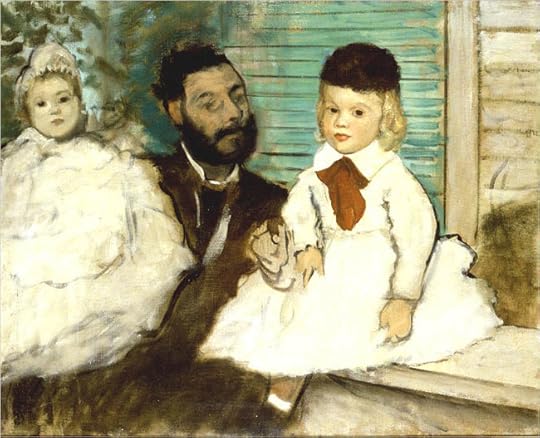
"Count Lepic and his Daughters" (1871), by Edgar Degas
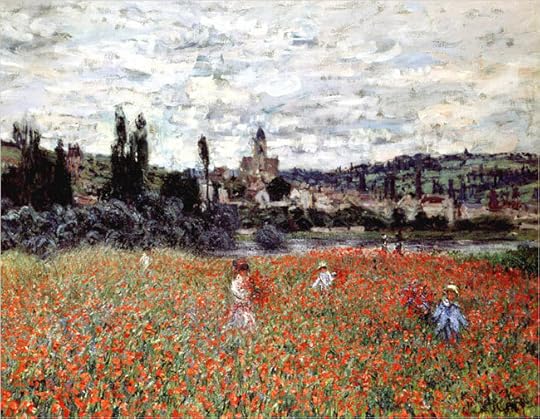
"Poppies near Vétheuil" (1879), by Claude Monet, was one of the four paintings stolen from a from the Buehrle Foundation museum in Zurich on Sunday
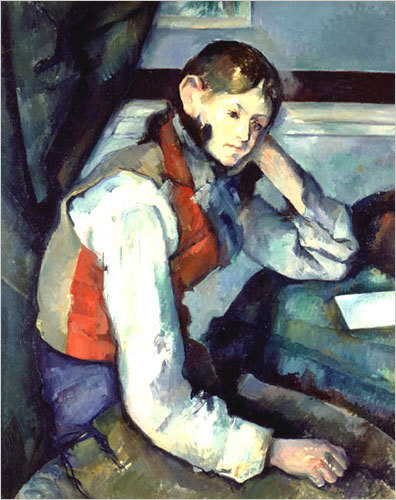
"Boy in the Red Waistcoat" (1888), by Paul Cezanne.

"Blossoming Chestnut Branches" (1890), by Vincent van Gogh.


They quickly left through the door and threw them into the back seat of a waiting van and sped away, pulling off one of the largest and most audacious robberies of all time.
This is the second theft of this type that has happened in this country within a week! The loss is not just stunning, but the ease of which they are stolen is astounding!
What was stolen?
Where did this take place?
What city/country is this?
When did this happen?
Was this ever solved?
Were the goods ever recovered?