
The History Book Club discussion
BRITISH HISTORY
>
BRITISH PRIME MINISTERS

 Here are a few:
 by Robert Blake
 by Roy Jenkins
 by Robert Lloyd George
(no image available)Lloyd George by Peter Rowland
 Mod
Mod
Mod
Mod
Gordon Brown: 'Clunking fist' of UK politics
http://www.cnn.com/2010/WORLD/europe/...
Source: CNN with video
Mod
Can David Cameron become the UK's next leader?
http://www.cnn.com/2010/WORLD/europe/...
Source: CNN with video
Mod
The UK election looms -- but who agrees with Nick?
http://www.cnn.com/2010/WORLD/europe/...
Source: CNN with video
Mod
http://news.bbc.co.uk/2/hi/uk_news/po...
"Gordon Brown has said he is stepping down as Labour Party leader.
Mr Brown, prime minister since 2007, said he wanted a successor to be in place by the time of the party's conference in September.
Mr Brown announced his intention to quit in a statement in Downing St in which he also said his party was to start formal talks with the Lib Dems.
The Conservatives won the most seats and most votes in the election and have been in talks with the Lib Dems.
Mr Brown said no party had won an overall majority in the UK general election and, as Labour leader, he had to accept his part in that.
He said he had no desire to stay in his position longer than was needed to form a stable government, and that he would ask the Labour Party to set in form the process of a leadership contest.
He said it could be in the interests of the country to form a "progressive" government - possibly in coalition with the Lib Dems - the UK's third largest party.
It emerged earlier that the Lib Dem negotiating team, who have held days of talks with the Conservatives, had also met senior Labour figures in private.
The BBC's political editor Nick Robinson said one of the stumbling blocks to any Lib Dem-Labour deal had been Mr Brown himself."
Source of Write-up: BBC News
Mod
http://news.bbc.co.uk/2/hi/uk_news/po...
I know you are happy Harvey; but I think that Brown was not that bad for England. I doubt Cameron will improve the lot of the people but it is too early to tell. Hope that things work out better.
Mod
Cameron admits calling Clegg a 'joke'
http://news.bbc.co.uk/2/hi/uk_news/po...
Mod
David Cameron has joined the likes of Winston Churchill, Barack Obama and Tony Blair in having his own wax statue at Madame Tussauds.
The prime minister's likeness was unveiled by wife Samantha in a ceremony at the central London museum.
But, unusually for a politician's wife, she refused to plant a kiss on her "husband's" cheek, for fear that "I might leave my lipstick on him".
http://news.bbc.co.uk/2/hi/politics/1...
 William Pitt the Younger is possibly my favorite British PM (along with Pitt the Elder, who had more influence when he wasn't PM than when he entered office). Any good books on them??
 Daniel wrote: "William Pitt the Younger is possibly my favorite British PM (along with Pitt the Elder, who had more influence when he wasn't PM than when he entered office). Any good books on them??"
You might try this one to start, although there are several books on both the Pitts:
 by William Hague(no photo)
 Hi Daniel, I have a copy of this book (see below) on Pitt the Elder but have not had the chance to read it yet but it has received some very good reader reviews.
 by Edward Pearce
Description:
This remarkable book opens at the dawn of the British Empire - with the great sea battle at Quiberon Bay where French ships, intended for the 1759 invasion of Britain, are chased, caught and defeated by a fleet commanded by Admiral Sir Edward Hawke. In this momentous victory Britain effectively settled the outcome of the Seven Years' War and established itself as the world's dominant imperial power.
At the heart of the conflict with France was William Pitt, the first Earl of Chatham and Britain's future Prime Minister. Weaving together military history and political biography Edward Pearce provides a portrait of the man 'with an eye like a diamond' - a man who had close ties with the slave trade and who preached war and British supremacy on a world stage. Alongside detailed descriptions of battles in Europe and North America we follow Pitt's career as a politician - one that was closely intertwined with General James Wolfe at Quebec; American independence; the slow mind of George III and the quick one of the rake and outsider John Wilkes.
Posterity has invested Pitt with a mystique - presented him as heroic, a titan, a brilliant statesman and military strategist. Edward Pearce scruitinises the reputation and investigates the extent to which Britain's victories and imperial advances can be credited to Pitt alone or to a coalition of commanders, naval administrators and foreign allies such as Frederick the Great of Prussia. He also shows us Pitt the man - vain, ruthless, tortured with physical illness, succumbing to mental collapse.
Pitt the Elder is a masterful portrait of arguably the most powerful minister ever to guide Britain's foreign policy and of an age which marked a new epoch in history, when the balance of power in Europe and the world was set for almost two centuries.
Benjamin Disraeli (later Lord Beaconsfield), nicknamed "Dizzy", was one of the most colorful and successful PMs in British history. He was an author, a noted dandy, a raconteur, and a talented statesman. His relationship with Queen Victoria was complex and his contentious dealings with Gladstone were monumental. An interesting book about an equally interesting man. by
by
 André Maurois
Was he a weak man who did not understand his enemy or was he just misunderstood?.....Neville Chamberlain has been vilified for his appeasment of Hitler at Munich. This book may answer some of those questions but will not rescue his reputation.
André Maurois
Was he a weak man who did not understand his enemy or was he just misunderstood?.....Neville Chamberlain has been vilified for his appeasment of Hitler at Munich. This book may answer some of those questions but will not rescue his reputation. by David Dutton(no photo)
Speaking of Mr. Chamberlian, here is the 1946 biography:
by David Dutton(no photo)
Speaking of Mr. Chamberlian, here is the 1946 biography:Life of Neville Chamberlain by Keith Grahame Feiling
 I enjoyed this small but very informative volume on Chamberlain.
  by Graham Macklin (no photo)
Having read this it is clear to me that he was a man whose was a fine public servant and his earlier ministerial career, especially when Minister of Health, provided some real changes, as did the social legislation enacted in his Premiership.
Sadly for him these achievements are forgotten, as we all know his reputation was thus destroyed by his foreign policy stances (and his cutting of the defence budget when chancellor of the exchequer).
For a enjoyable and, to my mind, fair appraisal of the man this is a good starter.
I have read two other titles in this series - The 20 Prime Ministers of the 20th Century - and recommend them too:
 by Eric Midwinter (no photo)
 by Roy Hattersley (no photo)
Thanks for those recommendations, Geevee. That Chamberlin book looks informative and might give a different take on the man.
by Graham Macklin
by Roy Hattersley (no photo)
Thanks for those recommendations, Geevee. That Chamberlin book looks informative and might give a different take on the man.
by Graham MacklinI think that author also wrote a book about Mosley which might also be a good one.
 by Graham Macklin
Jill wrote: "Thanks for those recommendations, Geevee. That Chamberlin book looks informative and might give a different take on the man.
by Graham Macklin
Jill wrote: "Thanks for those recommendations, Geevee. That Chamberlin book looks informative and might give a different take on the man.[bookcover:Chamberlain (British Prime Ministers of the 20th Century)|325..."
Thanks Jill, I wasn't aware of that volume (now on my TBR).
A very complex and misguided man. I have read some about him in books about the Mitfords but have never seen this one. It is on my TBR list as well.
Graham Macklin
I own but have yet to read this too
 by Stephen Dorril - you must stop finding me books that look so interesting; when will I ever have time to read them all :)
 by Ruby Thompson
Victoria.....don't forget to add the book cover, author link, and photo (if available).
Looks like an interesting book.
Somehow we got carried away and strayed from the thread title......but we got some good book recommendations out of our veering from the course!!!Getting back on track, here is a good biography of Lord Palmerston who was one of the great PMs of the Victorian Age.
 by David Brown (no photo)
Mod
by David Brown (no photo)
Mod
This thread should be about the British Prime Ministers. Thanks, this will help with clean up and will maintain the integrity of the threads.
 by Bernard Garfinkel
A biography about the lady who was both loved and vilified by the British public. Whatever your opinion this book will provide some interesting insights into Lady Thatcher and her years in office.
One of the main players in the Treaty of Versailles that ended WWI, the "Welsh Wizard, (David) Lloyd George was a talented politician who was loved by some and vilified by others. This biography will allow you to make your own decision.David Lloyd George
 by Peter Rowland
 Synopsis
Hero, rogue, idealist, cynic, treacherous friend, loyal ally, embittered foe, dangerous demagogue, impish genius--these are a few of the terms that could be used to describe David Lloyd George. He gained fame as the father of Britain's social welfare system, the Prime Minister who led his country to victory in World War I, the man who "solved" the Irish problem, and the eloquently outspoken elder statesman who triggered Chamberlain's resignation and Churchill's ascent to power. But there was much more to his half-century in politics than these historic landmarks, and in this comprehensive and richly detailed biography Peter Rowland seeks to separate the real Lloyd George and his genuine accomplishments from the larger-than-life legends and controversies that have always surrounded him.
Arthur Balfour, served as Conservative PM from 1902-1905.....but he is best known for the eponymous Declaration which was crafted when he served as Foreign Secretary from 1916-1919.The Balfour Declaration
 by Jonathan Schneer
Synopsis
Issued in London in 1917, the Balfour Declaration was one of the key documents of the twentieth century. It committed Britain to supporting the establishment in Palestine of “a National Home for the Jewish people,” and its reverberations continue to be felt to this day. Now the entire fascinating story of the document is revealed in this impressive work of modern history.
With new material retrieved from historical archives, scholar Jonathan Schneer recounts in dramatic detail the public and private battles in the early 1900s for a small strip of land in the Middle East, battles that started when the governing Ottoman Empire took Germany’s side in World War I. The Balfour Declaration paints an indelible picture of how Arab nationalists, backed by Britain, fought for their future as Zionists in England battled diplomatically for influence. Meanwhile, unbeknownst to either side or even to most members of the British government, Prime Minister David Lloyd George was telling Turkey that she could keep her flag flying over the disputed territory if only she would agree to a separate peace.
A book crucial to understanding the Middle East as it is today, The Balfour Declaration is a rich and remarkable achievement, a riveting volume about the ancient faiths and timeless treacheries that continue to drive global events.
Charles Grey, 2nd Earl Grey, KG, PC (13 March 1764 - 17 July 1845), known as Viscount Howick between 1806 and 1807, was Prime Minister of the United Kingdom of Great Britain and Ireland from 22 November 1830 to 16 July 1834. And we all have tasted the tea bearing his name!!Charles Grey, 2nd Earl Grey
 by Frederic P. Miller
Synopsis
Better known as the Earl Grey, he took office on 22nd November 1830 and left on 16th July 1834. His most notable achievement was the abolition of slavery throughout the British Empire. He also introduced new measures to protect children, in restricting the ways in which they could be employed and the manner of work they could undertake. The Earl Grey reformed the electoral system through the Reform Act of 1834, which created new parliamentary seats for expanded towns and cities. This act also increased the numbers in the electorate who could vote. However, he specifically stated that women may not vote, and so sparked the beginning of the Suffragette Movement. In 1834 he quietly retired.
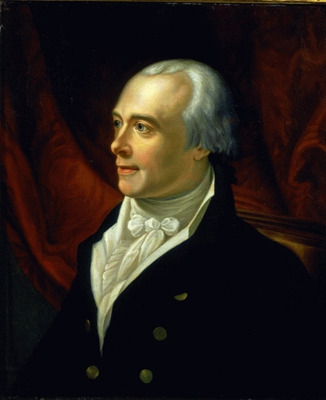
Spencer Perceval is the only British Prime Minister ever assassinated (1812) and now is practically forgotten. The link below, from The Guardian remembers this man who holds a unique place in British history.http://www.guardian.co.uk/politics/20...
 This is a wonderful guide to the lives of all the British PMs and a must for the British history lover.
British Prime Ministers
 by Robert Parker
Synopsis
On frequent trips to the UK, U.S. citizen Robert Parker was puzzled by the lack of readily available information about the British prime ministers, especially as a group. There are thick biographies of Churchill, Disraeli, and Pitt, but who were the others? There are plenty of short booklets and pamphlets for all of the monarchs but little or nothing on most of the fifty-three PMs.As an American, Robert was brought up on countless books of all lengths and sizes detailing the lives and accomplishments of the U.S. presidents, but he could find nothing of the sort in Britain's bookshops or tourist locations that chronicles the careers of the prime ministers. This is somewhat ironic as England is the birthplace of modern representative parliamentary government.
What better way to introduce these individuals than through a short, accurate, and comprehensive review of each prime minister, briefly describing their background and influence, their role in British history and in major world events. On closer inspection, the PMs are revealed to be more colorful figures than might be imagined, whose unique personalities and individual deeds shaped important historical events. British Prime Ministers will offer a handy and accessible guide to all the UK's heads of government, thereby lifting the veil of obscurity from an all too neglected cast of characters
Mod
There are so many PMs that are rather unknown that this book is particularly interesting.
Ever wonder what the powers and constraints of the Prime Minister are.....the following few paragraphs from Wikipedia explain his/her role in the government.When commissioned by the Sovereign, a potential Prime Minister's first requisite is to "form a Government" – create a cabinet of ministry that has the support of the House of Commons, of which they are expected to be a member. The Prime Minister then formally kisses the hands of his Sovereign, whose royal prerogative powers are thereafter exercised solely on the advice of the Prime Minister and Her Majesty's Government ("HMG"). The Prime Minister has weekly audiences with the Sovereign, whose rights are constitutionally limited "to warn, to encourage, and to be consulted"; the extent of the Sovereign's ability to influence the nature of the Prime Ministerial advice is unknown, but presumably varies depending upon the personal relationship between the Sovereign and the Prime Minister of the day.
The Prime Minister will appoint all other cabinet members (who then become active Privy Counsellors) and ministers, although consulting senior ministers on their junior ministers, without any Parliamentary or other control or process over these powers. At any time, he may obtain the appointment, dismissal or nominal resignation of any other minister; he may resign, either purely personally or with his whole government. The Prime Minister generally co-ordinates the policies and activities of the Cabinet and Government departments, acting as the main public "face" of Her Majesty's Government.
Although the Commander-in-Chief of the British Armed Forces is legally the Sovereign: under constitutional practice the Prime Minister can declare war, and through the Secretary of State for Defence (whom he may appoint, dismiss or even appoint himself as) as chair of the Defence Council the power over the deployment and disposition of British forces. The Prime Minister can authorise, but not directly order, the use of Britain's nuclear weapons and the Prime Minister is hence a Commander-in-Chief in all but name.
The Prime Minister makes all the most senior Crown appointments, and most others are made by Ministers over whom he has the power of appointment and dismissal. Privy Counsellors, Ambassadors and High Commissioners, senior civil servants, senior military officers, members of important committees and commissions, and other officials are selected, and in most cases may be removed, by the Prime Minister. He also formally advises the Sovereign on the appointment of Archbishops and Bishops of the Church of England, but his discretion is limited by the existence of the Crown Nominations Commission. The appointment of senior judges, while constitutionally still on the advice of the Prime Minister, is now made on the basis of recommendations from independent bodies.
Peerages, knighthoods, and other honours are bestowed by the Sovereign only on the advice of the Prime Minister. The only important British honours over which the Prime Minister does not have control are the Orders of the Garter, Thistle, and Merit; the Royal Victorian Order; and the Venerable Order of Saint John, which are all within the "personal gift" of the Sovereign.
The Prime Minister appoints ministers known as the "Whips", who use his patronage to negotiate for the support of MPs and to discipline dissenters of the government parliamentary party. Party discipline is strong since electors generally vote for parties rather than individuals. Members of Parliament may be expelled from their party for failing to support the Government on important issues, and although this will not mean they must resign as MPs, it will usually make re-election difficult. Members of Parliament who hold ministerial office or political privileges can expect removal for failing to support the Prime Minister. Restraints imposed by the Commons grow weaker when the Government's party enjoys a large majority in that House, or in the electorate. In general, however, the Prime Minister and their colleagues may secure the Commons' support for almost any bill by internal party negotiations with little regard to opposition MPs.
However, even a government with a healthy majority can on occasion find itself unable to pass legislation. For example, on 31 January 2006, Tony Blair's Government was defeated over certain aspects of proposals to outlaw religious hatred, and, on 9 November 2005, was defeated over plans which would have allowed police to detain terror suspects for up to 90 days without charge. On other occasions, the Government alters its proposals in order to avoid defeat in the Commons, as Tony Blair's Government did in February 2006 over education reforms.
Formerly, a Prime Minister whose government lost a Commons vote would be regarded as fatally weakened, and his whole government would resign, usually precipitating a general election. In modern practice, when the Government party has an absolute majority in the House, only the express vote "that this House has no confidence in Her Majesty's Government" is treated as having this effect; dissentients on a minor issue within the majority party are unlikely to force an election with the probable loss of their seats and salaries, and any future in the party.
Likewise, a Prime Minister is no longer just "first amongst equals" in HM Government; although theoretically his Cabinet might still outvote him, in practice he progressively entrenches his position by retaining only personal supporters in the Cabinet. In periodical reshuffles, the Prime Minister can sideline and simply drop from Cabinet the Members who have fallen out of favour: they remain Privy Counsellors, but the Prime Minister decides which of them are summoned to meetings. The Prime Minister is responsible for producing and enforcing the Ministerial Code.
One of the greatest of the British PMs and the creator of the Conservative Party.Robert Peel: A Biography
 by Douglas Hurd
Synopsis
Described as one of the 19th century’s most dynamic prime ministers, Robert Peel transformed Great Britain into a modern nation. He invented the police force, steered through legislation that allowed Catholics to sit in Parliament, reorganized the criminal justice system, and invented the Conservative Party as it exists today. Above all he tackled poverty by repealing the Corn Laws and, thanks to Peel, Britain chose free trade and opened the door for globalization. For all his achievements, however, Peel was not all politics: he built two great houses, filled them with famous paintings, and was devoted to his beautiful wife. Yet he was widely regarded as stiff and strange, with Queen Victoria describing him as "such a cold, odd man” while Disraeli attacked him for dishonesty. But when in 1850 he was carried home after a fall from his horse, crowds primarily composed of working people gathered outside his house to read the medical bulletins. When he died a few days later, factories closed, flags flew at half mast, and thousands contributed small sums to memorials in his honor. Like Peel, Douglas Hurd served as Home Secretary and lived through a time of conflict in the Conservative Party. With one eye on the present, Douglas Hurd charts Peel's life and work through the dramas of 19th century politics.
Anthony Eden lived and served during some turbulent times in his long career. A great servant of the crown, he may also have been the most elegant! by D. R. Thorpe(no photo)
Synopsis
Anthony Eden, who served as both Foreign Secretary and Prime Minister, was one of the central political figures of the last century. This groundbreaking book examines his controversial life and tells the inside story of the Munich crisis, the Geneva Conference, and the Suez crisis. Churchill’s role throughout Eden’s career is shown in an entirely new light.
The link below show us how BBC polls and some done at Leeds University ranked British PMs according to their leadership and importance. Some of the results are a little surprising.http://en.wikipedia.org/wiki/Historic...
I have not read this book but from the GR synopsis, I get the distinct feeling that this biography may gloss over some of the more unpleasant aspects of Palmerston's life.Lord Palmerston
 by Michael S. Partridge (no photo)
Synopsis:
One of the great figures of 19th-century Britain, Lord Palmerston had an extensive career both as a domestic politician and as an international statesman. This volume is the first comprehensive bibliography of his life, both public and private. It includes published and unpublished material by and about Palmerston, from his own time to the present.
The book begins with a brief biographical sketch and chronology of Palmerston's life. Over half of the work covers primary source materials and unpublished materials pertaining to Palmerston's career. The following sections deal with his speeches and published writings, general biography, and the secondary literature on his early life and political career, his years as foreign secretary, home secretary, and prime minister, and his private life. The work also includes sections on iconography, death and funeral notices, theses and dissertations, and full indexes.
In lists of the greatest British Prime Ministers, Clement Attlee often is listed as number one, ahead of Churchill. Yet there is little written about him available in the GR data base.Labour in Crisis: Clement Attlee and the Labour Party in Opposition 1931-1941
 by John Swift (no photo)
Synopsis
This is a study of the development of Clement Attlee and the Labour Party from the collapse of the second Labour Government in August 1931, to their entry into Churchill's coalition in May 1940. It is an examination of how Labour became essential to the effective prosecution of the war, and how Attlee emerged from relative obscurity to become a central figure in the War Cabinet.
 Winston Churchill
This book will give you a peek at what went on at Number 10 during Harold Wilson's stint as Prime Minister.
Winston Churchill
This book will give you a peek at what went on at Number 10 during Harold Wilson's stint as Prime Minister.Downing Street Diary: With Harold Wilson in No. 10
 by Bernard Donoughue (no photo)
Synopsis
Early in 1974, Bernard Donoughue was invited by Harold Wilson first to help fight the General Election and then to found and run the Policy Unit at Number Ten Downing Street, a body independent of the Civil Service machine working solely for the Prime Minister. He thus joined Wilson’s notorious "kitchen cabinet" with Joe Haines—Wilson’s combative press secretary—and Marcia Williams, Wilson’s personal and private secretary. Donoughue remained in Downing Street throughout Wilson’s final premiership, and his daily diary provides an extraordinarily intimate portrait of Harold Wilson struggling to hold the Labour Party together, drinking heavily, increasingly paranoid about "plots" and the press, and apparently in thrall to Marcia Williams. Williams had an extraordinary hold over the Prime Minister and violently resented "intrusion" from any other advisors, Donoughue included. Though the story of Wilson’s "kitchen cabinet" has been told before, there has never been an account as intimate and explosive as this extraordinary diary. One of the most extraordinary accounts of modern times, this is an intimate and often explosive look at life at the heart of Harold Wilson's government.
Surprisingly, there seems to be little written about the first and longest-serving Prime Minister of Great Britain.....or at least I couldn't find much. Instead, here is a short history of one of the most powerful men to ever sit in the PMs seat.___________________________________________________
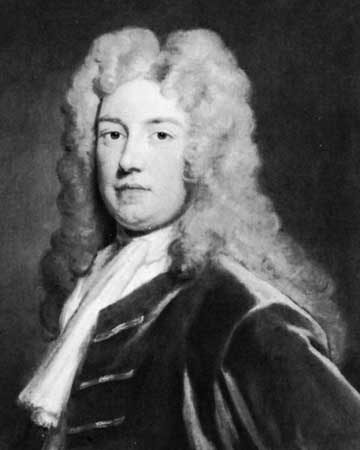
Walpole was a British Whig statesman, considered to the first holder of the office of prime minister, who dominated politics in the reigns of George I and George II.
Robert Walpole was born on 26 August 1676 in Houghton, Norfolk into a wealthy landowning family. He was educated at Cambridge University and in 1701 became member of parliament for Castle Rising in Norfolk, where his father had previously been MP. He rose rapidly, becoming a member of the Admiralty Board, secretary of war and, in 1709, treasurer of the navy. His rise was temporarily halted by the Tories, who came into power in 1710. In 1712, they accused him of corruption and he was briefly imprisoned.
In 1714, George I came to the throne. George distrusted the Tories, whom he believed opposed his right to the throne, and as a result the Whigs were in the ascendant again. In 1715, Walpole became first lord of the treasury and chancellor of the exchequer. He resigned in 1717 after disagreements within his party but in 1720 was made paymaster general. He avoided the scandal that surrounded the collapse of the South Sea Company and was subsequently appointed first lord of the treasury and chancellor of the exchequer again. In this position he effectively became prime minister, although the term was not used at the time. He remained in this position of dominance until 1742.
Walpole consolidated Whig power through a system of royal patronage. He pursued a policy of peace abroad, low taxation and reducing the national debt and he knew the importance of keeping parliament on his side. He was also accused of bribery and corruption in his efforts to retain power. After George I's death in 1727, Walpole was briefly superseded by George II's favourite, Spencer Compton, but succeeded in returning himself to favour, partly through the support of the new queen, Caroline. In 1735, George II made Walpole a gift of 10 Downing Street, now the permanent London residence of the British prime minister.
Opposition eventually began to develop within Walpole's own party, and a trade dispute with Spain was used by his critics to force him to declare war in 1739, known as the War of Jenkins' Ear. A poor general election result in 1741 made his position more unstable. A number of Whig politicians opposed Walpole's conduct of the war and he resigned in February 1742. He was created earl of Orford in the same year and continued to maintain influence over George II. Walpole died on 18 March 1745.
 Jill wrote: "This book will give you a peek at what went on at Number 10 during Harold Wilson's stint as Prime Minister.
Downing Street Diary: With Harold Wilson in No. 10
[bookcover:Downing Street Diary: Wit..."
Thanks for that recommendation. I've a read a little bit about Harold Wilson and his administrations, and it never ceases to be entertaining. It's akin to a TV soap.
 Currently reading
 The Gathering Storm by
Winston Churchill. Fascinating book, the 1st in a 5 part series. Just mesmerized by this period of history.
In my opinion, that is one of the greatest series ever written by a politician.....even though Churchill was much more than a politician.
The Gathering Storm by
Winston Churchill. Fascinating book, the 1st in a 5 part series. Just mesmerized by this period of history.
In my opinion, that is one of the greatest series ever written by a politician.....even though Churchill was much more than a politician.You are close on your citations. It should look like this:
by
Winston Churchill

The History Book Club
Books mentioned in this topic
Gordon Brown: Power with Purpose (other topics)The Cancelled Prime Minister: The Extraordinary Rise and Tragic Fall of Ramsay MacDonald (other topics)
Power and the Palace: The explosive new royal book that reveals what happens between 10 Downing Street and Buckingham Palace in times of crisis (other topics)
Rivals in the Storm: How Lloyd George Seized Power, Won the War and Lost His Government (other topics)
Optimist in a Raincoat: Harold Wilson, 1964-70 (other topics)
More...
Authors mentioned in this topic
James Macintyre (other topics)Walter Reid (other topics)
Valentine Low (other topics)
Damian Collins (other topics)
Thomas Hennessey (other topics)
More...

Who were the British Prime Ministers and what role did they play in the history and government of Great Britain?
We have read two books in The History Book Club devoted to one of these Prime Ministers: Winston Churchill.
Please feel free to discuss any and all of Britain's prime ministers.