
Green Group discussion
Environment in Films and Video
>
Films and Documentaries

 Is it a waste of time to awake us, to remember and to show the humain condition ?
 .."Humain are physical, biological, psychological, cultural, social, historical beings.."
- Edgar Morin
[image error]
In addition to your second question Sam,"do they confuse and add weight to incorrect beliefs or do they help portray all sides of an issue?" I'm taking an example.
We discuss for a long time about Food and Nutrition at The Green group . In 2007, a first documentary has argued about food products in the World - " We feed the World" by the Austrian filmmaker Erwin Wagenhofer-
His documentary traces the origins of the food we eat and views modern industrial production of food in a critical light with a lot of examples in Europe and South- America.
Is it a call to act, to take action ? Have you change your habits, practices about Food and Nutrition ?
The second example is the recent American documentary film " Food Inc." directed by Emmy Award-winning filmmaker Robert Kenner. The film examines large-scale agricultural food production in the United States, concluding that the meat and vegetables produced by this type of economic enterprise have many hidden costs and are unhealthy and environmentally-harmful. The film is narrated by Michael Pollan - author of The Omnivore's Dilemma: A Natural History of Four Meals - and Eric Schlosser - author of Fast Food Nation -
Here's the link about this new documentary film.
http://www.foodincmovie.com/
Documentaries and films are also a way to educate, often used as educational materials, although some of them shows damages. Do they help to act ? Of course, but this is only my point of view.
Some thoughts ?
 Michelle, I just started a new thread before I read this post of yours. I loved Food Inc.
Melissa wrote: "Michelle, I just started a new thread before I read this post of yours. I loved Food Inc."
Michelle, I just started a new thread before I read this post of yours. I loved Food Inc.
Melissa wrote: "Michelle, I just started a new thread before I read this post of yours. I loved Food Inc."Ooops!!! Here's your post about Food Inc. , Melissa.
..........
I just wondered if any members had seen this documentary about food processing in the U.S.
I am not vegetarian, though it would be a healthier way for me to eat--but this film, and the book Welfare Ranching put me off all but grass fed beef for the rest of my life.
I have seen this documentary at The International Festival of Environmental Film in Paris in November 2009. " Food Inc" was also presented at "Toronto International Film Festival" and at "The Berlinale", the European Film Festival in November 2009."Food Inc" about food processing in the US, like " We feed the World", the European documentary, presented a few years ago are the kind of documentaries that I named " shock documentaries"
They definitively ask the question - What are we eating ? So, I'll open a new thread under the folder " Food/Nutrition " to discuss about this question but also to debate about the impact of these documentaries. Do they help to act ? How to change our food habits and practices?
Melissa, have you read The Omnivore's Dilemma: A Natural History of Four Meals by Michael Pollan and Eating Animals by Jonathan Safran Foer ? Could you tell us more about the book Welfare Ranching: The Subsidized Destruction of the American West by George Wuerthner
Yes, I've read the Omnivore's Dilemma. Before I read this book, I read an article by Pollan in 2002 about the life of a industrial beef production steer from calf to slaughter. At the time, I had as Pollan also so deftly puts it, found meat "problematic" in my diet. His article opened my eyes to feed lots and beef handling. I stopped eating industrially raised beef (corn fed, antibiotic supported). In Omnivore's Dilemma, Pollan takes the exploration of food sources a bit further and I think, certainly tells a thorough story about the rise of corn production and subsidy in the United States. It changed my perspective completely. I check ingredient labels assiduously now, and in my household, we try to eat whole foods (minimal processing).
Welfare Ranching: The Subsidized Destruction of the American West explores in detail the environmental consequences of open range grazing on our public lands in the United States. The majority of public lands in the United States are held in trust for the American people by the federal government and managed by executive agencies. From 25 to 75 percent of the land area in the western U.S. is public land. These lands are managed as national forests, parks, campgrounds, wilderness, and often as open range for cattle.
This means that cattle ranchers can lease the public lands to graze their cattle. "Open range" can mean that it is the responsibility of the land owner to keep unwanted livestock off their land and the livestock owner is not liable for any damage caused by the livestock. Needless to say this can be a controversial issue between ranchers and those who see wildlands as valuable for environmental conservation.
 Anyone planning on seeing Promised Land? It has Matt Damon, and has fracking as its theme.
Normally I wait until films are out on Netflix, but I think I might have to go to this one.
 Mod
Mod
And it would be great to support Promised Land and Matt Damon. I also recommend supporting Damon's group: http://water.org/. He uses his fame for all the right reasons.
Jimmy - never heard of Beasts of the Southern Wild - I'll have to look for it.Agree that we should support the film. And thanks for the link to Matt's group.
 There is quite a bit of buzz about the documentary CHASING ICE:
 http://youtu.be/eIZTMVNBjc4
It's been out for a few months but it's probably still floating around in some theaters if someone wants to see it.
http://www.landfillharmonicmovie.com/"The world sends us garbage. We send back music."
-Favio Chavez, orchestra director
Thanks for the links.I forgot about the film Chasing Ice. I looked on Netflix - not available through them yet. They are always a bit slow on documentaries.
The trailer for the documentary "Midway."Very powerful - we don't realize the impact that our lifestyle has on the beautiful creatures of the Earth.
http://www.youtube.com/watch?v=Ai3IKO...
If you ever have a chance to watch it, the PBS documentary, The National Parks: America's Best Idea, was wonderful.Here is a 26 minute extended preview trailer:
http://www.youtube.com/watch?v=mx8WbZ...
And the PBS site has a number of different videos. A bit bummed that they don't have more on the John Muir section of the documentary. He was so wonderfully eccentric.
http://www.pbs.org/nationalparks/watc...
Mod
http://www.youtube.com/watch?v=c5wmUk...
Very calming - "The Poetic Autumn" piano piece with pictures of autumn trees.https://www.youtube.com/watch?v=V6MYF...
A 17 minute trailer for the documentary film "Genetic Roulette":https://www.youtube.com/watch?v=hAMli...
I also posted this in the Member Shout Out thread,Do the Math - The Movie (from 350.org)
https://www.youtube.com/watch?v=IsIfo...
Just watched it - very very good. If you have been an environmentalist for awhile and read a lot of information/watched a lot of documentaries, you know most of the information. It is more motivational than anything. Trying to get people - both present environmentalists and future environmentalists - involved in getting out the word on climate change and its link to fossil fuels.
Trailer for the new eco-thriller "The East."https://www.youtube.com/watch?v=gHpT9...
I am troubled though about the message about environmentalists.
 I can't find any Hollywood movies, but I loved "Koyaanisqatsi" (1982)and used it in class.
"Directed by Godfrey Reggio and scored by Philip Glass, this film was an epic, wordless exploration of the Hopi phrase Koyaanisqatsi, which means "life out of balance. It superimposes spectacular imagery of nature with the frenetic comings and goings of a modern-day megapolis."
There are actually two more films in the Reggio/Glass series:
"The Qatsi trilogy is the informal name given to a series of three films produced by Godfrey Reggio and scored by Philip Glass:
Koyaanisqatsi: Life out of balance (1982)
Powaqqatsi: Life in transformation (1988)
Naqoyqatsi: Life as war (2002)
The titles of all three films are words from the language of the Hopi people, in which the word qatsi means "life."
I finally watched Promised Land last night. It didn't get good reviews, but for what it is worth, I liked it. Of course, fracking is an issue that I'm really interested in.
Mod
 There's a documentary in the making now by film maker Richard Smedley about the European Starling in the US. Here's a link to a draft teaser trailer from it. I'm looking so forward to seeing this when it's done!!! I don't know Richard personally, but came across his work when I was seeking images for my own book trailer. And that's other news! My novel "The Starling God", an environmentally-based story (fiction of course and from the avian perspective), landed a publisher and should be out in print around Christmas! So there's a recommended future documentary and a recommended book for those bird lovers out there. :-)
Here's the trailer link: https://vimeo.com/67964332
There's a nice preview of my novel on my Goodreads blog by a green builder and designer, if anyone is interested. Here's a link to that:
http://www.goodreads.com/author_blog_...
The documentary, "An Unwelcome Successs: the European Starling in America" is almost completed! It's produced by Barely B/Avian films and I can't wait to see the whole thing. Because I wrote a book called "The Starling God", I was interviewed as part of it, but that is truly not the only reason. ;-) Here is a teaser clip from it including one of the portions of my interview. Love starlings or hate them - whatever your view on invasive species, it's great food for thought: http://vimeo.com/84641991
 Although this is not completely about living sustainably, I feel that the movie Blackfish is a great film to watch. It is about the orca (killer whale) Tillikum who killed trainer Dawn Brancheau at Seaworld Orlando. It has been on CNN numerous times, is currently on Netflix, and has brought a lot of controversy to the practice of keeping marine animals (especially whales and dolphins) in captivity. The environmental and animal welfare movement has been calling recent changes towards keeping animals in captivity (zoos and aquariums) " The Blackfish Effect". Highly suggested! If you decide to watch that, then tune into the Oscar Winner "The Cove" also on Netflix and see where these dolphins come from the majority of the time.
 Mod
Mod
 If the leading environmental orgs refuse to discuss the leading cause of worldwide greenhouse gas emissions, something is clearly wrong. Filmmaker Kip Andersen investigated the issue; the result is his documentary film "Cowspiracy".
A few facts:
Livestock and their byproducts actually account for at least 32,000 million tons of carbon dioxide (CO2) per year, or 51% of all worldwide greenhouse gas emissions.
2,500 gallons of water are needed to produce one pound of beef.
1,000 gallons of water are needed to produce one gallon of milk.
"Animal agriculture is the leading cause of deforestation, water consumption and pollution, is responsible for more greenhouse gases than the transportation industry, and is a primary driver of rainforest destruction, species extinction, habitat loss, topsoil erosion, ocean “dead zones,” and virtually every other environmental ill. Yet it goes on, almost entirely unchallenged." This is partly because Agribusiness has money and political power. Whistleblowers have been sued, or killed, upon speaking the truth; the filmmaker himself was reminded that he is putting his head on the chopping block by making this film. Cowspiracy also alludes to the idea that environmental orgs may be receiving "bribes" from pro-farm environmentally destructive groups in an effort to keep them silent. Some orgs refuse to be interviewed, or to answer questions on these topics.
We can create change by changing what we eat. See the film, read the facts (w/sources cited), and learn more at http://www.cowspiracy.com/
 Mod
Mod
This film highlights the difference between Haiti and Dominican Republic which share the island of Hispaniola; and looks at deforestation and illicit charcoal trade.
Mod
Different countries produce meat in different ways.
Ireland's meat is largely grass fed as far as cattle and sheep are concerned, with no use of growth promoters, hormones or antibiotics to make the animals grow faster. We also get enough rain for about two countries our size. Ireland is Europe's largest exporter of beef.
Mod
Blue Serengeti
Blue Serengeti Premieres July 1 @ 10PM, only on Discovery Channel's Shark Week!
The title Blue Serengeti comes from biologist and shark expert Barbara Block who has been studying whites sharks in the waters around California for 27 years. She compares that underwater world, which is now more visible than ever due to camera technology, to the land-based ecosystem in Africa due to its vastness.
Mod
I saw a good programme on the rarely seen six-gilled shark.
Mod
Disruption - The Movie
Mod
Sea of Hope: America's Underwater Treasures
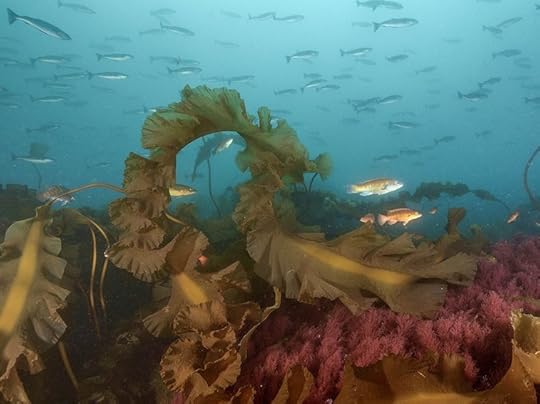
Looks very uplifting... and we can all use that, eh? Hope 2017 starts well for everyone!
Mod
Dust
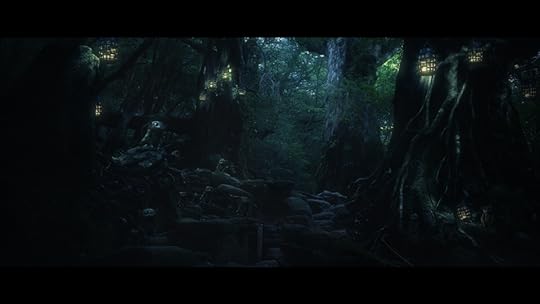 Mod
Mod
Chinese countryside is spectacular.
Mod
At least I hope this works, EcoWatch has been mucking around their format.
http://www.ecowatch.com/fast-fashion-...
Mod
Raise a Paddle: a journey from the Pacific Islands to the tar sands
Mod
https://www.youtube.com/watch?v=WmWKX...
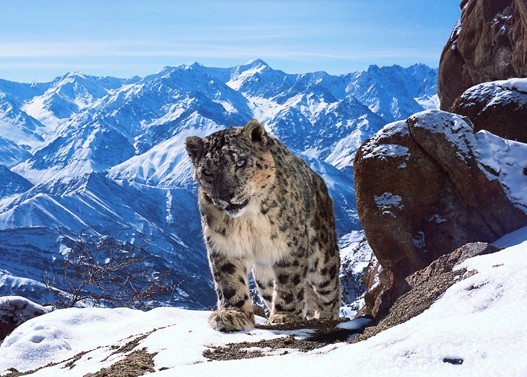
This was next up for me, the Saami reindeer herders (Finland and Norway) talking about the difficulty of keeping herds when the forests are being cleared, the rivers dammed and winters getting warmer.
Mod
Mod
Mod
Access For All - Dublin To London
https://www.youtube.com/watch?v=IdwHv...
Mod
The 20 minute work has been filmed in Ireland, Belgium and Kenya.
https://www.youtube.com/watch?v=UC4oF...
Mod
https://www.seashepherdglobal.org/lat...
 A great director (William McGregor) has made a documentary about a THE BEEKEEPER - A Beekeeper on the island of Anglesey faces losing her ancestral home to the construction of a nuclear power plant.
 I just watched The need to Grow the other day, and thought that was pretty interesting. Anybody else seen it?

Green Group
Books mentioned in this topic
Welfare Ranching: The Subsidized Destruction Of The American West (other topics)Eating Animals (other topics)
The Omnivore's Dilemma: A Natural History of Four Meals (other topics)
Welfare Ranching: The Subsidized Destruction Of The American West (other topics)
The Omnivore's Dilemma: A Natural History of Four Meals (other topics)
More...

Food for thought...
Do they help educate people or are they a complete waste of time?
Do they confuse and add weight to incorrect beliefs or do they help portray all sides of an issue?
Do you just watch them to see humanity reap what it has sown or to see how humanity and nature can survive the damage that has been done?