
 Sign in with Facebook
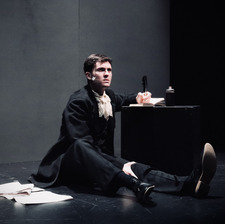
Frankie Frabizzio
https://instagram.com/frankie.frabizzio


“You’ve mistaken the stars reflected on the surface of the lake at night for the heavens.”
― Blood of Elves
― Blood of Elves
“Nothing burns in your heart like the emptiness of losing something, someone, before you truly have learned of its value.”
― Homeland
― Homeland

“O: You’re quite a writer. You’ve a gift for language, you’re a deft hand at plotting, and your books seem to have an enormous amount of attention to detail put into them. You’re so good you could write anything. Why write fantasy?
Pratchett: I had a decent lunch, and I’m feeling quite amiable. That’s why you’re still alive. I think you’d have to explain to me why you’ve asked that question.
O: It’s a rather ghettoized genre.
P: This is true. I cannot speak for the US, where I merely sort of sell okay. But in the UK I think every book— I think I’ve done twenty in the series— since the fourth book, every one has been one the top ten national bestsellers, either as hardcover or paperback, and quite often as both. Twelve or thirteen have been number one. I’ve done six juveniles, all of those have nevertheless crossed over to the adult bestseller list. On one occasion I had the adult best seller, the paperback best-seller in a different title, and a third book on the juvenile bestseller list. Now tell me again that this is a ghettoized genre.
O: It’s certainly regarded as less than serious fiction.
P: (Sighs) Without a shadow of a doubt, the first fiction ever recounted was fantasy. Guys sitting around the campfire— Was it you who wrote the review? I thought I recognized it— Guys sitting around the campfire telling each other stories about the gods who made lightning, and stuff like that. They did not tell one another literary stories. They did not complain about difficulties of male menopause while being a junior lecturer on some midwestern college campus. Fantasy is without a shadow of a doubt the ur-literature, the spring from which all other literature has flown. Up to a few hundred years ago no one would have disagreed with this, because most stories were, in some sense, fantasy. Back in the middle ages, people wouldn’t have thought twice about bringing in Death as a character who would have a role to play in the story. Echoes of this can be seen in Pilgrim’s Progress, for example, which hark back to a much earlier type of storytelling. The epic of Gilgamesh is one of the earliest works of literature, and by the standard we would apply now— a big muscular guys with swords and certain godlike connections— That’s fantasy. The national literature of Finland, the Kalevala. Beowulf in England. I cannot pronounce Bahaghvad-Gita but the Indian one, you know what I mean. The national literature, the one that underpins everything else, is by the standards that we apply now, a work of fantasy.
Now I don’t know what you’d consider the national literature of America, but if the words Moby Dick are inching their way towards this conversation, whatever else it was, it was also a work of fantasy. Fantasy is kind of a plasma in which other things can be carried. I don’t think this is a ghetto. This is, fantasy is, almost a sea in which other genres swim. Now it may be that there has developed in the last couple of hundred years a subset of fantasy which merely uses a different icongraphy, and that is, if you like, the serious literature, the Booker Prize contender. Fantasy can be serious literature. Fantasy has often been serious literature. You have to fairly dense to think that Gulliver’s Travels is only a story about a guy having a real fun time among big people and little people and horses and stuff like that. What the book was about was something else. Fantasy can carry quite a serious burden, and so can humor. So what you’re saying is, strip away the trolls and the dwarves and things and put everyone into modern dress, get them to agonize a bit, mention Virginia Woolf a few times, and there! Hey! I’ve got a serious novel. But you don’t actually have to do that.
(Pauses) That was a bloody good answer, though I say it myself.”
―
Pratchett: I had a decent lunch, and I’m feeling quite amiable. That’s why you’re still alive. I think you’d have to explain to me why you’ve asked that question.
O: It’s a rather ghettoized genre.
P: This is true. I cannot speak for the US, where I merely sort of sell okay. But in the UK I think every book— I think I’ve done twenty in the series— since the fourth book, every one has been one the top ten national bestsellers, either as hardcover or paperback, and quite often as both. Twelve or thirteen have been number one. I’ve done six juveniles, all of those have nevertheless crossed over to the adult bestseller list. On one occasion I had the adult best seller, the paperback best-seller in a different title, and a third book on the juvenile bestseller list. Now tell me again that this is a ghettoized genre.
O: It’s certainly regarded as less than serious fiction.
P: (Sighs) Without a shadow of a doubt, the first fiction ever recounted was fantasy. Guys sitting around the campfire— Was it you who wrote the review? I thought I recognized it— Guys sitting around the campfire telling each other stories about the gods who made lightning, and stuff like that. They did not tell one another literary stories. They did not complain about difficulties of male menopause while being a junior lecturer on some midwestern college campus. Fantasy is without a shadow of a doubt the ur-literature, the spring from which all other literature has flown. Up to a few hundred years ago no one would have disagreed with this, because most stories were, in some sense, fantasy. Back in the middle ages, people wouldn’t have thought twice about bringing in Death as a character who would have a role to play in the story. Echoes of this can be seen in Pilgrim’s Progress, for example, which hark back to a much earlier type of storytelling. The epic of Gilgamesh is one of the earliest works of literature, and by the standard we would apply now— a big muscular guys with swords and certain godlike connections— That’s fantasy. The national literature of Finland, the Kalevala. Beowulf in England. I cannot pronounce Bahaghvad-Gita but the Indian one, you know what I mean. The national literature, the one that underpins everything else, is by the standards that we apply now, a work of fantasy.
Now I don’t know what you’d consider the national literature of America, but if the words Moby Dick are inching their way towards this conversation, whatever else it was, it was also a work of fantasy. Fantasy is kind of a plasma in which other things can be carried. I don’t think this is a ghetto. This is, fantasy is, almost a sea in which other genres swim. Now it may be that there has developed in the last couple of hundred years a subset of fantasy which merely uses a different icongraphy, and that is, if you like, the serious literature, the Booker Prize contender. Fantasy can be serious literature. Fantasy has often been serious literature. You have to fairly dense to think that Gulliver’s Travels is only a story about a guy having a real fun time among big people and little people and horses and stuff like that. What the book was about was something else. Fantasy can carry quite a serious burden, and so can humor. So what you’re saying is, strip away the trolls and the dwarves and things and put everyone into modern dress, get them to agonize a bit, mention Virginia Woolf a few times, and there! Hey! I’ve got a serious novel. But you don’t actually have to do that.
(Pauses) That was a bloody good answer, though I say it myself.”
―
“Dandelion, staring into the dying embers, sat much longer, alone, quietly strumming his lute. It began with a few bars, from which an elegant, soothing melody emerged. The lyric suited the melody, and came into being simultaneously with it, the words bending into the music, becoming set in it like insects in translucent, golden lumps of amber.
The ballad told of a certain witcher and a certain poet. About how the witcher and the poet met on the seashore, among the crying of seagulls, and how they fell in love at first sight. About how beautiful and powerful was their love. About how nothing - not even death - was able to destroy that love and part them.
Dandelion knew that few would believe the story told by the ballad, but he was not concerned. He knew ballads were not written to be believed, but to move their audience.
Several years later, Dandelion could have changed the contents of the ballad and written about what had really occurred. He did not. For the true story would not have move anyone. Who would have wanted to hear that the Witcher and Little Eye parted and never, ever, saw each other again? About how four years later Little Eye died of the smallpox during an epidemic raging in Vizima? About how he, Dandelion, had carried her out in his arms between corpses being cremated on funeral pyres and buried her far from the city, in the forest, alone and peaceful, and, as she had asked, buried two things with her: her lute and her sky blue pearl. The pearl from which she was never parted.
No, Dandelion stuck with his first version. And he never sang it. Never. To no one.
Right before the dawn, while it was still dark, a hungry, vicious werewolf crept up to their camp, but saw that it was Dandelion, so he listened for a moment and then went on his way.”
― Miecz przeznaczenia
The ballad told of a certain witcher and a certain poet. About how the witcher and the poet met on the seashore, among the crying of seagulls, and how they fell in love at first sight. About how beautiful and powerful was their love. About how nothing - not even death - was able to destroy that love and part them.
Dandelion knew that few would believe the story told by the ballad, but he was not concerned. He knew ballads were not written to be believed, but to move their audience.
Several years later, Dandelion could have changed the contents of the ballad and written about what had really occurred. He did not. For the true story would not have move anyone. Who would have wanted to hear that the Witcher and Little Eye parted and never, ever, saw each other again? About how four years later Little Eye died of the smallpox during an epidemic raging in Vizima? About how he, Dandelion, had carried her out in his arms between corpses being cremated on funeral pyres and buried her far from the city, in the forest, alone and peaceful, and, as she had asked, buried two things with her: her lute and her sky blue pearl. The pearl from which she was never parted.
No, Dandelion stuck with his first version. And he never sang it. Never. To no one.
Right before the dawn, while it was still dark, a hungry, vicious werewolf crept up to their camp, but saw that it was Dandelion, so he listened for a moment and then went on his way.”
― Miecz przeznaczenia
“It is easy to kill with a bow, girl. How easy it is to release the bowstring and think, it is not I, it is the arrow. The blood of that boy is not on my hands. The arrow killed him, not I. But the arrow does not dream anything in the night.”
― Miecz przeznaczenia
― Miecz przeznaczenia


Frankie’s 2025 Year in Books
Take a look at Frankie’s Year in Books, including some fun facts about their reading.

429 books
|
22 friends

488 books
|
25 friends

1,415 books
|
5 friends

508 books
|
51 friends

1,051 books
|
60 friends

976 books
|
44 friends

328 books
|
56 friends

322 books
|
25 friends
More friends…


Favorite Genres
Polls voted on by Frankie
Lists liked by Frankie
