
Discover new books on Goodreads
Meet your next favorite book


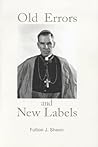
Modern religion has enunciated one great and fundamental dogma that is at the basis of all the other dogmas, and that is, that religion must be freed from dogmas. Creeds and confessions of faith are no longer the fashion; religious leaders
...more
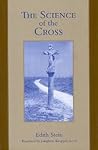


“God the Creator is present in each thing and sustains it in existence. He has foreseen each, and knows it through and through with all its changes and destinies. By the might of his omnipotence he can do with each, at every moment, whatever he pleases. He can leave it to its own laws and the normal flow of events. He can also intervene with extraordinary measures. God dwells in this manner in every human soul, also. He knows each one from all eternity, with all the mysteries of her being and every wave that breaks over her life. She is in his power. It is up to him whether he leaves her to herself and the course of worldly events or whether, with his strong hand, he will interfere in her destiny. Such a marvel of his power is every rebirth of a soul through sanctifying grace.”
― The Science of the Cross
― The Science of the Cross
“The position and role of monastic and diocesan clergy evolved as the Church grew, and so did the liturgies they used. As cathedrals or monasteries were the anchors of society in the early Middle Ages, the bells that called priests and monks to prayer also drew in the laity from village and field. They would gather to listen as Lauds or Vespers were chanted. According to historians, the Divine Office was the daily liturgy most available during the week, for daily Mass, offered in public by parish priests, was not a universal custom at that time.”
― The Everyday Catholic's Guide to the Liturgy of the Hours
― The Everyday Catholic's Guide to the Liturgy of the Hours
“The entirely comfortable being-at-home in the world, the satiety of pleasures that it offers, the demand for these pleasures and the matter-of-course consent to these demands—all of this that human nature considers bright daily life—all of this is darkness5 in God’s eyes and incompatible with the divine light. It has to be totally uprooted if room for God is to be made in the soul. Meeting this demand means engaging in battle with one’s own nature all along the line, taking up one’s cross and delivering oneself up to be crucified. Holy Father St. John here invokes the Lord’s saying in this connection: “Whoever does not renounce all that the will possesses cannot be my disciple” [Lk.”
― The Science of the Cross
― The Science of the Cross
“At first, after her conversion she thought she would have to renounce all that was secular and live totally immersed in God, but then she realized that, even in the contemplative life, you cannot sever all connection with the world, that the deeper you are drawn into God, the more you must go out of yourself to the world in order to carry the divine life into it.”
― The Science of the Cross
― The Science of the Cross
“Once while Edith was visiting the cathedral of Frankfurt, a woman with a market basket entered and knelt down in one of the pews to pray briefly. This was something entirely new to her, leaving as deep an impression as the university lectures.”
― The Science of the Cross
― The Science of the Cross
 Catholic Readers
— 2182 members
— last activity Oct 08, 2026 09:09AM
Catholic Readers
— 2182 members
— last activity Oct 08, 2026 09:09AM
A group for Catholics to discuss the (Catholic) books they're reading. Please read the group rules before joining and posting. Any promotion of mate ...more

 Catholic Spirituality Books
— 47 members
— last activity Jan 11, 2025 07:53AM
Catholic Spirituality Books
— 47 members
— last activity Jan 11, 2025 07:53AM
An outgrowth of Catholic Spirituality Blogs Network, we share, discuss, and promote books on authentic Catholic spirituality--especially those of CSBN ...more

Diane’s 2025 Year in Books
Take a look at Diane’s Year in Books, including some fun facts about their reading.

2,684 books
|
6 friends

5,443 books
|
175 friends

710 books
|
16 friends

16 books
|
367 friends

577 books
|
154 friends

510 books
|
365 friends

537 books
|
160 friends

168 books
|
68 friends
More friends…

Polls voted on by Diane
Lists liked by Diane