
Discover new books on Goodreads
Meet your next favorite book
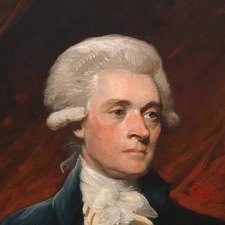


When seated, however, he seemed to melt into the upholstery with a kind of contorted grace, one hip high, the other low, shoulders slouched and uneven, his torso folded in several places, part jackknife and part accordion.


“The story became a clash between British tyranny and colonial liberty, scheming British officials and supplicating colonists, all culminating in the clash at Lexington and Concord between General Thomas Gage’s “ministerial army” and “the unsuspecting inhabitants” of Massachusetts. All this was conveyed in what we might call the sentimental style of the innocent victim.33 It is impossible to know how much of this cartoonlike version of the imperial crisis Jefferson actually believed and how much was a stylistic affectation.”
― American Sphinx (National Book Award Winner): The Character of Thomas Jefferson
― American Sphinx (National Book Award Winner): The Character of Thomas Jefferson
“to deprive unsuspecting colonists of their liberties. Like the Saxon myth, this way of thinking and talking about politics had deep roots in the Whig tradition in England, dating back to the Puritan dissenters during the English Civil War in the 1640s.”
― American Sphinx (National Book Award Winner): The Character of Thomas Jefferson
― American Sphinx (National Book Award Winner): The Character of Thomas Jefferson
“There he gained a reputation among his classmates as an obsessive student, sometimes spending fifteen hours with his books, three hours practicing his violin and the remaining six hours eating and sleeping. He was an extremely serious young man.”
― American Sphinx (National Book Award Winner): The Character of Thomas Jefferson
― American Sphinx (National Book Award Winner): The Character of Thomas Jefferson
“The explanation lies buried in the inner folds of Jefferson’s personality, beyond the reach of traditional historical methods and canons of evidence. What we can discern is a reclusive pattern of behavior with distinctive psychological implications. The youthful Jefferson had already shown himself to be an extremely private temperament. Monticello offers the most graphic illustration of Jefferson’s need to withdraw from the rest of the world, filled as it was with human conflicts and coercions, and create a refuge where the perfect Palladian architecture established the ideal environment for his vision of domestic harmony.”
― American Sphinx (National Book Award Winner): The Character of Thomas Jefferson
― American Sphinx (National Book Award Winner): The Character of Thomas Jefferson

“At times I felt as if I were the last survivor of an Ice Age, striving to hold on with the flimsy tools bequeathed by an easy-going, temperate world. Cold does queer things. At 500 below zero a flashlight dies out in your hand. At - 550 kerosene will freeze, and the flame will dry up on the
wick. At - 60° rubber turns brittle. One day, I remember, the antenna wire snapped in my hands when I tried to bend it to make a new connection. Below - 60° cold will find the last microscopic touch of oil in an instrument and stop it dead. If there is the slightest breeze, you can hear your breath freeze as it floats away, making a sound like that of Chinese firecrackers. As does the morning dew, rime coats every exposed object. And if you work too hard and breathe too deeply, your lungs will sometimes feel as if they were on fire.”
― Alone: The Classic Polar Adventure
wick. At - 60° rubber turns brittle. One day, I remember, the antenna wire snapped in my hands when I tried to bend it to make a new connection. Below - 60° cold will find the last microscopic touch of oil in an instrument and stop it dead. If there is the slightest breeze, you can hear your breath freeze as it floats away, making a sound like that of Chinese firecrackers. As does the morning dew, rime coats every exposed object. And if you work too hard and breathe too deeply, your lungs will sometimes feel as if they were on fire.”
― Alone: The Classic Polar Adventure


Petra’s 2025 Year in Books
Take a look at Petra’s Year in Books, including some fun facts about their reading.

333 books
|
6 friends

18 books
|
1 friend

2 books
|
1 friend

1,808 books
|
22 friends

1,351 books
|
3 friends

446 books
|
16 friends
387 books
|
190 friends
15 books
|
2 friends

Favorite Genres
Polls voted on by Petra
Lists liked by Petra