
Discover new books on Goodreads
Meet your next favorite book


“What are the health effects of the choice between austerity and stimulus? Today there is a vast natural experiment being conducted on the body economic. It is similar to the policy experiments that occurred in the Great Depression, the post-communist crisis in eastern Europe, and the East Asian Financial Crisis. As in those prior trials, health statistics from the Great Recession reveal the deadly price of austerity—a price that can be calculated not just in the ticks to economic growth rates, but in the number of years of life lost and avoidable deaths.
Had the austerity experiments been governed by the same rigorous standards as clinical trials, they would have been discontinued long ago by a board of medical ethics. The side effects of the austerity treatment have been severe and often deadly. The benefits of the treatment have failed to materialize. Instead of austerity, we should enact evidence-based policies to protect health during hard times. Social protection saves lives. If administered correctly, these programs don’t bust the budget, but—as we have shown throughout this book—they boost economic growth and improve public health.
Austerity’s advocates have ignored evidence of the health and economic consequences of their recommendations. They ignore it even though—as with the International Monetary Fund—the evidence often comes from their own data. Austerity’s proponents, such as British Prime Minister David Cameron, continue to write prescriptions of austerity for the body economic, in spite of evidence that it has failed.
Ultimately austerity has failed because it is unsupported by sound logic or data. It is an economic ideology. It stems from the belief that small government and free markets are always better than state intervention. It is a socially constructed myth—a convenient belief among politicians taken advantage of by those who have a vested interest in shrinking the role of the state, in privatizing social welfare systems for personal gain. It does great harm—punishing the most vulnerable, rather than those who caused this recession.”
― The Body Economic: Why Austerity Kills
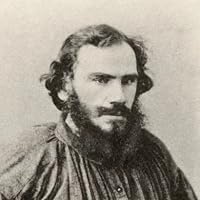
“In reality it was just what is usually
seen in the houses of people of moderate
means who want to appear rich, and therefore succeed only in resembling others
like themselves: there are damasks,
dark wood, plants, rugs, and dull and
polished bronzes -- all the things people of
a certain class have in order to
resemble other people of that class. His
house was so like the others that it
would never have been noticed, but to him it
all seemed to be quite exceptional.”
― The Death of Ivan Ilych
“False. Everything by which you have lived and live now is all a deception, a lie, concealing both life and death from you.”
― The Death of Ivan Ilych
― The Death of Ivan Ilych
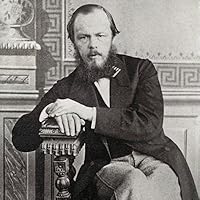
“I was cursing and swearing at you because of that address, I hated you already because of the lies I had told you. Because I only like playing with words, only dreaming, but, do you know, what I really want is that you should all go to hell. That is what I want. I want peace; yes, I'd sell the whole world for a farthing, straight off, so long as I was left in peace. Is the world to go to pot, or am I to go without my tea? I say that the world may go to pot for me so long as I always get my tea.”
― Notes from Underground, White Nights, The Dream of a Ridiculous Man, and Selections from The House of the Dead
― Notes from Underground, White Nights, The Dream of a Ridiculous Man, and Selections from The House of the Dead

“A majority of people in these surveys also said that America gives too much aid--but when they were asked how much America should give, the median answers ranged from 5 percent to 10 percent of government spending. In other words, people wanted foreign aid 'cut' to an amount five to ten times greater than the United States actually gives!”
― The Life You Can Save: Acting Now to End World Poverty
― The Life You Can Save: Acting Now to End World Poverty

Hywel’s 2025 Year in Books
Take a look at Hywel’s Year in Books, including some fun facts about their reading.

1,983 books
|
325 friends

788 books
|
178 friends

1,405 books
|
122 friends

1,569 books
|
53 friends

1,106 books
|
99 friends

1,360 books
|
175 friends

814 books
|
57 friends

491 books
|
66 friends
More friends…

Polls voted on by Hywel
Lists liked by Hywel