
Discover new books on Goodreads
Meet your next favorite book


 Patrick Marcoux said:
"
My stepmother gave me this long ago. After reading a New Yorker profile on Snyder, I realize it's because he's been a real conservationist and ecologist voice since bfore it was anything close to popular. I decided to give this another try.
...more
"
Patrick Marcoux said:
"
My stepmother gave me this long ago. After reading a New Yorker profile on Snyder, I realize it's because he's been a real conservationist and ecologist voice since bfore it was anything close to popular. I decided to give this another try.
...more
"

Patrick Marcoux
rated a book it was ok
Reading for the 2nd time
read in January 2009
Patrick Marcoux said:
"
Definitely have a soft spot for detective fiction from this era. Hammett certainly lacks the chops of Chandler, though. No atmosphere. No mood. Just the facts, m'am. And the facts never interested me all that much. Or the mystery. It's the world. I t
...more
"

Patrick Marcoux
rated a book it was ok
Reading for the 2nd time
read in January 2009
Patrick Marcoux said:
"
It's not the greatest. But I have a soft spot for the culture of comic books. And I love the art of the comic book covers of olden days--which this book frequently builds in my imagination (the book is in part about a fictitious comic book company's
...more
"

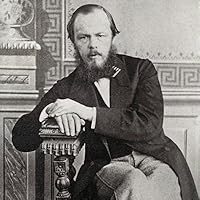
“The Idiot. I have read it once, and find that I don't remember the events of the book very well--or even all the principal characters. But mostly the 'portrait of a truly beautiful person' that dostoevsky supposedly set out to write in that book. And I remember how Myshkin seemed so simple when I began the book, but by the end, I realized how I didn't understand him at all. the things he did. Maybe when I read it again it will be different. But the plot of these dostoevsky books can hold such twists and turns for the first-time reader-- I guess that's b/c he was writing most of these books as serials that had to have cliffhangers and such.
But I make marks in my books, mostly at parts where I see the author's philosophical points standing in the most stark relief. My copy of Moby Dick is positively full of these marks. The Idiot, I find has a few...
Part 3, Section 5. The sickly Ippolit is reading from his 'Explanation' or whatever its called. He says his convictions are not tied to him being condemned to death. It's important for him to describe, of happiness: "you may be sure that Columbus was happy not when he had discovered America, but when he was discovering it." That it's the process of life--not the end or accomplished goals in it--that matter. Well. Easier said than lived!
Part 3, Section 6. more of Ippolit talking--about a christian mindset. He references Jesus's parable of The Word as seeds that grow in men, couched in a description of how people are interrelated over time; its a picture of a multiplicity.
Later in this section, he relates looking at a painting of Christ being taken down from the cross, at Rogozhin's house. The painting produced in him an intricate metaphor of despair over death "in the form of a huge machine of the most modern construction which, dull and insensible, has aimlessly clutched, crushed, and swallowed up a great priceless Being, a Being worth all nature and its laws, worth the whole earth, which was created perhaps solely for the sake of the advent of this Being." The way Ippolit's ideas are configured, here, reminds me of the writings of Gilles Deleuze. And the phrasing just sort of remidns me of the way everyone feels--many people feel crushed by the incomprehensible machine, in life. Many people feel martyred in their very minor ways. And it makes me think of the concept that a narrative religion like Christianity uniquely allows for a kind of socialized or externalized, shared experience of subjectivity. Like, we all know the story of this man--and it feels like our own stories at the same time.
Part 4, Section 7. Myshkin's excitement (leading to a seizure) among the Epanchin's dignitary guests when he talks about what the nobility needs to become ("servants in order to be leaders"). I'm drawn to things like this because it's affirming, I guess, for me: "it really is true that we're absurd, that we're shallow, have bad habits, that we're bored, that we don't know how to look at things, that we can't understand; we're all like that." And of course he finds a way to make that into a good thing. which, it's pointed out by scholars, is very important to Dostoevsky philosophy--don't deny the earthly passions and problems in yourself, but accept them and incorporate them into your whole person. Me, I'm still working on that one.”
―
But I make marks in my books, mostly at parts where I see the author's philosophical points standing in the most stark relief. My copy of Moby Dick is positively full of these marks. The Idiot, I find has a few...
Part 3, Section 5. The sickly Ippolit is reading from his 'Explanation' or whatever its called. He says his convictions are not tied to him being condemned to death. It's important for him to describe, of happiness: "you may be sure that Columbus was happy not when he had discovered America, but when he was discovering it." That it's the process of life--not the end or accomplished goals in it--that matter. Well. Easier said than lived!
Part 3, Section 6. more of Ippolit talking--about a christian mindset. He references Jesus's parable of The Word as seeds that grow in men, couched in a description of how people are interrelated over time; its a picture of a multiplicity.
Later in this section, he relates looking at a painting of Christ being taken down from the cross, at Rogozhin's house. The painting produced in him an intricate metaphor of despair over death "in the form of a huge machine of the most modern construction which, dull and insensible, has aimlessly clutched, crushed, and swallowed up a great priceless Being, a Being worth all nature and its laws, worth the whole earth, which was created perhaps solely for the sake of the advent of this Being." The way Ippolit's ideas are configured, here, reminds me of the writings of Gilles Deleuze. And the phrasing just sort of remidns me of the way everyone feels--many people feel crushed by the incomprehensible machine, in life. Many people feel martyred in their very minor ways. And it makes me think of the concept that a narrative religion like Christianity uniquely allows for a kind of socialized or externalized, shared experience of subjectivity. Like, we all know the story of this man--and it feels like our own stories at the same time.
Part 4, Section 7. Myshkin's excitement (leading to a seizure) among the Epanchin's dignitary guests when he talks about what the nobility needs to become ("servants in order to be leaders"). I'm drawn to things like this because it's affirming, I guess, for me: "it really is true that we're absurd, that we're shallow, have bad habits, that we're bored, that we don't know how to look at things, that we can't understand; we're all like that." And of course he finds a way to make that into a good thing. which, it's pointed out by scholars, is very important to Dostoevsky philosophy--don't deny the earthly passions and problems in yourself, but accept them and incorporate them into your whole person. Me, I'm still working on that one.”
―

Patrick’s 2025 Year in Books
Take a look at Patrick’s Year in Books, including some fun facts about their reading.

1,006 books
|
193 friends

334 books
|
225 friends

1,040 books
|
1,131 friends

36 books
|
109 friends

4 books
|
14 friends

182 books
|
15 friends

129 books
|
62 friends

1,797 books
|
20 friends
More friends…
Polls voted on by Patrick
Lists liked by Patrick