
Discover new books on Goodreads
Meet your next favorite book





“During the lifetime of great revolutionaries, the oppressing classes constantly hounded them, received their theories with the most savage malice, the most furious hatred and the most unscrupulous campaigns of lies and slander. After their death, attempts are made to convert them into harmless icons, to canonize them, so to say, and to hallow their names to a certain extent for the “consolation” of the oppressed classes and with the object of duping the latter, while at the same time robbing the revolutionary theory of its substance, blunting its revolutionary edge and vulgarizing it.”
― The State and Revolution
― The State and Revolution
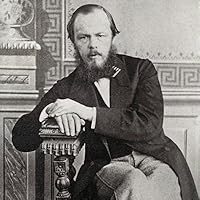
“And the more I drink the more I feel it. That's why I drink too. I try to find sympathy and feeling in drink.... I drink so that I may suffer twice as much!”
― Crime and Punishment
― Crime and Punishment

“It is indisputable that the being whose capacities of enjoyment are low, has the greatest chance of having them fully satisfied; and a highly endowed being will always feel that any happiness which he can look for, as the world is constituted, is imperfect. But he can learn to bear its imperfections, if they are at all bearable; and they will not make him envy the being who is indeed unconscious of the imperfections, but only because he feels not at all the good which those imperfections qualify.
It is better to be a human being dissatisfied than a pig satisfied; better to be Socrates dissatisfied than a fool satisfied. And if the fool, or the pig, is of a different opinion, it is only because they only know their own side of the question.”
― Utilitarianism
It is better to be a human being dissatisfied than a pig satisfied; better to be Socrates dissatisfied than a fool satisfied. And if the fool, or the pig, is of a different opinion, it is only because they only know their own side of the question.”
― Utilitarianism

“The current ruling ontology denies any possibility of a social causation of mental illness. The chemico-biologization of mental illness is of course strictly commensurate with its depoliticization. Considering mental illness an individual chemico-biological problem has enormous benefits for capitalism. First, it reinforces Capital’s drive towards atomistic individualization (you are sick because of your brain chemistry). Second, it provides an enormously lucrative market in which multinational pharmaceutical companies can peddle their pharmaceuticals (we can cure you with our SSRIs). It goes without saying that all mental illnesses are neurologically instantiated, but this says nothing about their causation. If it is true, for instance, that depression is constituted by low serotonin levels, what still needs to be explained is why particular individuals have low levels of serotonin. This requires a social and political explanation; and the task of repoliticizing mental illness is an urgent one if the left wants to challenge capitalist realism.”
― Capitalist Realism: Is There No Alternative?
― Capitalist Realism: Is There No Alternative?

“You take somebody that cries their goddam eyes out over phony stuff in the movies, and nine times out of ten they're mean bastards at heart.”
―
―



Elis’s 2025 Year in Books
Take a look at Elis’s Year in Books, including some fun facts about their reading.

183 books
|
84 friends

17 books
|
2 friends

676 books
|
3 friends
257 books
|
6 friends

977 books
|
197 friends


Favorite Genres
Polls voted on by Elis
Lists liked by Elis