
Discover new books on Goodreads
Meet your next favorite book




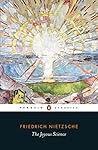
The title of the book has been the subject of some discussion. ‘Die fröhliche Wissenschaft’ has been variously translated as ‘The Joyful Wisdom’ (by Thomas Common), ‘The Gay Science’ (by Walter Kaufmann), ‘The Joyous Science’ (by Laurence
...more


“Art,” said Picasso, “is a lie that makes us realize the truth.”
― Obliquity: Why Our Goals Are Best Achieved Indirectly
― Obliquity: Why Our Goals Are Best Achieved Indirectly

“I dreamed I saw my maternal grandmother sitting by the bank of a swimming pool, that was also a river. In real life, she had been a victim of Alzheimer’s disease, and had regressed, before her death, to a semi-conscious state. In the dream, as well, she had lost her capacity for self-control. Her genital region was exposed, dimly; it had the appearance of a thick mat of hair. She was stroking herself, absent-mindedly. She walked over to me, with a handful of pubic hair, compacted into something resembling a large artist’s paint-brush. She pushed this at my face. I raised my arm, several times, to deflect her hand; finally, unwilling to hurt her, or interfere with her any farther, I let her have her way. She stroked my face with the brush, gently, and said, like a child, “isn’t it soft?” I looked at her ruined face and said, “yes, Grandma, it’s soft.”
― Maps of Meaning: The Architecture of Belief
― Maps of Meaning: The Architecture of Belief

“Those who mismanage our affairs would silence our criticism by pretending they have facts not avaliable to the rest of us. Our best weapon against them is not to marshal facts, of which they are truly managers, but passion. Passion is our hope and strenght."
”
― Anthills of the Savannah
”
― Anthills of the Savannah

“The difference essentially between a book and a friend lies not in their greater or lesser wisdom, but in the manner in which we communicate with them, reading being the reverse of conversation, consisting as it does for each one of us in receiving the communication of another’s thought while still being on our own, that is, continuing to enjoy the intellectual sway which we have in solitude and which conversation dispels instantly, and continuing to be open to inspiration, with our minds still at work hard and fruitfully on themselves.”
― Days of Reading
― Days of Reading

“Maladies, poorly interpreted, can’t be cured.”
― Interpreter of Maladies
― Interpreter of Maladies
 Political Philosophy and Ethics
— 6662 members
— last activity 11 hours, 22 min ago
Political Philosophy and Ethics
— 6662 members
— last activity 11 hours, 22 min ago
Study and discussion of the important questions of ethical and political philosophy from Confucius and Socrates to the present. Rules (see also the ...more

Ranas’s 2025 Year in Books
Take a look at Ranas’s Year in Books, including some fun facts about their reading.

443 books
|
215 friends

1,976 books
|
743 friends

57 books
|
4,404 friends

65 books
|
12 friends

9,212 books
|
4,583 friends

147 books
|
3,125 friends

542 books
|
348 friends

22,968 books
|
3,039 friends


Favorite Genres
Polls voted on by Ranas
Lists liked by Ranas