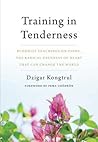
Francisca Hoces

Add friend
Sign in to Goodreads to learn more about Francisca.

https://linktr.ee/mana.bg1987
https://www.goodreads.com/francisca_hoces

Children of Dune
Rate this book
Clear rating

 
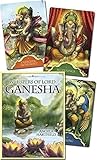
Whispers of Lord ...
Rate this book
Clear rating

progress: 
 
  (page 19 of 0)
Mar 08, 2023 06:11PM

 
See all 4 books that Francisca is reading…
Loading...
James Clear
“You do not rise to the level of your goals. You fall to the level of your systems.”
James Clear, Atomic Habits: An Easy & Proven Way to Build Good Habits & Break Bad Ones

James Clear
“Over the long run, however, the real reason you fail to stick with habits is that your self-image gets in the way. This is why you can't get too attached to one version of your identity. Progress requires unlearning. Becoming the best version of yourself requires you to continuously edit your beliefs, and to upgrade and expand your identity.”
James Clear, Atomic Habits: An Easy & Proven Way to Build Good Habits & Break Bad Ones

Yuval Noah Harari
“According to Buddhism, the root of suffering is neither the feeling of pain nor of sadness nor even of meaninglessness. Rather, the real root of suffering is this never-ending and pointless pursuit of ephemeral feelings, which causes us to be in a constant state of tension, restlessness and dissatisfaction. Due to this pursuit, the mind is never satisfied. Even when experiencing pleasure, it is not content, because it fears this feeling might soon disappear, and craves that this feeling should stay and intensify. People are liberated from suffering not when they experience this or that fleeting pleasure, but rather when they understand the impermanent nature of all their feelings, and stop craving them. This is the aim of Buddhist meditation practices. In meditation, you are supposed to closely observe your mind and body, witness the ceaseless arising and passing of all your feelings, and realise how pointless it is to pursue them. When the pursuit stops, the mind becomes very relaxed, clear and satisfied. All kinds of feelings go on arising and passing – joy, anger, boredom, lust – but once you stop craving particular feelings, you can just accept them for what they are. You live in the present moment instead of fantasising about what might have been. The resulting serenity is so profound that those who spend their lives in the frenzied pursuit of pleasant feelings can hardly imagine it. It is like a man standing for decades on the seashore, embracing certain ‘good’ waves and trying to prevent them from disintegrating, while simultaneously pushing back ‘bad’ waves to prevent them from getting near him. Day in, day out, the man stands on the beach, driving himself crazy with this fruitless exercise. Eventually, he sits down on the sand and just allows the waves to come and go as they please. How peaceful!”
Yuval Noah Harari, Sapiens: A Brief History of Humankind

B.K.S. Iyengar
“Happy is the man who knows how to distinguish the real from the unreal, the eternal from the transient and the good from the pleasant by his discrimination and wisdom. Twice blessed is he who knows true love and can love all God's creatures. He who works selflessly for the welfare of others with love in his heart is thrice blessed. But the man who combines within his mortal frame knowledge, love and selfless service is holy and becomes a place of pilgrimage.”
B.K.S. Iyengar, Light on Yoga

“Tell me and I forget, teach me and I may remember, involve me and I learn."

Benjamin Franklin never said those words, he was falsely attributed on a respected quotation website and it spread from there.

The quote comes from the Xunzi.

Xun Kuang was a Chinese Confucian philosopher that lived from 312-230 BC. His works were collected into a set of 32 books called the Xunzi, by Liu Xiang in about 818 AD. There are woodblock copies of these books that are almost 1100 years old.

Book 8 is titled Ruxiao ("The Teachings of the Ru"). The quotation in question comes from Chapter 11 of that book. In Chinese the quote is:

不闻不若闻之, 闻之不若见之, 见之不若知之, 知之不若行之

It is derived from this paragraph:

Not having heard something is not as good as having heard it; having heard it is not as good as having seen it; having seen it is not as good as knowing it; knowing it is not as good as putting it into practice. (From the John Knoblock translation, which is viewable in Google Books)

The first English translation of the Xunzi was done by H.H. Dubs, in 1928, one-hundred and thirty-eight years after Benjamin Franklin died.”
Xun Kuang

19519 Bound Together — 1103 members — last activity 29 minutes ago
This is a group for women only! No group collectors! We expect participation! Before you apply for membership in Bound Together please check to see ...more
50920 Beta Reader Group — 29872 members — last activity 3 hours, 23 min ago
A place to connect writers with beta readers. Sometimes writers get so involved in the plot they can't see the wood for the trees. Hang on a sec'--th ...more

year in books
triviar...
144 books | 75 friends

Ercy
350 books | 23 friends

Morgan
4,000 books | 450 friends

Liz Dav...
679 books | 72 friends

Leo
Leo
8,867 books | 2,965 friends

Victori...
433 books | 35 friends

Joana F...
3,714 books | 162 friends

Morene ...
887 books | 102 friends

More friends…


Polls voted on by Francisca

Lists liked by Francisca