
Discover new books on Goodreads
Meet your next favorite book

Ben Gardner
https://www.goodreads.com/shinyben



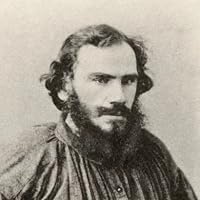
“Can it be that I have not lived as one ought?" suddenly came into his head. "But how not so, when I've done everything as it should be done?”
― The Death of Ivan Ilych
― The Death of Ivan Ilych

“Fiat ars – pereat mundus”, says Fascism, and, as Marinetti admits, expects war to supply the artistic gratification of a sense perception that has been changed by technology. This is evidently the consummation of “l’art pour l’art.” Mankind, which in Homer’s time was an object of contemplation for the Olympian gods, now is one for itself. Its self-alienation has reached such a degree that it can experience its own destruction as an aesthetic pleasure of the first order. This is the situation of politics which Fascism is rendering aesthetic. Communism responds by politicizing art.”
― The Work of Art in the Age of Mechanical Reproduction
― The Work of Art in the Age of Mechanical Reproduction

“In irony a man annihilates what he posits within one and the same act; he leads us to believe in order not to be believed; he affirms to deny and denies to affirm; he creatives a positive object but it has no being other than its nothingness.”
― Being and Nothingness
― Being and Nothingness
“Once the arrow has left the bowstring, it has no power to come back. The moon's brightness shines, revealing the night traveller.”
― The Blue Cliff Record
― The Blue Cliff Record

“Happy the writer who, passing by characters that are boring, disgusting, shocking in their mournful reality, approaches characters that manifest the lofty dignity of man, who from the great pool of daily whirling images has chosen only the rare exceptions, who has never once betrayed the exalted turning of his lyre, nor descended from his height to his poor, insignificant brethren, and, without touching the ground, has given the whole of himself to his elevated images so far removed from it. Twice enviable is his beautiful lot: he is among them as in his own family; and meanwhile his fame spreads loud and far. With entrancing smoke he has clouded people's eyes; he has flattered them wondrously, concealing what is mournful in life, showing them a beautiful man. Everything rushes after him, applauding, and flies off following his triumphal chariot. Great world poet they name him, soaring high above all other geniuses in the world, as the eagle soars above the other high fliers. At the mere mention of his name, young ardent hearts are filled with trembling, responsive tears shine in all eyes...No one equals him in power--he is God! But such is not the lot, and other is the destiny of the writer who has dared to call forth all that is before our eyes every moment and which our indifferent eyes do not see--all the stupendous mire of trivia in which our life in entangled, the whole depth of cold, fragmented, everyday characters that swarm over our often bitter and boring earthly path, and with the firm strength of his implacable chisel dares to present them roundly and vividly before the eyes of all people! It is not for him to win people's applause, not for him to behold the grateful tears and unanimous rapture of the souls he has stirred; no sixteen-year-old girl will come flying to meet him with her head in a whirl and heroic enthusiasm; it is not for him to forget himself in the sweet enchantment of sounds he himself has evoked; it is not for him, finally, to escape contemporary judgment, hypocritically callous contemporary judgment, which will call insignificant and mean the creations he has fostered, will allot him a contemptible corner in the ranks of writers who insult mankind, will ascribe to him the quality of the heroes he has portrayed, will deny him heart, and soul, and the divine flame of talent. For contemporary judgment does not recognize that equally wondrous are the glasses that observe the sun and those that look at the movement of inconspicuous insect; for contemporary judgment does not recognize that much depth of soul is needed to light up the picture drawn from contemptible life and elevate it into a pearl of creation; for contemporary judgment does not recognize that lofty ecstatic laughter is worthy to stand beside the lofty lyrical impulse, and that a whole abyss separates it from the antics of the street-fair clown! This contemporary judgment does not recognize; and will turn it all into a reproach and abuse of the unrecognized writer; with no sharing, no response, no sympathy, like a familyless wayfarer, he will be left alone in the middle of the road. Grim is his path, and bitterly he will feel his solitude.”
― Dead Souls
― Dead Souls
 neo-/lit/
— 394 members
— last activity Sep 29, 2026 08:43AM
neo-/lit/
— 394 members
— last activity Sep 29, 2026 08:43AM
The premier /lit/erature-related assembly of minds.

Ben’s 2025 Year in Books
Take a look at Ben’s Year in Books, including some fun facts about their reading.

758 books
|
1 friend

1,118 books
|
64 friends

280 books
|
11 friends

0 books
|
22 friends

462 books
|
1 friend
38 books
|
7 friends

7 books
|
1 friend

1,169 books
|
92 friends
More friends…

Favorite Genres
Polls voted on by Ben
Lists liked by Ben