
Discover new books on Goodreads
Meet your next favorite book



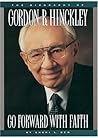


“Each of us will have our own Fridays—those days when the universe itself seems shattered and the shards of our world lie littered about us in pieces. We all will experience those broken times when it seems we can never be put together again. We will all have our Fridays. But I testify to you in the name of the One who conquered death—Sunday will come. In the darkness of our sorrow, Sunday will come. No matter our desperation, no matter our grief, Sunday will come. In this life or the next, Sunday will come.”
―
―

“Our opportunities to give of ourselves are indeed limitless, but they are also perishable. There are hearts to gladden. There are kind words to say. There are gifts to be given. There are deeds to be done. There are souls to be saved.
As we remember that “when ye are in the service of your fellow beings ye are only in the service of your God,” (Mosiah 2:17) we will not find ourselves in the unenviable position of Jacob Marley’s ghost, who spoke to Ebenezer Scrooge in Charles Dickens’s immortal "Christmas Carol." Marley spoke sadly of opportunities lost. Said he: 'Not to know that any Christian spirit working kindly in its little sphere, whatever it may be, will find its mortal life too short for its vast means of usefulness. Not to know that no space of regret can make amends for one life’s opportunity misused! Yet such was I! Oh! such was I!'
Marley added: 'Why did I walk through crowds of fellow-beings with my eyes turned down, and never raise them to that blessed Star which led the Wise Men to a poor abode? Were there no poor homes to which its light would have conducted me!'
Fortunately, as we know, Ebenezer Scrooge changed his life for the better. I love his line, 'I am not the man I was.'
Why is Dickens’ "Christmas Carol" so popular? Why is it ever new? I personally feel it is inspired of God. It brings out the best within human nature. It gives hope. It motivates change. We can turn from the paths which would lead us down and, with a song in our hearts, follow a star and walk toward the light. We can quicken our step, bolster our courage, and bask in the sunlight of truth. We can hear more clearly the laughter of little children. We can dry the tear of the weeping. We can comfort the dying by sharing the promise of eternal life. If we lift one weary hand which hangs down, if we bring peace to one struggling soul, if we give as did the Master, we can—by showing the way—become a guiding star for some lost mariner.”
―
As we remember that “when ye are in the service of your fellow beings ye are only in the service of your God,” (Mosiah 2:17) we will not find ourselves in the unenviable position of Jacob Marley’s ghost, who spoke to Ebenezer Scrooge in Charles Dickens’s immortal "Christmas Carol." Marley spoke sadly of opportunities lost. Said he: 'Not to know that any Christian spirit working kindly in its little sphere, whatever it may be, will find its mortal life too short for its vast means of usefulness. Not to know that no space of regret can make amends for one life’s opportunity misused! Yet such was I! Oh! such was I!'
Marley added: 'Why did I walk through crowds of fellow-beings with my eyes turned down, and never raise them to that blessed Star which led the Wise Men to a poor abode? Were there no poor homes to which its light would have conducted me!'
Fortunately, as we know, Ebenezer Scrooge changed his life for the better. I love his line, 'I am not the man I was.'
Why is Dickens’ "Christmas Carol" so popular? Why is it ever new? I personally feel it is inspired of God. It brings out the best within human nature. It gives hope. It motivates change. We can turn from the paths which would lead us down and, with a song in our hearts, follow a star and walk toward the light. We can quicken our step, bolster our courage, and bask in the sunlight of truth. We can hear more clearly the laughter of little children. We can dry the tear of the weeping. We can comfort the dying by sharing the promise of eternal life. If we lift one weary hand which hangs down, if we bring peace to one struggling soul, if we give as did the Master, we can—by showing the way—become a guiding star for some lost mariner.”
―

“Cultivate an attitude of happiness. Cultivate a spirit of optimism. Walk with faith, rejoicing in the beauties of nature, in the goodness of those you love, in the testimony which you carry in your heart concerning things divine.”
―
―

“The laughter of the world is merely loneliness pathetically trying to reassure itself.”
― The Neal A. Maxwell Quote Book
― The Neal A. Maxwell Quote Book

Carolyn’s 2025 Year in Books
Take a look at Carolyn’s Year in Books, including some fun facts about their reading.

169 books
|
25 friends

987 books
|
112 friends

273 books
|
606 friends

506 books
|
31 friends

57 books
|
59 friends

736 books
|
34 friends

0 books
|
37 friends

19 books
|
68 friends
More friends…

Polls voted on by Carolyn
Lists liked by Carolyn