“I read the way a person might swim, to save his or her life.”
― Upstream: Selected Essays
“These days, after drinking from the internet's fire hose for thirty years, I've begun to feel more of those negative effects. I don't know if it's my age, or the fact that the internet is no longer plugged into the wall and now travels with me everywhere I go, but I find myself thinking of that Wordsworth poem that begins, "The world is too much with us; late and soon.”
What does it say that I can't imagine my life or my work without the internet? What does it mean to have my way of thinking, and my way of being, so profoundly shaped my machine logic? What does it mean that, having been part of the internet for so long, the internet is also part of me?
My friend Stan Muller tells me that when you're living in the middle of history, you never know what it means. I am living in the middle of the internet. I have no idea what it means.”
― The Anthropocene Reviewed: Essays on a Human-Centered Planet
What does it say that I can't imagine my life or my work without the internet? What does it mean to have my way of thinking, and my way of being, so profoundly shaped my machine logic? What does it mean that, having been part of the internet for so long, the internet is also part of me?
My friend Stan Muller tells me that when you're living in the middle of history, you never know what it means. I am living in the middle of the internet. I have no idea what it means.”
― The Anthropocene Reviewed: Essays on a Human-Centered Planet
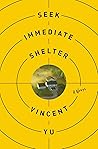
“And I do it because it's unnecessary.
For what is kindness but the performance of an act that is both beneficial to another and unrequited? There is no kindness in paying a bill. There is no kindness in getting up at dawn to slop the pigs, or milk the cows, or gather the eggs from the henhouse. For that matter, there is no kindness in making dinner, or in cleaning the kitchen after your father heads upstairs without so much as a word of thanks.
There is no kindness in latching the doors and turning out the lights, or in picking up the clothes from the bathroom floor in order to put them int he hamper. There is no kindness in taking care of a household because your only sister had the good sense to get herself married and move to Pensacola.
Nope, I said to myself while climbing into bed and switching off the light, there is no kindness in any of that.
For kindness begins where necessity ends.”
― The Lincoln Highway
For what is kindness but the performance of an act that is both beneficial to another and unrequited? There is no kindness in paying a bill. There is no kindness in getting up at dawn to slop the pigs, or milk the cows, or gather the eggs from the henhouse. For that matter, there is no kindness in making dinner, or in cleaning the kitchen after your father heads upstairs without so much as a word of thanks.
There is no kindness in latching the doors and turning out the lights, or in picking up the clothes from the bathroom floor in order to put them int he hamper. There is no kindness in taking care of a household because your only sister had the good sense to get herself married and move to Pensacola.
Nope, I said to myself while climbing into bed and switching off the light, there is no kindness in any of that.
For kindness begins where necessity ends.”
― The Lincoln Highway
“Here's the plain truth, at least as it has been shown to me: We are never far from wonders. I remember when my son was about two, we were walking in the woods one November morning. We were along a ridge, looking down at a forest in the valley below, where a cold haze seemed to hug the forest floor. I kept trying to get my oblivious two-year-old to appreciate the landscape. At one point, I picked him up and pointed out toward the horizon and said, "Look at that, Henry, just look at it!" And he said, "Weaf!" I said, "What?" And again he said, "Weaf," and then reached out and grabbed a single brown oak leaf from the little tree next to us.
I wanted to explain to him that you can see a brown oak leaf anywhere in the eastern United States in November, that nothing in the forest was less interesting. But after watching him look at it, I began to look as well, and I soon realized it wasn't just a brown leaf. Its veins spidered out red and orange and yellow in a pattern too complex for my brain to synthesize, and the more I looked at that leaf with Henry, the more I was compelled into an aesthetic contemplation I neither understood nor desired, face-to-face with something commensurate to my capacity for wonder.
Marveling at the perfection of that leaf, I was reminded that aesthetic beauty is as much about how and whether you look as what you see. From the quark to the supernova, the wonders do not cease. It is our attentiveness that is in short supply, our ability and willingness to do the work that awe requires.”
― The Anthropocene Reviewed: Essays on a Human-Centered Planet
I wanted to explain to him that you can see a brown oak leaf anywhere in the eastern United States in November, that nothing in the forest was less interesting. But after watching him look at it, I began to look as well, and I soon realized it wasn't just a brown leaf. Its veins spidered out red and orange and yellow in a pattern too complex for my brain to synthesize, and the more I looked at that leaf with Henry, the more I was compelled into an aesthetic contemplation I neither understood nor desired, face-to-face with something commensurate to my capacity for wonder.
Marveling at the perfection of that leaf, I was reminded that aesthetic beauty is as much about how and whether you look as what you see. From the quark to the supernova, the wonders do not cease. It is our attentiveness that is in short supply, our ability and willingness to do the work that awe requires.”
― The Anthropocene Reviewed: Essays on a Human-Centered Planet
“Florence had noticed that people who didn't feel the way she did about literature - that it was, as much as biology or physics, one of life's organizing principles - regarded it as little more than a collection of physical objects: books. Did they think the power of music could be whittled down to the look and feel of a violin string? In fact, Florence did love books - the smell of the binding, the roughness of the pages - but they were nothing compared to the magnitude of what was inside them.”
―
―
Jane’s 2025 Year in Books
Take a look at Jane’s Year in Books, including some fun facts about their reading.
More friends…
Favorite Genres
Polls voted on by Jane
Lists liked by Jane