Parke

Add friend
Sign in to Goodreads to learn more about Parke.

http://onlyconnectparke.blogspot.com/

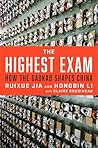
The Highest Exam:...
Parke is currently reading
by Ruixue Jia (Goodreads Author)
bookshelves: currently-reading
Rate this book
Clear rating

 
Earth Angel
Parke is currently reading
bookshelves: currently-reading
Rate this book
Clear rating

 
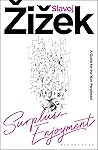
Surplus-Enjoyment...
Rate this book
Clear rating

 
See all 34 books that Parke is reading…
Book cover for Feel Free: Essays
There is a vitality, a life force, an energy, a quickening that is translated through you into action, and because there is only one of you in all of time, this expression is unique. And if you block it, it will never exist through any ...more
Loading...
Frank Kermode
“What Kant took to be the necessary schemata of reality,' says a modern Freudian, 'are really only the necessary schemata of repression.' And an experimental psychologist adds that 'a sense of time can only exist where there is submission to reality.' To see everything as out of mere succession is to behave like a man drugged or insane. Literature and history, as we know them, are not like that; they must submit, be repressed. It is characteristic of the stage we are now at, I think, that the question of how far this submission ought to go--or, to put it the other way, how far one may cultivate fictional patterns or paradigms--is one which is debated, under various forms, by existentialist philosophers, by novelists and anti-novelists, by all who condemn the myths of historiography. It is a debate of fundamental interest, I think, and I shall discuss it in my fifth talk.

Certainly, it seems, there must, even when we have achieved a modern degree of clerical scepticism, be some submission to the fictive patterns. For one thing, a systematic submission of this kind is almost another way of describing what we call 'form.' 'An inter-connexion of parts all mutually implied'; a duration (rather than a space) organizing the moment in terms of the end, giving meaning to the interval between tick and tock because we humanly do not want it to be an indeterminate interval between the tick of birth and the tock of death. That is a way of speaking in temporal terms of literary form. One thinks again of the Bible: of a beginning and an end (denied by the physicist Aristotle to the world) but humanly acceptable (and allowed by him to plots). Revelation, which epitomizes the Bible, puts our fate into a book, and calls it the book of life, which is the holy city. Revelation answers the command, 'write the things which thou hast seen, and the things which are, and the things which shall be hereafter'--'what is past and passing and to come'--and the command to make these things interdependent. Our novels do likewise. Biology and cultural adaptation require it; the End is a fact of life and a fact of the imagination, working out from the middle, the human crisis. As the theologians say, we 'live from the End,' even if the world should be endless. We need ends and kairoi and the pleroma, even now when the history of the world has so terribly and so untidily expanded its endless successiveness. We re-create the horizons we have abolished, the structures that have collapsed; and we do so in terms of the old patterns, adapting them to our new worlds. Ends, for example, become a matter of images, figures for what does not exist except humanly. Our stories must recognize mere successiveness but not be merely successive; Ulysses, for example, may be said to unite the irreducible chronos of Dublin with the irreducible kairoi of Homer. In the middest, we look for a fullness of time, for beginning, middle, and end in concord.

For concord or consonance really is the root of the matter, even in a world which thinks it can only be a fiction. The theologians revive typology, and are followed by the literary critics. We seek to repeat the performance of the New Testament, a book which rewrites and requites another book and achieves harmony with it rather than questioning its truth. One of the seminal remarks of modern literary thought was Eliot's observation that in the timeless order of literature this process is continued. Thus we secularize the principle which recurs from the New Testament through Alexandrian allegory and Renaissance Neo-Platonism to our own time. We achieve our secular concords of past and present and future, modifying the past and allowing for the future without falsifying our own moment of crisis. We need, and provide, fictions of concord.”
Frank Kermode, The Sense of an Ending: Studies in the Theory of Fiction

Neil Gaiman
“The irritating question they ask us -- us being writers -- is: "Where do you get your ideas?"
And the answer is: Confluence. Things come together. The right ingredients and suddenly: Abracadabra!
Neil Gaiman, Smoke and Mirrors: Short Fiction and Illusions

Walt Whitman
“I am large, I contain multitudes”
Walt Whitman, Leaves of Grass

John Ashbery
“I tried each thing, only some were immortal and free.”
John Ashbery, Self-Portrait in a Convex Mirror

Antoine de Saint-Exupéry
“If you want to build a ship, don’t drum up the men to gather wood, divide the work, and give orders. Instead, teach them to yearn for the vast and endless sea.”
Antoine de Saint-Exupéry

167647 College admission and American culture — 189 members — last activity Jun 13, 2025 12:54PM
A group dedicated to discussing books about the American college admission process and American collegiate/high school culture.
156266 MK & TCK Book Club — 188 members — last activity Jan 09, 2023 04:14AM
This group is no longer active. Original description: Join us as we read books by and about missionary kids (MKs), third culture kids (TCKs), their fa ...more

year in books
Juliana...
237 books | 170 friends

Dan'S_mind
5,674 books | 986 friends

Kate
548 books | 156 friends

Matthew...
2 books | 201 friends

Sarah Cole
332 books | 215 friends

Jess
766 books | 73 friends

Ryan
1,233 books | 277 friends

Cheng
832 books | 96 friends

More friends…


Polls voted on by Parke

Lists liked by Parke