
Discover new books on Goodreads
Meet your next favorite book



![金閣寺 [Kinkakuji] by Yukio Mishima](https://i.gr-assets.com/images/S/compressed.photo.goodreads.com/books/1190736068l/1948057._SX50_.jpg "金閣寺 [Kinkakuji] by Yukio Mishima")






“...That, however, was not what our scholar was concerned to prove; for he maintained that the Great Wall alone would provide for the first time in the history of mankind a secure foundation for a new Tower of Babel. First the wall, therefore, and then the tower. His book was in everybody's hands at that time, but I admit that even today I cannot quite make out how he conceived this tower. How could the wall, which did not form even a circle, but only a sort of quarter- or half-circle, provide the foundation for a tower? That could obviously be meant only in a spiritual sense. But in that case why build the actual wall, which after all was something concrete, the result of the lifelong labor of multitudes of people? And why were there in the book plans, somewhat nebulous plans, it must be admitted, of the tower, and proposals worked out in detail for mobilizing the people's energies for the stupendous new work?
There were many wild ideas in people's heads at that time -- this scholar's book is only one example -- perhaps simply because so many were trying to join forces as far as they could for the achievement of a single aim. Human nature, essentially changeable, unstable as the dust, can endure no restraint; if it binds itself it soon begins to tear madly at its bonds, until it rends everything asunder, the wall, the bonds, and its very self.”
― The Great Wall of China
There were many wild ideas in people's heads at that time -- this scholar's book is only one example -- perhaps simply because so many were trying to join forces as far as they could for the achievement of a single aim. Human nature, essentially changeable, unstable as the dust, can endure no restraint; if it binds itself it soon begins to tear madly at its bonds, until it rends everything asunder, the wall, the bonds, and its very self.”
― The Great Wall of China

“Clarissa had a theory in those days - they had heaps of theories, always theories, as young people have. It was to explain the feeling they had of dissatisfaction; not knowing people; not being known. For how could they know each other? You met every day; then not for six months, or years. It was unsatisfactory, they agreed, how little one knew people. But she said, sitting on the bus going up Shaftesbury Avenue, she felt herself everywhere; not 'here, here, here'; and she tapped the back of the seat; but everywhere. She waved her hand, going up Shaftesbury Avenue. She was all that. So that to know her, or any one, one must seek out the people who completed them; even the places. Odd affinities she had with people she had never spoke to, some women in the street, some man behind a counter - even trees, or barns. It ended in a transcendental theory which, with her horror of death, allowed her to believe, or say that she believed (for all her scepticism), that since our apparitions, the part of us which appears, are so momentary compared with the other, the unseen part of us, which spreads wide, the unseen might survive, be recovered somehow attached to this person or that, or even haunting certain places, after death. Perhaps - perhaps.”
― Mrs. Dalloway
― Mrs. Dalloway

“Are we not all of us fanatics? I say only what you of the U.S.A. pretend you do not know. Attachments are of great seriousness. Choose your attachments carefully. Choose your temple of fanaticism with great care. What you wish to sing of as tragic love is an attachment not carefully chosen. Die for one person? This is a craziness. Persons change, leave, die, become ill. They leave, lie, go mad, have sickness, betray you, die. Your nation outlives you. A cause outlives you.”
― Infinite Jest
― Infinite Jest
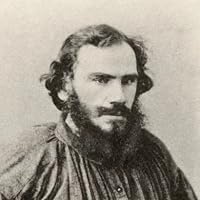
“What is bad? What is good? What should one love and what hate? What does one live for? And what am I? What is life, and what is death? What power governs all?
There was no answer to any of these questions, except one, and that not a logical answer and not at all a reply to them. The answer was:
“You’ll die and all will end. You’ll die and know all, or cease asking.” But dying was also dreadful.”
― War and Peace
There was no answer to any of these questions, except one, and that not a logical answer and not at all a reply to them. The answer was:
“You’ll die and all will end. You’ll die and know all, or cease asking.” But dying was also dreadful.”
― War and Peace

“I felt my lungs inflate with the onrush of scenery—air, mountains, trees, people. I thought, "This is what it is to be happy.”
― The Bell Jar
― The Bell Jar
 Goodreads Librarians Group
— 346216 members
— last activity 0 minutes ago
Goodreads Librarians Group
— 346216 members
— last activity 0 minutes ago
Goodreads Librarians are volunteers who help ensure the accuracy of information about books and authors in the Goodreads' catalog. The Goodreads Libra ...more
 The Rory Gilmore Book Club
— 24055 members
— last activity Oct 26, 2026 03:38PM
The Rory Gilmore Book Club
— 24055 members
— last activity Oct 26, 2026 03:38PM
Reading is sexy! This group is for fans of literature and the Gilmore Girls. Join us for some witty banter, numerous pop culture references, and enlig ...more


emi’s 2025 Year in Books
Take a look at emi’s Year in Books, including some fun facts about their reading.

961 books
|
46 friends

1,582 books
|
53 friends

1,071 books
|
4,493 friends

2,230 books
|
148 friends

1,058 books
|
507 friends

46 books
|
10 friends

746 books
|
32 friends

885 books
|
101 friends
More friends…


Favorite Genres
Polls voted on by emi
Lists liked by emi