
Discover new books on Goodreads
Meet your next favorite book





“Robert Graves, the poet and British Army officer, was in London, too, still shaky from the German metal he had received in his chest and thigh the year before. His mother-in-law contracted influenza, but deceived her physician in order to make the rounds of the latest London plays with her son, Tony, on leave from France. She died July 13: “her chief feeling was one of pleasure that Tony had got his leave prolonged on her account.” On the day she died, Grave’s friend and fellow poet, Sigfried Sassoon, who had been shot through the throat in 1917, was shot through the head while on patrol in No-Man’s-Land. He recovered. Tony was killed two months later.27 Yes, the war was much more engrossing than Spanish flu.”
― America's Forgotten Pandemic: The Influenza of 1918
― America's Forgotten Pandemic: The Influenza of 1918
“With them heredity, diatheses, the vicissitudes of weather and other meteorological conditions, elements of decomposition, impure atmosphere, gluttony, insufficient and unwholesome food, inebriety and other environments, potent factors in the formation of disease, are entirely overlooked. Having their gaze fixed upon the one ignis fatuus, they become oblivious to all things else in heaven, earth or sea.79”
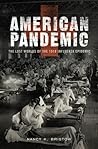
― American Pandemic: The Lost Worlds of the 1918 Influenza Epidemic
― American Pandemic: The Lost Worlds of the 1918 Influenza Epidemic
“No other influenza before or since has had such a propensity for pneumonic complications. And pneumonia kills.”
― America's Forgotten Pandemic: The Influenza of 1918
― America's Forgotten Pandemic: The Influenza of 1918
“World War I killed upwards of fifteen millions, wreaked immeasurable physical, social, and psychic damage, and left most of the citizens of the belligerent powers with a deep conviction that war must in some way be prohibited.”
― America's Forgotten Pandemic: The Influenza of 1918
― America's Forgotten Pandemic: The Influenza of 1918
“The characteristic of the influenza virus that makes it so dangerous and gives rise to epidemic after epidemic is its extreme mutability. It perpetually is changing the nature of its outer surface, which antibodies, the body’s most important defense system, must zero in on to be effective.”
― America's Forgotten Pandemic: The Influenza of 1918
― America's Forgotten Pandemic: The Influenza of 1918

A’s 2025 Year in Books
Take a look at A’s Year in Books, including some fun facts about their reading.

76 books
|
68 friends

170 books
|
587 friends

113 books
|
37 friends

0 books
|
45 friends

351 books
|
196 friends

0 books
|
138 friends

172 books
|
90 friends

0 books
|
17 friends
More friends…


Favorite Genres
Business, Classics, Cookbooks, Crime, Ebooks, History, Humor and Comedy, Manga, Non-fiction, Philosophy, Psychology, Science, Self help, and Travel
Polls voted on by A
Lists liked by A