
 Sign in with Facebook

Diana
https://www.goodreads.com/dianacsaki


“Couples choose each other with an unerring instinct for finding the very person who will exactly match their own level of unconscious anxieties and mirror their own dysfunctions, and who will trigger for them all their unresolved emotional pain.”
― Scattered: How Attention Deficit Disorder Originates and What You Can Do About It
― Scattered: How Attention Deficit Disorder Originates and What You Can Do About It
“The three conditions without which healthy growth does not take place can be taken for granted in the matrix of the womb: nutrition, a physically secure environment and the unbroken relationship with a safe, ever-present maternal organism. The word matrix is derived from the Latin for “womb,” itself derived from the word for “mother.” The womb is mother, and in many respects the mother remains the womb, even following birth. In the womb environment, no action or reaction on the developing infant’s part is required for the provision of any of his needs.
Life in the womb is surely the prototype of life in the Garden of Eden where nothing can possibly be lacking, nothing has to be worked for. If there is no consciousness — we have not yet eaten of the Tree of Knowledge — there is also no deprivation or anxiety. Except in conditions of extreme poverty unusual in the industrialized world, although not unknown, the nutritional needs and shelter requirements of infants are more or less satisfied. The third prime requirement, a secure, safe and not overly stressed emotional atmosphere, is the one most likely to be disrupted in Western societies.
The human infant lacks the capacity to follow or cling to the parent soon after being born, and is neurologically and biochemically underdeveloped in many other ways. The first nine months or so of extrauterine life seem to have been intended by nature as the second part of gestation. The anthropologist Ashley Montagu has called this phase exterogestation, gestation outside the maternal body. During this period, the security of the womb must be provided by the parenting environment. To allow for the maturation of the brain and nervous system that in other species occurs in the uterus, the attachment that was until birth directly physical now needs to be continued on both physical and emotional levels. Physically and psychologically, the parenting environment must contain and hold the infant as securely as she was held in the womb.
For the second nine months of gestation, nature does provide a near-substitute for the direct umbilical connection: breast-feeding. Apart from its irreplaceable nutritional value and the immune protection it gives the infant, breast-feeding serves as a transitional stage from unbroken physical attachment to complete separation from the mother’s body. Now outside the matrix of the womb, the infant is nevertheless held close to the warmth of the maternal body from which nourishment continues to flow.
Breast-feeding also deepens the mother’s feeling of connectedness to the baby, enhancing the emotionally symbiotic bonding relationship. No doubt the decline of breast-feeding, particularly accelerated in North America, has contributed to the emotional insecurities so prevalent in industrialized countries. Even more than breast-feeding, healthy brain development requires emotional security and warmth in the infant’s environment. This security is more than the love and best possible intentions of the parents. It depends also on a less controllable variable: their freedom from stresses that can undermine their psychological equilibrium. A calm and consistent emotional milieu throughout infancy is an essential requirement for the wiring of the neurophysiological circuits of self-regulation. When interfered with, as it often is in our society, brain development is adversely affected.”
― Scattered: How Attention Deficit Disorder Originates and What You Can Do About It
Life in the womb is surely the prototype of life in the Garden of Eden where nothing can possibly be lacking, nothing has to be worked for. If there is no consciousness — we have not yet eaten of the Tree of Knowledge — there is also no deprivation or anxiety. Except in conditions of extreme poverty unusual in the industrialized world, although not unknown, the nutritional needs and shelter requirements of infants are more or less satisfied. The third prime requirement, a secure, safe and not overly stressed emotional atmosphere, is the one most likely to be disrupted in Western societies.
The human infant lacks the capacity to follow or cling to the parent soon after being born, and is neurologically and biochemically underdeveloped in many other ways. The first nine months or so of extrauterine life seem to have been intended by nature as the second part of gestation. The anthropologist Ashley Montagu has called this phase exterogestation, gestation outside the maternal body. During this period, the security of the womb must be provided by the parenting environment. To allow for the maturation of the brain and nervous system that in other species occurs in the uterus, the attachment that was until birth directly physical now needs to be continued on both physical and emotional levels. Physically and psychologically, the parenting environment must contain and hold the infant as securely as she was held in the womb.
For the second nine months of gestation, nature does provide a near-substitute for the direct umbilical connection: breast-feeding. Apart from its irreplaceable nutritional value and the immune protection it gives the infant, breast-feeding serves as a transitional stage from unbroken physical attachment to complete separation from the mother’s body. Now outside the matrix of the womb, the infant is nevertheless held close to the warmth of the maternal body from which nourishment continues to flow.
Breast-feeding also deepens the mother’s feeling of connectedness to the baby, enhancing the emotionally symbiotic bonding relationship. No doubt the decline of breast-feeding, particularly accelerated in North America, has contributed to the emotional insecurities so prevalent in industrialized countries. Even more than breast-feeding, healthy brain development requires emotional security and warmth in the infant’s environment. This security is more than the love and best possible intentions of the parents. It depends also on a less controllable variable: their freedom from stresses that can undermine their psychological equilibrium. A calm and consistent emotional milieu throughout infancy is an essential requirement for the wiring of the neurophysiological circuits of self-regulation. When interfered with, as it often is in our society, brain development is adversely affected.”
― Scattered: How Attention Deficit Disorder Originates and What You Can Do About It
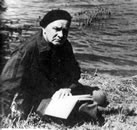
“Nagyon későn értettem meg, mi az, amiben megmérhetetlen magasságban állnak fölöttem egyszerű kis emberkék. Tudnak valamit, amit én nem tudok. Lényükben megvan a ragyogás, ami belőlem hiányzik. Közelebb állnak a legmagasabbhoz, és hozzájuk képest minden megszerzett fennsőbbségemmel milyen kicsiny vagyok. Elsősorban nem a szentekre gondolok, akikben oly sok a szakrális és megható képmutatás, de nem is az anyákra, akik ügyefogyottan és mániákusan gyakorolják anyaságuk tehetségeit. Van egy fajta gondtalan mosoly, amit csak olyanok arcán látok, akiket szeretnek. Lao-ce mondja, hogy a legbiztosabb hely, ha az ember magát szeretettel őrizteti. Ezt ismerem. Van, aki őriz és akinek szárnyai alatt megnyugodva tudok mosolyogni. De van egy mosoly, amely ennél több, azé, aki maga szeret. A becsvágy a kétségbeesés egy neme, mondják. Kétségbeesés pedig annyi, mint a szeretet hiánya. Ezért a hajsza és az ember olyan, mint „az éjszakába kilőtt nyíl". Ez a paradicsomi arc, a szerető arc, félelem és gond nélkül, védekezés és taktika és stratégia nélkül. Önzés nélkül, amit olyan mélyen megvetek, de amin nem tudom magam átsegíteni. Nem tudom megvalósítani azt, ami ezt fölöslegessé teszi. A tisztátalan én nem is tudja megérteni. Értem, de csak értem és meghódolok előtte. A szeretet nem okvetlen áldozat, de bármit tesz, azzá válik. Ismerem, és nem ismerem egyszerre, jelenlétéről tudomásom van, de nem tud bennem életre kelni. Van valaki, akinek lényéből a paradicsomi meleg sugárzik. Semmi feltűnő, semmi aggodalom, a legegyszerűbb, ami van, és amíg nem értettem, semmit sem tudtam. Értem. Mindent érteni.”
―
―

“If you set yourself to it, you can live the same life, rich or poor, you can still keep on with your books and your ideas. You just got to say to yourself, "Im a free man in here"- he tapped his forehead- and you're all right”
― Down and Out in Paris and London
― Down and Out in Paris and London

“I don't feel particularly proud of myself. But when I walk alone in the woods or lie in the meadows, all is well.”
― Letters to Friends, Family, and Editors
― Letters to Friends, Family, and Editors

Diana’s 2025 Year in Books
Take a look at Diana’s Year in Books, including some fun facts about their reading.

146 books
|
10 friends

240 books
|
38 friends

94 books
|
10 friends

609 books
|
65 friends

2,644 books
|
8 friends

355 books
|
5 friends

126 books
|
25 friends

0 books
|
2 friends
More friends…


Polls voted on by Diana
Lists liked by Diana
