
 Sign in with Facebook



to-read
(1251)
currently-reading (32)
read (210)
did-not-finish (0)
priority-reading (87)
christian-faith (35)
favorites (15)
practical-theology (6)
apologetics (5)
counseling (5)
currently-reading (32)
read (210)
did-not-finish (0)
priority-reading (87)
christian-faith (35)
favorites (15)
practical-theology (6)
apologetics (5)
counseling (5)
family
(5)
sanctification (5)
children-book (4)
children-s-literature (4)
brain-science (3)
classic (3)
revelation (3)
thought (3)
fiction (2)
homiletics (2)
sanctification (5)
children-book (4)
children-s-literature (4)
brain-science (3)
classic (3)
revelation (3)
thought (3)
fiction (2)
homiletics (2)


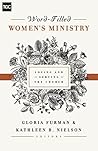
Profitable ministry among women is grounded in God’s Word, grows in the context of God’s people, and aims for the glory of Christ.


“Weakness means we don't have what it takes. It means we are not sovereign, omniscient, or invincible. We are not in control, we don't know everything, and we can be stopped. Weakness means that we desperately need God.
P. 52
Most of you didn't come to faith in Jesus with the intellectual endorsement of secular scholars or the accolades of worldly fame. The truth is, you are weak all around. You are weak, plain and simple. But in your weakness, God has called you, and therefore you have entered seminary for theological training. You go to seminary to grow, yes. You go to seminary to learn and steward your gifts, absolutely. But here's the thing: the goal of seminary is not to become unweak.
P. 52-53”
―
P. 52
Most of you didn't come to faith in Jesus with the intellectual endorsement of secular scholars or the accolades of worldly fame. The truth is, you are weak all around. You are weak, plain and simple. But in your weakness, God has called you, and therefore you have entered seminary for theological training. You go to seminary to grow, yes. You go to seminary to learn and steward your gifts, absolutely. But here's the thing: the goal of seminary is not to become unweak.
P. 52-53”
―
“Weakness means we don't have what it takes. It means we are not sovereign, omniscient, or invincible. We are not in control, we don't know everything, and we can be stopped. Weakness means that we desperately need God.
P. 52
Most of you didn't come to faith in Jesus with the intellectual endorsement of secular scholars or the accolades of worldly fame. The truth is, you are weak all around. You are weak, plain and simple. But in your weakness, God has called you, and therefore you have entered seminary for theological training. You go to seminary to grow, yes. You go to seminary to learn and steward your gifts, absolutely. But here's the thing: the goal of seminary is not to become unweak.
P. 52-53”
―
P. 52
Most of you didn't come to faith in Jesus with the intellectual endorsement of secular scholars or the accolades of worldly fame. The truth is, you are weak all around. You are weak, plain and simple. But in your weakness, God has called you, and therefore you have entered seminary for theological training. You go to seminary to grow, yes. You go to seminary to learn and steward your gifts, absolutely. But here's the thing: the goal of seminary is not to become unweak.
P. 52-53”
―

“But the secret of good writing is to strip every sentence to its cleanest components. Every word that serves no function, every long word that could be a short word, every adverb that carries the same meaning that’s already in the verb, every passive construction that leaves the reader unsure of who is doing what—these are the thousand and one adulterants that weaken the strength of a sentence. And they usually occur in proportion to education and rank.”
― On Writing Well: The Classic Guide to Writing Nonfiction
― On Writing Well: The Classic Guide to Writing Nonfiction

“My mom was a sayyed from the bloodline of the Prophet (which you know about now). In Iran, if you convert from Islam to Christianity or Judaism, it’s a capital crime.
That means if they find you guilty in religious court, they kill you. But if you convert to something else, like Buddhism or something, then it’s not so bad. Probably because Judaism, Christianity, and Islam are sister religions, and you always have the worst fights with your sister.
And probably nothing happens if you’re just a six-year-old. Except if you say, “I’m a Christian now,” in your school, chances are the Committee will hear about it and raid your house, because if you’re a Christian now, then so are your parents probably. And the Committee does stuff way worse than killing you.
When my sister walked out of her room and said she’d met Jesus, my mom knew all that.
And here is the part that gets hard to believe: Sima, my mom, read about him and became a Christian too. Not just a regular one, who keeps it in their pocket. She fell in love. She wanted everybody to have what she had, to be free, to realize that in other religions you have rules and codes and obligations to follow to earn good things, but all you had to do with Jesus was believe he was the one who died for you.
And she believed.
When I tell the story in Oklahoma, this is the part where the grown-ups always interrupt me. They say, “Okay, but why did she convert?”
Cause up to that point, I’ve told them about the house with the birds in the walls, all the villages my grandfather owned, all the gold, my mom’s own medical practice—all the amazing things she had that we don’t have anymore because she became a Christian.
All the money she gave up, so we’re poor now.
But I don’t have an answer for them.
How can you explain why you believe anything? So I just say what my mom says when people ask her. She looks them in the eye with the begging hope that they’ll hear her and she says, “Because it’s true.”
Why else would she believe it?
It’s true and it’s more valuable than seven million dollars in gold coins, and thousands of acres of Persian countryside, and ten years of education to get a medical degree, and all your family, and a home, and the best cream puffs of Jolfa, and even maybe your life.
My mom wouldn’t have made the trade otherwise.
If you believe it’s true, that there is a God and He wants you to believe in Him and He sent His Son to die for you—then it has to take over your life. It has to be worth more than everything else, because heaven’s waiting on the other side.
That or Sima is insane.
There’s no middle. You can’t say it’s a quirky thing she thinks sometimes, cause she went all the way with it.
If it’s not true, she made a giant mistake.
But she doesn’t think so.
She had all that wealth, the love of all those people she helped in her clinic. They treated her like a queen. She was a sayyed.
And she’s poor now.
People spit on her on buses. She’s a refugee in places people hate refugees, with a husband who hits harder than a second-degree black belt because he’s a third-degree black belt. And she’ll tell you—it’s worth it. Jesus is better.
It’s true.
We can keep talking about it, keep grinding our teeth on why Sima converted, since it turned the fate of everybody in the story. It’s why we’re here hiding in Oklahoma.
We can wonder and question and disagree. You can be certain she’s dead wrong.
But you can’t make Sima agree with you.
It’s true.
Christ has died. Christ is risen. Christ will come again.
This whole story hinges on it.
Sima—who was such a fierce Muslim that she marched for the Revolution, who studied the Quran the way very few people do read the Bible and knew in her heart that it was true.”
― Everything Sad Is Untrue
That means if they find you guilty in religious court, they kill you. But if you convert to something else, like Buddhism or something, then it’s not so bad. Probably because Judaism, Christianity, and Islam are sister religions, and you always have the worst fights with your sister.
And probably nothing happens if you’re just a six-year-old. Except if you say, “I’m a Christian now,” in your school, chances are the Committee will hear about it and raid your house, because if you’re a Christian now, then so are your parents probably. And the Committee does stuff way worse than killing you.
When my sister walked out of her room and said she’d met Jesus, my mom knew all that.
And here is the part that gets hard to believe: Sima, my mom, read about him and became a Christian too. Not just a regular one, who keeps it in their pocket. She fell in love. She wanted everybody to have what she had, to be free, to realize that in other religions you have rules and codes and obligations to follow to earn good things, but all you had to do with Jesus was believe he was the one who died for you.
And she believed.
When I tell the story in Oklahoma, this is the part where the grown-ups always interrupt me. They say, “Okay, but why did she convert?”
Cause up to that point, I’ve told them about the house with the birds in the walls, all the villages my grandfather owned, all the gold, my mom’s own medical practice—all the amazing things she had that we don’t have anymore because she became a Christian.
All the money she gave up, so we’re poor now.
But I don’t have an answer for them.
How can you explain why you believe anything? So I just say what my mom says when people ask her. She looks them in the eye with the begging hope that they’ll hear her and she says, “Because it’s true.”
Why else would she believe it?
It’s true and it’s more valuable than seven million dollars in gold coins, and thousands of acres of Persian countryside, and ten years of education to get a medical degree, and all your family, and a home, and the best cream puffs of Jolfa, and even maybe your life.
My mom wouldn’t have made the trade otherwise.
If you believe it’s true, that there is a God and He wants you to believe in Him and He sent His Son to die for you—then it has to take over your life. It has to be worth more than everything else, because heaven’s waiting on the other side.
That or Sima is insane.
There’s no middle. You can’t say it’s a quirky thing she thinks sometimes, cause she went all the way with it.
If it’s not true, she made a giant mistake.
But she doesn’t think so.
She had all that wealth, the love of all those people she helped in her clinic. They treated her like a queen. She was a sayyed.
And she’s poor now.
People spit on her on buses. She’s a refugee in places people hate refugees, with a husband who hits harder than a second-degree black belt because he’s a third-degree black belt. And she’ll tell you—it’s worth it. Jesus is better.
It’s true.
We can keep talking about it, keep grinding our teeth on why Sima converted, since it turned the fate of everybody in the story. It’s why we’re here hiding in Oklahoma.
We can wonder and question and disagree. You can be certain she’s dead wrong.
But you can’t make Sima agree with you.
It’s true.
Christ has died. Christ is risen. Christ will come again.
This whole story hinges on it.
Sima—who was such a fierce Muslim that she marched for the Revolution, who studied the Quran the way very few people do read the Bible and knew in her heart that it was true.”
― Everything Sad Is Untrue

“Sin makes us glory thieves...
At the bottom of a broken marriage, a shattered family, or a forsaken friendship you will always find stolen glory. We crave glory that does not belong to us, and we step on one another to get it. Rather than glorifying God by using the things he has given us to love other people,
we use people to get the glory we love. Sin causes us to steal the story and rewrite it with ourselves as the lead, and with our lives at center stage.
But there is only one stage and it belongs to the Lord. Any attempt to put ourselves in his place puts us in a war with him...
Sin has made us glory robbers. We do not suffer well, because suffering interferes with our glory. We do not find relationships easy, because others compete with us for glory. We do not serve well, because in our quest for glory, we want to be served.
But the story of Scripture is the story of the Lord's glory. It calls me to an agenda that is bigger than myself. It offers me something truly worth living for. The Redeemer has come so that glory thieves would joyfully live for the glory of Another. There is no deeper personal joy and satisfaction than to live committed to his glory. It is what we truly need.”
― Instruments in the Redeemer's Hands: How to Help Others Change, Study Guide
At the bottom of a broken marriage, a shattered family, or a forsaken friendship you will always find stolen glory. We crave glory that does not belong to us, and we step on one another to get it. Rather than glorifying God by using the things he has given us to love other people,
we use people to get the glory we love. Sin causes us to steal the story and rewrite it with ourselves as the lead, and with our lives at center stage.
But there is only one stage and it belongs to the Lord. Any attempt to put ourselves in his place puts us in a war with him...
Sin has made us glory robbers. We do not suffer well, because suffering interferes with our glory. We do not find relationships easy, because others compete with us for glory. We do not serve well, because in our quest for glory, we want to be served.
But the story of Scripture is the story of the Lord's glory. It calls me to an agenda that is bigger than myself. It offers me something truly worth living for. The Redeemer has come so that glory thieves would joyfully live for the glory of Another. There is no deeper personal joy and satisfaction than to live committed to his glory. It is what we truly need.”
― Instruments in the Redeemer's Hands: How to Help Others Change, Study Guide
 READeemer
— 9 members
— last activity Jun 21, 2024 07:50PM
READeemer
— 9 members
— last activity Jun 21, 2024 07:50PM
For all REAdeemers A.K.A any member of Redeemer Church of Dubai who (1) reads habitually or every now and then, (2) have something to share and encour ...more
 Underground Knowledge — A discussion group
— 25327 members
— last activity 1 hour, 49 min ago
Underground Knowledge — A discussion group
— 25327 members
— last activity 1 hour, 49 min ago
This global discussion group has been designed to encourage debates about important and underreported issues of our era. All you need is an enquiring ...more

aiza’s 2025 Year in Books
Take a look at aiza’s Year in Books, including some fun facts about their reading.

1,881 books
|
237 friends

589 books
|
86 friends

236 books
|
39 friends

658 books
|
233 friends

223 books
|
5 friends

1,126 books
|
131 friends

677 books
|
1,223 friends

443 books
|
16 friends
More friends…


Favorite Genres
Polls voted on by aiza
Lists liked by aiza
