
Discover new books on Goodreads
Meet your next favorite book


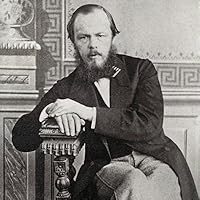
“How can a man of consciousness have the slightest respect for himself”
― Notes from Underground
― Notes from Underground

“For it is not what happens to me that makes me great, but it is what I do.”
― Fear and Trembling
― Fear and Trembling

“Let us be blunt, even at the risk of being misunderstood: the true Christian is not the denominational party member but he who through being a Christian has become truly human; not he who slavishly observes a system of norms, thinking as he does so only of himself, but he who has become freed to simple human goodness. Of course, the principle of love, if it is to be genuine, includes faith. Only thus does it remain what it is. For without faith, which we have come to understand as a term expressing man’s ultimate need to receive and the inadequacy of all personal achievement, love becomes an arbitrary deed. It cancels itself out and becomes self-righteousness: faith and love condition and demand each other reciprocally. Similarly, in the principle of love there is also present the principle of hope, which looks beyond the moment and its isolation and seeks the whole. Thus our reflections finally lead of their own accord to the words in which Paul named the main supporting pillars of Christianity: “So faith, hope, love abide, these three; but the greatest of these is love” (1 Cor 13:13).”
― Introduction To Christianity
― Introduction To Christianity
“Christian belief—as we have already said—means opting for the view that what cannot be seen is more real than what can be seen.”
― Introduction To Christianity
― Introduction To Christianity
“Augustine relates in his Confessions how it was decisive for his own path when he learned that the famous philosopher Marius Victorinus had become a Christian. Victorinus had long refused to join the Church because he took the view that he already possessed in his philosophy all the essentials of Christianity, with whose intellectual premises he was in complete agreement.10 Since from his philosophical thinking, he said, he could already regard the central Christian ideas as his own, he no longer needed to institutionalize his convictions by belonging to a Church. Like many educated people both then and now, he saw the Church as Platonism for the people, something of which he as a full-blown Platonist had no need. The decisive factor seemed to him to be the idea alone; only those who could not grasp it themselves, as the philosopher could, in its original form needed to be brought into contact with it through the medium of ecclesiastical organization. That Marius Victorinus nevertheless one day joined the Church and turned from Platonist into Christian was an expression of his perception of the fundamental error implicit in this view. The great Platonist had come to understand that a Church is something more and something other than an external institutionalization and organization of ideas. He had understood that Christianity is not a system of knowledge but a way. The believers’ “We” is not a secondary addition for small minds; in a certain sense it is the matter itself—the community with one’s fellowmen is a reality that lies on a different plane from that of the mere “idea”. If Platonism provides an idea of the truth, Christian belief offers truth as a way, and only by becoming a way has it become man’s truth. Truth as mere perception, as mere idea, remains bereft of force; it only becomes man’s truth as a way that makes a claim upon him, that he can and must tread. Thus belief embraces, as essential parts of itself, the profession of faith, the word, and the unity it effects; it embraces entry into the community’s worship of God and, so, finally the fellowship we call Church. Christian belief is not an idea but life; it is, not mind existing for itself, but incarnation, mind in the body of history and its “We”. It is, not the mysticism of the self-identification of the mind with God, but obedience and service: going beyond oneself, freeing the self precisely through being taken into service by something not made or thought out by oneself, the liberation of being taken into service for the whole.”
― Introduction To Christianity
― Introduction To Christianity

ysabella’s 2025 Year in Books
Take a look at ysabella’s Year in Books, including some fun facts about their reading.


Favorite Genres
Polls voted on by ysabella
Lists liked by ysabella